Choosing the right bag size is one of the most practical decisions in solventless filtration. The capacity of the bag set affects how much material can be processed in one cycle, how easily the bags can be handled, how much water and ice are required, and how efficient the overall workflow becomes. For many users, the first question is what size bags for bubble hash are suitable for their actual production needs. A small test batch does not require the same system as a larger repeated-wash operation, and choosing the wrong size can create unnecessary labor, waste, or inconsistent results.
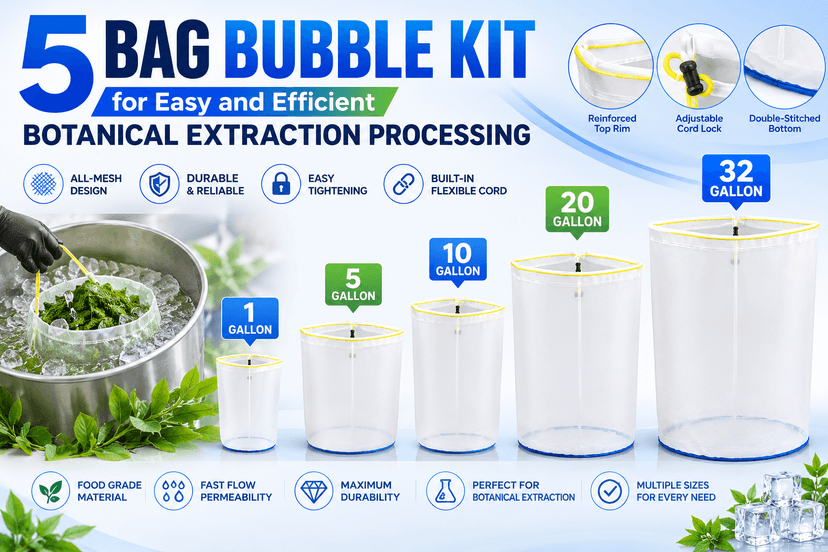
Bubble hash bag sizes are usually described by gallon capacity, such as 1 gallon, 2 gallon, 5 gallon, or 32 gallon. However, gallon size should not be confused with micron size. Capacity determines the working volume, while micron rating determines filtration accuracy. This distinction is important because many buyers also ask what size micron bags for bubble hash should be selected. A complete purchasing decision should consider both factors together: the gallon size must match the container and batch volume, while the micron configuration must match the desired level of separation.
Understanding Bubble Hash Bag Sizes
Bubble hash bag sizes refer to the container volume the bags are designed to fit. For example, bubble bags for hash 5 gallon systems are made for standard 5 gallon buckets. This format is widely used because the buckets are easy to source, simple to handle, and suitable for small to mid-size processing. A 5 gallon setup provides enough capacity for routine use while remaining manageable during washing, draining, collection, and cleaning.
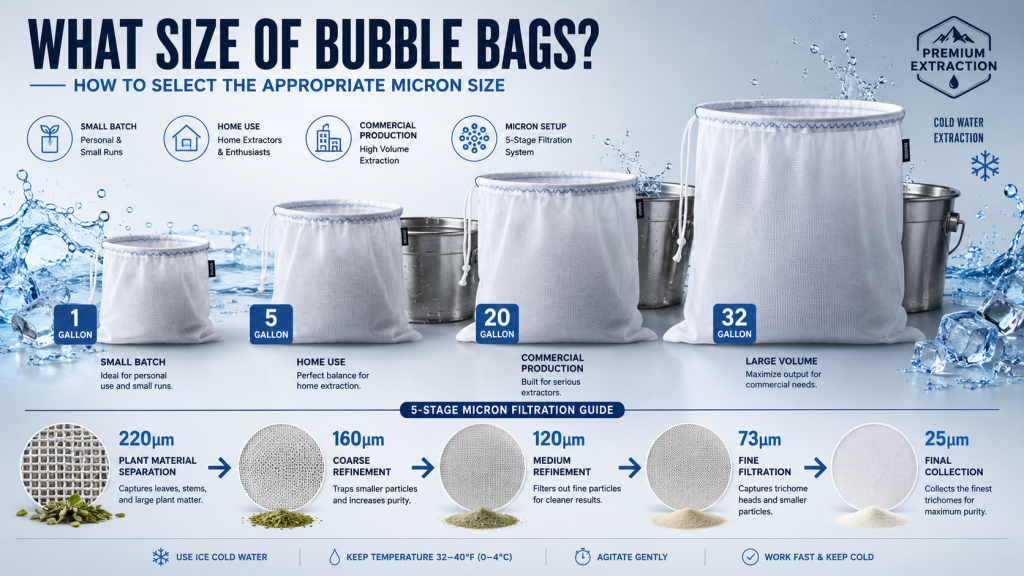
1 gallon bubble hash bags are designed for very small batches. They are useful for testing material quality, running sample washes, or learning the process with limited input. Because they require less water, less ice, and less space, they are practical for controlled trials. 2 gallon bubble hash bags offer slightly more capacity while still remaining compact. These small hash bags are suitable when operators need more flexibility than a one-gallon setup but do not yet need a full five-gallon system.
Small bubble bags for hash are often preferred by users who prioritize precision, convenience, and easy maintenance. Smaller systems are easier to rinse after use and easier to dry before storage. They also make it simpler to observe drainage behavior and collection quality during each wash. However, they are not efficient for larger material volumes because multiple repeated cycles may be required to complete one production run.
Large bubble bags for hash serve a different purpose. Larger formats, including bubble hash bags 32 gallon systems, are designed for higher-volume workflows. They allow operators to process more material in one cycle and reduce repeated handling. However, large systems also require more water, more ice, more workspace, and stronger handling procedures. Wet bags can become heavy, and cleaning large mesh surfaces takes more time. For this reason, large systems should be selected only when the production volume justifies the additional operating requirements.
Why 5 Gallon Bags Are a Practical Standard
For many buyers, bubble hash bags for 5 gallon bucket workflows offer the most practical middle ground. They are more productive than small one-gallon or two-gallon systems, but they are still easier to handle than 20 gallon or 32 gallon configurations. This makes them suitable for users who need regular processing capacity without moving into large-scale equipment.
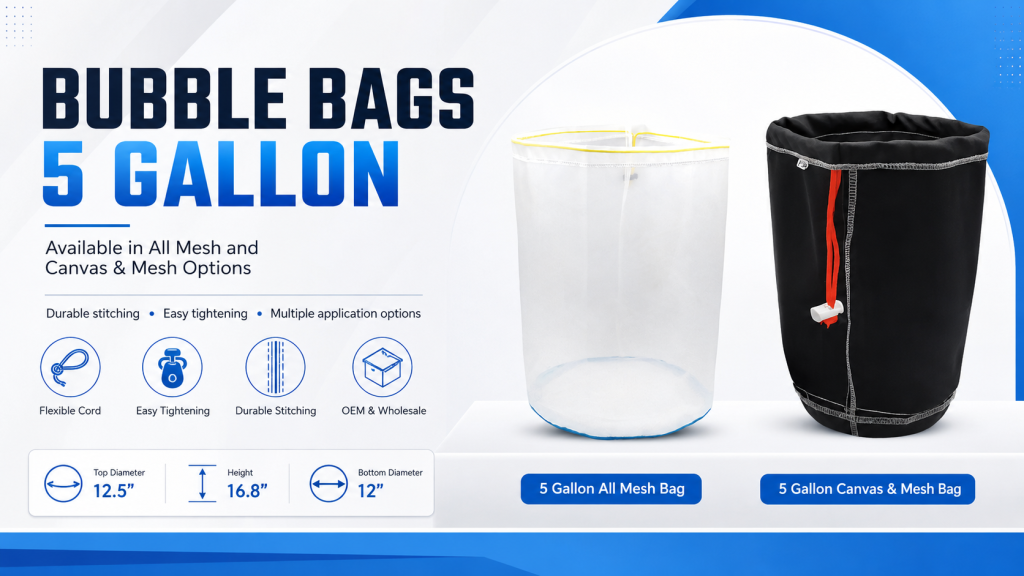
5 gallon bubble bags for hash are also compatible with standard bucket-based workflows. The bags can be stacked in the bucket according to micron order, and the wash water can drain through each layer in sequence. This simple setup supports a structured filtration process without requiring specialized vessels. For operators learning how to manage bag order, agitation time, and resin collection, the 5 gallon format is practical and forgiving.
Some buyers search for 5 gallon bubble hash bags amazon when comparing common options online. Marketplace availability can be convenient, especially for users who want quick access to standard-size sets. However, buyers should evaluate more than price or delivery speed. Mesh accuracy, food-grade materials, reinforced stitching, and clear micron labeling all affect long-term performance. A low-cost set may be acceptable for occasional use, but repeated washing requires stronger construction.
The 5 gallon size is also useful for process development. Operators can test different material types, washing times, and micron configurations without committing to very large batches. Once a workflow is proven at the 5 gallon level, it can be scaled more confidently to larger formats if production demand increases. This makes bubble bags for hash 5 gallon systems a practical foundation for many solventless filtration setups.
What Size Micron Bags for Bubble Hash
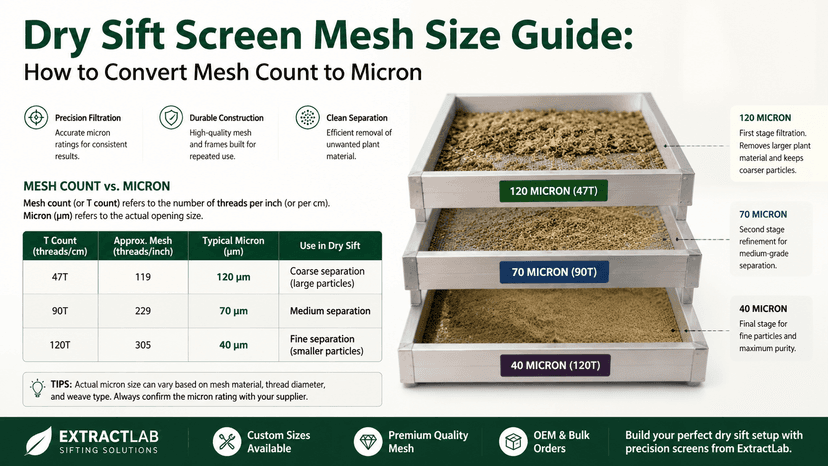
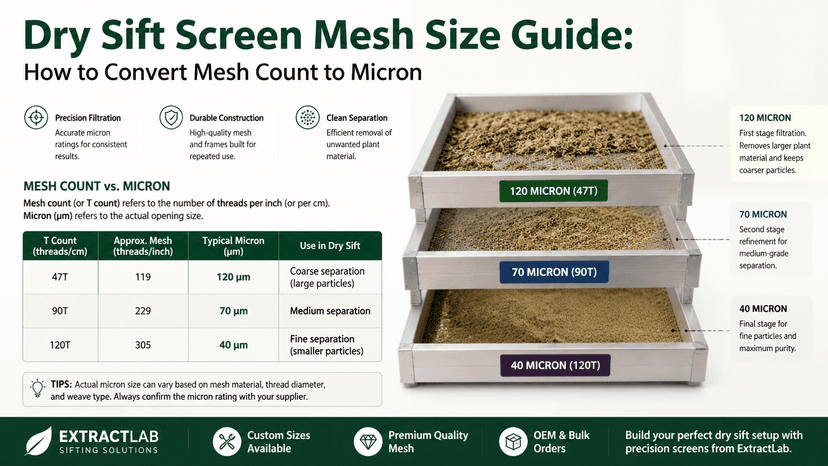
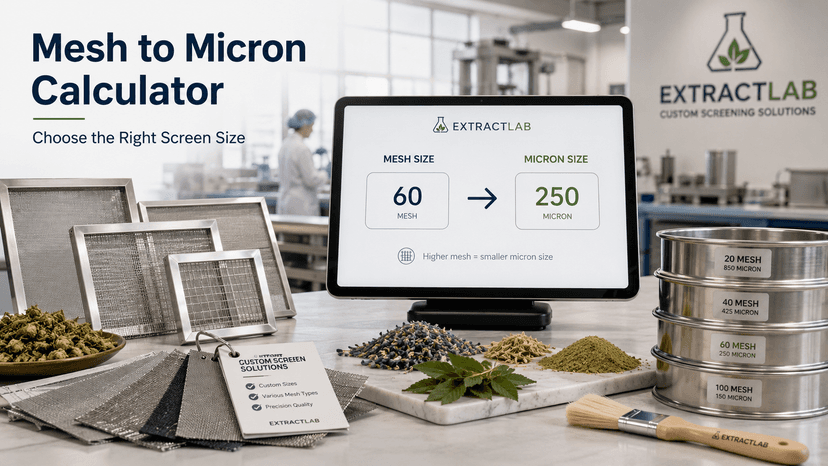
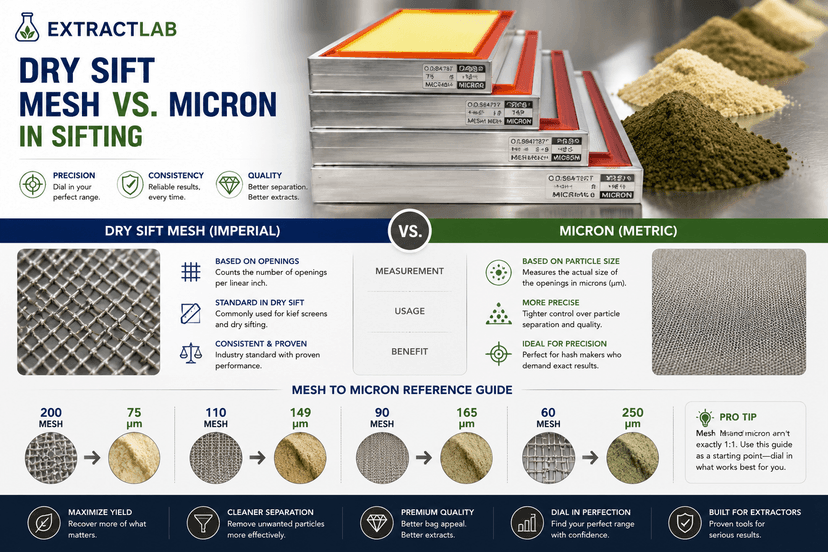
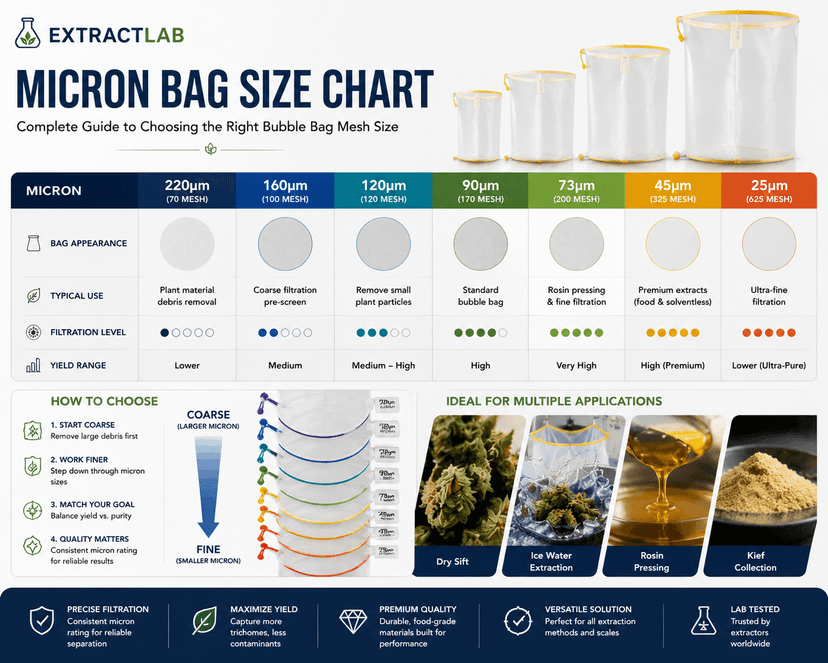
The question of what size micron bags for bubble hash is separate from the question of gallon capacity. Micron size refers to the opening size of the mesh. Larger micron numbers indicate larger openings, while smaller micron numbers indicate finer filtration. A bag set may include several micron ratings so material can be separated progressively during the filtration process.
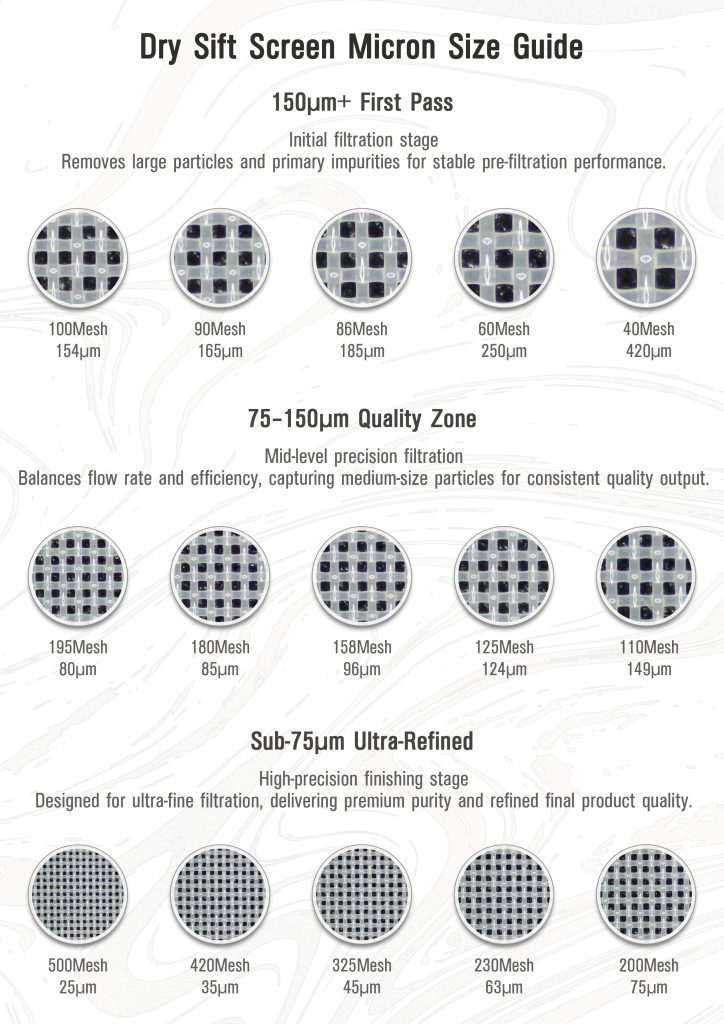
Common micron ratings may include coarse, intermediate, and fine filtration layers. Larger micron bags are typically used early in the stack to remove plant material and larger particles. Mid-range micron bags are often used for primary collection. Smaller micron bags collect finer particles and require careful handling because fine material may drain more slowly and retain more moisture.
For users asking what size micron bags for bubble hash should be included, the answer depends on the desired level of grading. A simple set may include fewer bags and provide basic separation. A more complete set may include several collection layers, allowing operators to divide material into narrower particle ranges. More layers provide better classification, but they also increase handling, cleaning, and drying time.
Micron consistency is especially important in any size system. A 5 gallon set with inaccurate mesh will not perform reliably, even if the capacity is appropriate. Likewise, bubble hash bags 32 gallon systems require stable mesh because a larger batch means any filtration issue can affect more material at once. Buyers should choose bags with uniform mesh openings, durable seams, and materials that maintain their shape during cold-water use.
Comparing Small Bags, 5 Gallon Bags, and Large Bags
The best size depends on the operating goal. 1 gallon bubble hash bags are useful for trial runs, small samples, and limited material. They are easy to handle and clean, but they are not suitable for high-volume production. 2 gallon bubble hash bags offer a little more capacity while keeping the same compact advantage. These small hash bags are often used when operators want to test process variables without wasting input material.
5 gallon bubble bags for hash are suitable for routine processing and general-purpose use. They provide enough volume for meaningful production while keeping handling requirements manageable. For many operators, the 5 gallon size offers the best balance between efficiency and control. It is also a practical size for users moving beyond experimental batches but not yet ready for large vessels.
Large bubble bags for hash, including bubble hash bags 32 gallon, are designed for higher throughput. They are useful when repeated small batches become inefficient and the operation needs to process larger material volumes per cycle. However, large bags require more disciplined workflow management. Operators must plan for drainage time, lifting weight, cleaning space, and proper storage.
The transition from small bags to large bags should be based on actual production needs rather than the assumption that bigger is always better. Oversized bags can waste water and ice when used for small batches. Undersized bags can increase labor when used for large batches. Matching bag size to batch volume is the most efficient approach.
How to Choose the Right Size for Long-Term Use
The right choice begins with batch volume. If the goal is testing or occasional small processing, small bubble bags for hash may be sufficient. If the goal is regular small to mid-size production, bubble hash bags for 5 gallon bucket systems are usually more practical. If the goal is higher-volume operation, bubble hash bags 32 gallon may provide better throughput and reduce repeated cycles.
The next factor is handling capacity. Bags become heavier when wet, especially in larger systems. A user working alone may find 5 gallon bags easier and safer to manage than larger formats. A facility with more workspace and better equipment may benefit from large bubble bags for hash because the labor can be distributed and the workflow can be standardized.
Cleaning and storage should also influence the decision. 1 gallon bubble hash bags and 2 gallon bubble hash bags are easier to rinse and dry quickly. 5 gallon systems remain manageable for most users. Larger systems require more drying space and careful storage to prevent moisture retention, odor, or material degradation. Proper maintenance supports long-term reliability and preserves filtration performance.
Buyers should also consider future scalability. Starting with 5 gallon bubble bags for hash can be a practical way to establish a repeatable process before moving into larger systems. The 5 gallon format allows operators to understand material behavior, micron performance, and workflow timing. Once these variables are controlled, scaling to bubble hash bags 32 gallon becomes more predictable.
Selecting the right bubble hash bag sizes requires a clear understanding of both capacity and micron rating. The question of what size bags for bubble hash should be answered by looking at batch volume, container compatibility, handling requirements, and workflow goals. The question of what size micron bags for bubble hash should be answered by looking at separation quality, mesh consistency, and desired grading detail. For many users, bubble bags for hash 5 gallon systems provide a dependable balance of capacity and control, while small hash bags support testing and bubble hash bags 32 gallon support larger production. By matching bag size and micron structure to the actual process, buyers can improve efficiency, reduce unnecessary labor, and maintain more consistent filtration results.