Why Most Growers Fail at Dry Sifting
Most people think dry sifting is just shaking plant material over a mesh. They buy a single 100-micron screen, shake it like a cocktail, and wonder why their “kief” looks like powdered lawn clippings.
The secret to award-winning results isn’t just the screen; it’s the micron strategy. In this guide, we’ll break down exactly which microns to use, why dry sift screen sets are non-negotiable, and the professional techniques that separate the hobbyists from the connoisseurs.
1. Micron vs. Mesh: Don’t Get Lost in Translation
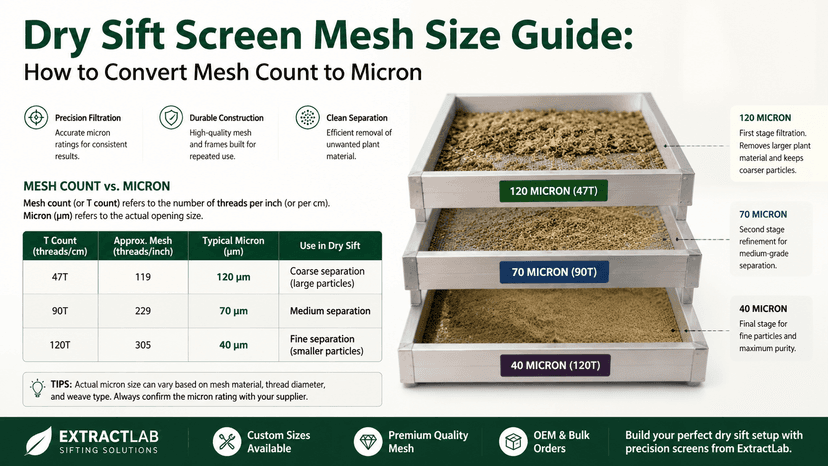
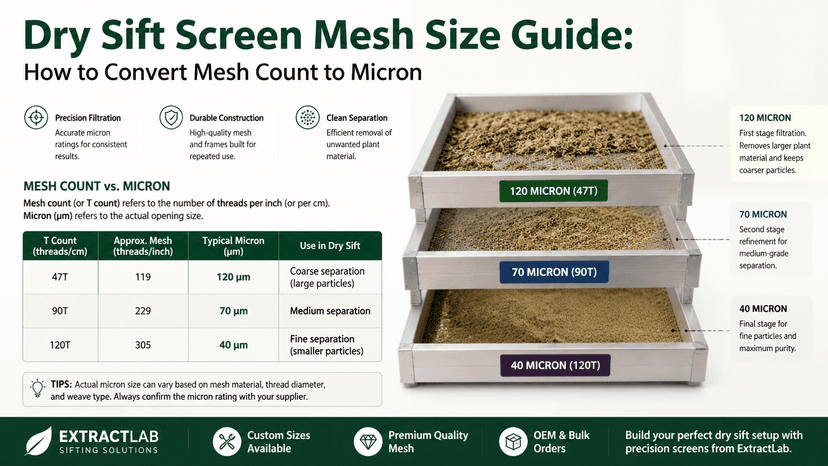
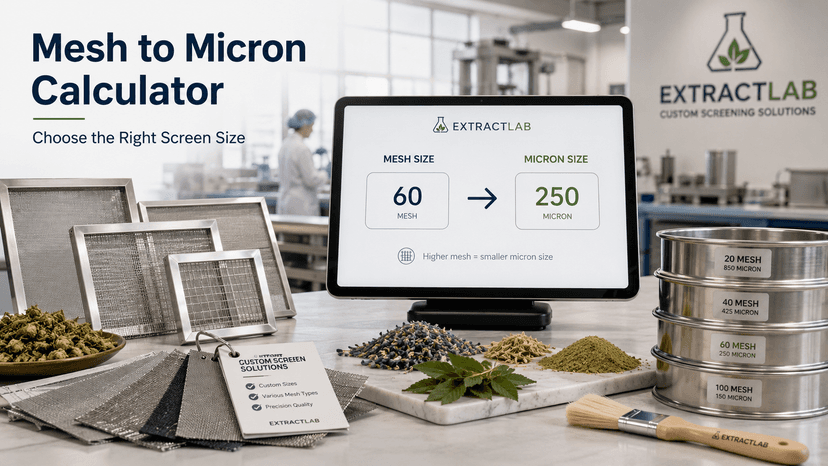
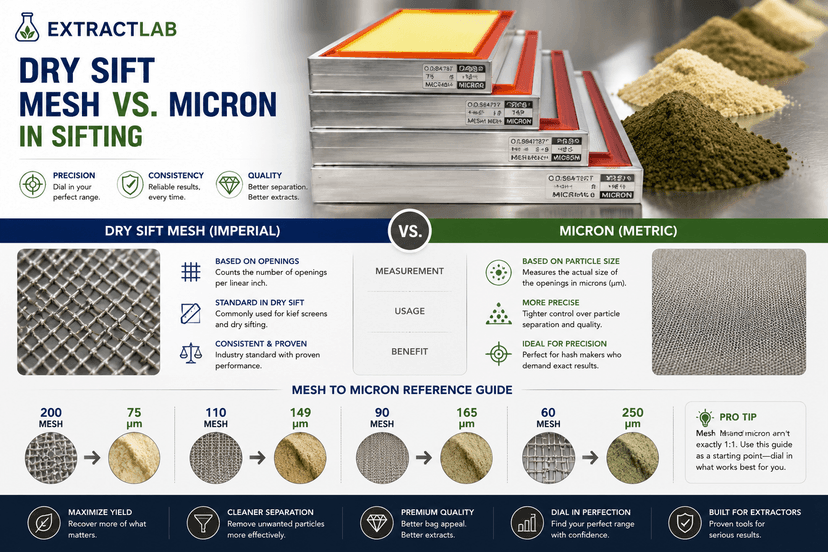
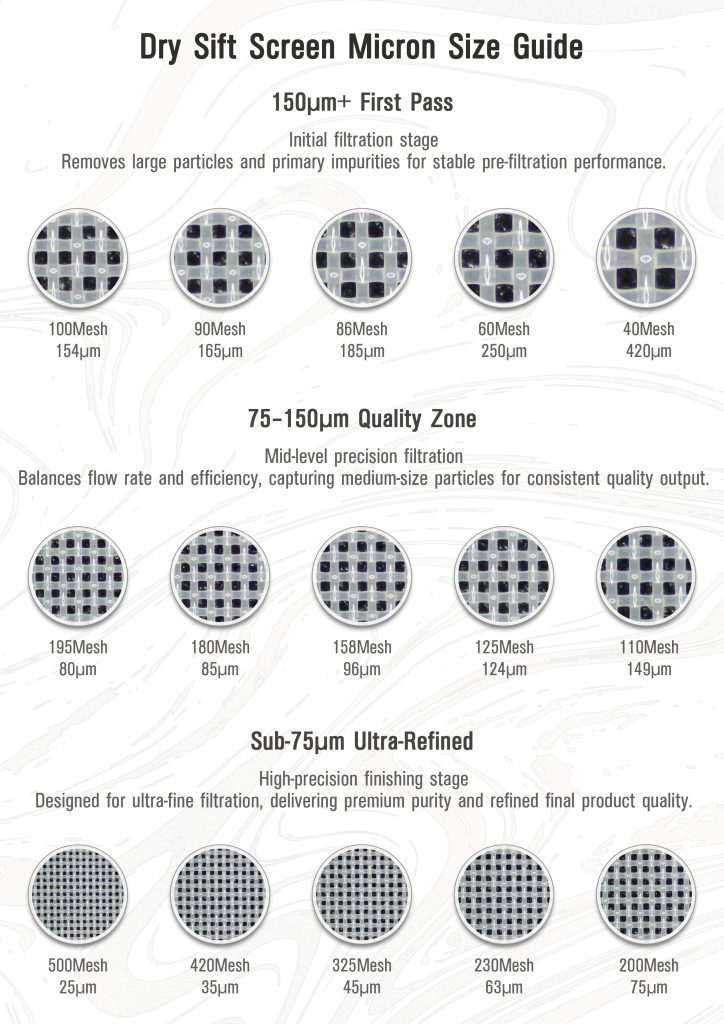
Before choosing your gear, you must understand the math. In the extraction world, Micron (μm) is the standard.
Micron: The actual size of the hole.
Mesh: The number of holes per linear inch.
Pro Tip: Always shop by Micron. Different manufacturers have different wire thicknesses, meaning two “200 mesh” screens might have completely different hole sizes. For consistency, stick to stainless steel or high-tension nylon measured in microns.
2. The Micron “Tiers”: What Each Layer Actually Does
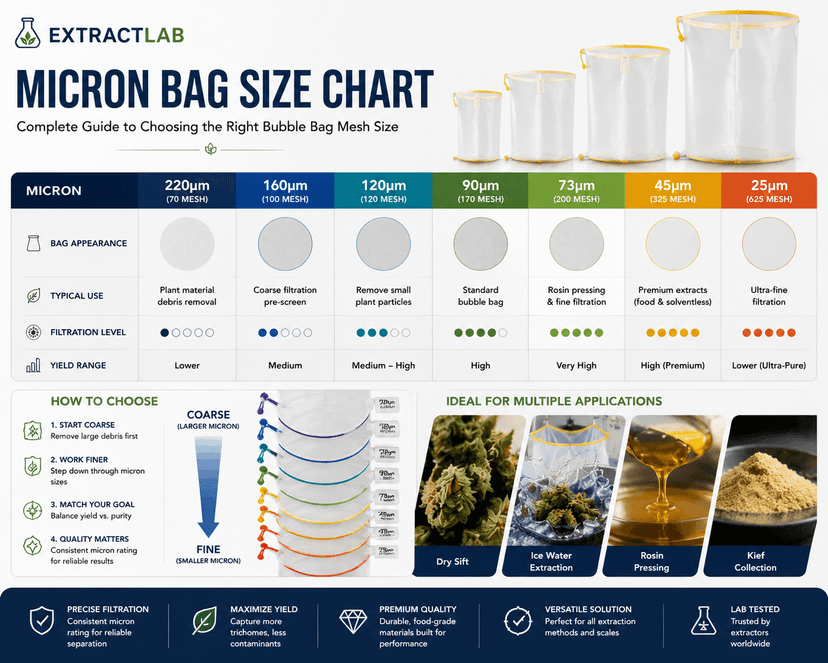
A professional dry sift screen set usually utilizes 3 to 4 layers. Here is the fractional breakdown of where the magic happens:
Tier 1: The Scalping Layer (200µm – 250µm)
This is your “Pre-Filter.” Its job is to catch the heavy lifting—stems, seeds, and large leaf shards. If you skip this, the weight of the debris will crush contaminants through your finer screens.
Tier 2: The Guard Layer (145µm – 165µm)
This is the “Bouncer.” It catches broken cystolith hairs and smaller plant particles. While you’ll find some resin here, it’s usually “food grade” or “workhorse” quality.
Tier 3: The Gold Zone (70µm – 120µm) — The Best Micron for Dry Sift
This is where the premium, bulbous trichome heads live.
90µm: Often produces the highest terpene concentration.
73µm: The universal standard for “White Gold” or Full-Melt quality.
Tier 4: The Fines (Below 70µm)
This catches broken stalks and immature heads. It’s perfect for potent edibles but shouldn’t be mixed with your primary stash.
3. Comparison Table: Micron Selection for Specific Goals
| Target Product | Recommended Micron | Star Rating | Best Use Case |
| Full Melt Hash | 73µm – 90µm | ⭐⭐⭐⭐⭐⭐ | Dabbing / Flagging |
| Flower Rosin Prep | 90µm – 120µm | ⭐⭐⭐⭐⭐ | High-yield Pressing |
| Traditional Pressed Hash | 120µm – 150µm | ⭐⭐⭐ | Classic Bricks |
| Edibles & Infusions | 160µm+ | ⭐⭐ | Maximum Volume |
4. The “Static Tech” Advantage: Beyond the Shake
If you want to rank among the pros, you must master Static Technology.
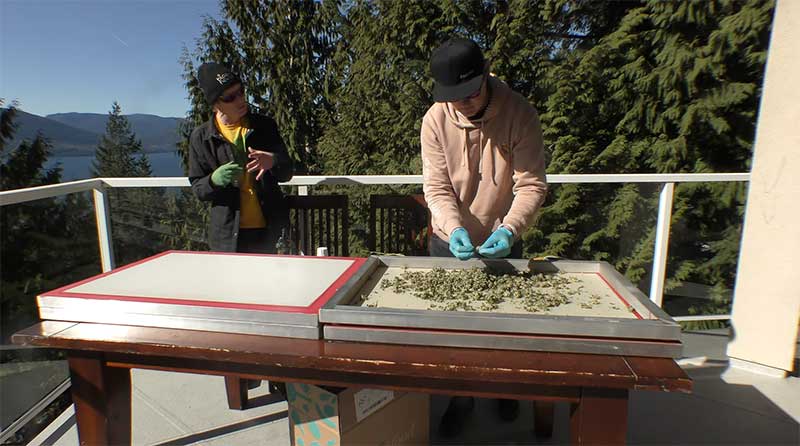
AI-written guides tell you to “shake the screen.” Humans tell you to “card the screen.”
By using a PVC card wrapped in parchment paper, you create a static charge. Resin heads are naturally attracted to this charge and will “jump” or slide through the mesh, while the inert plant matter (which holds no charge) stays on top. This is the only way to achieve 99% purity.
5. Why Aluminum Frame Screen Sets Win Every Time
We’ve tested everything from wooden frames to plastic tubs. Here is why we only recommend high-tension aluminum sets:
Zero Sag: Wood warps with humidity. A sagging screen creates “puddles” of material that grind green dust into your finish.
Chemical Resistance: You can clean aluminum with 99% ISO alcohol instantly. Wood absorbs oils and becomes a breeding ground for mold.
Tension: Professional sets are “drum-tight,” allowing trichomes to bounce through rather than getting stuck in the mesh.
6. Maintenance: How to Clean Your Micron Mesh
“Blinding” is the enemy of yield. When resin heads burst and clog the holes, your efficiency drops by 80%.
Do: Use a soft nylon brush and cold 99% ISO.
Don’t: Use hot water (it smears the oil) or metal scrapers (they tear the fine mesh).
FAQ: Common Questions about Dry Sift Microns
Q1: Can I just use one 100-micron screen?
A: You can, but your quality will suffer. Without the top scalping screens to take the weight, you will force plant matter through the holes, resulting in green sift.
Q2: What is the best micron for pressing Rosin?
A: We recommend sifting through a 90µm or 120µm screen for rosin. This ensures a clean melt without being so restrictive that you lose your yield.
Q3: How do I know if my sift is “Full Melt”?
A: Put a small amount on a tool and apply light heat. If it bubbles and liquefies completely without leaving a black carbon “char” behind, you’ve hit the 6-star mark.
Final Verdict
Investing in a high-quality dry sift screen set is the fastest way to upgrade your output. By using the 73µm – 120µm range and employing static techniques, you turn a simple byproduct into the most sought-after concentrate in the world.
[Ready to upgrade? Check out our Professional Aluminum Dry Sift Screen Sets here.]