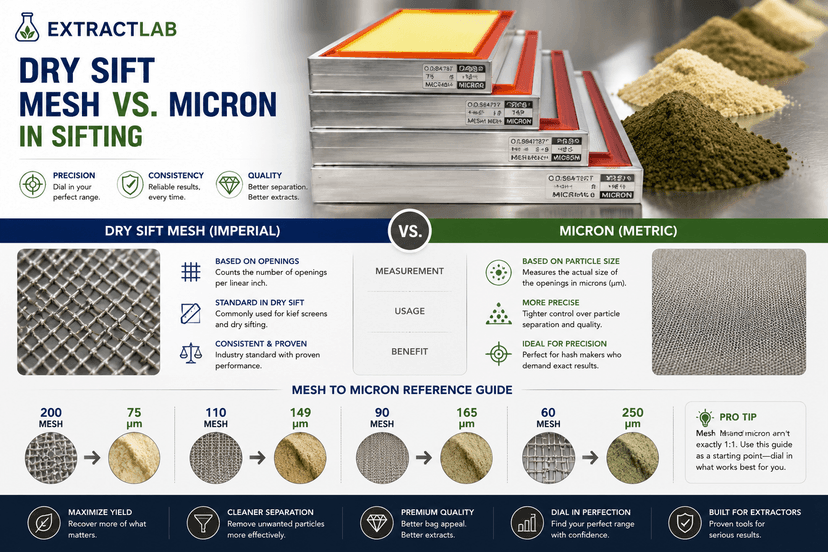
Understanding Micron Bag Size Charts for Better Filtration Results
When selecting a bubble bag filtration system, one of the most important factors is understanding the micron bag size chart. Different micron ratings determine how particles are separated, collected, and filtered during the extraction process. Choosing the correct micron size can significantly improve filtration efficiency, product consistency, and overall process performance.
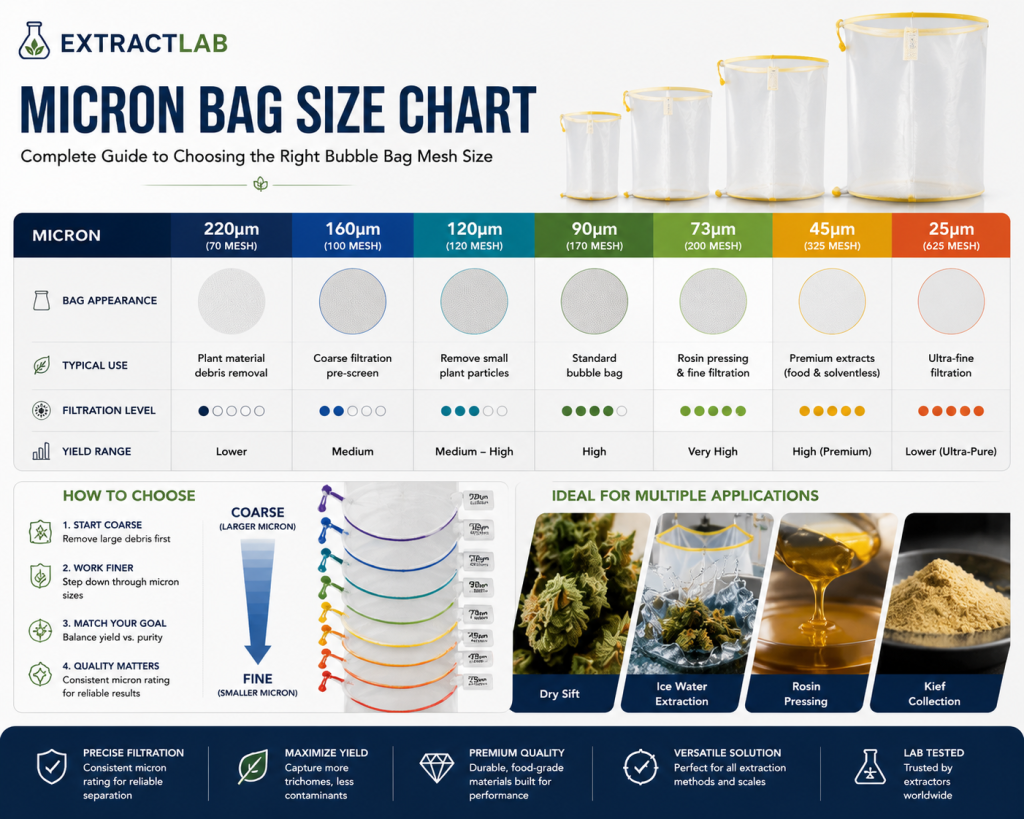
Whether you’re purchasing a complete bubble bag kit, replacing individual filter bags, or designing a custom filtration setup, understanding micron sizes is essential for achieving reliable results.
As a professional manufacturer and supplier, ExtractLab specializes in producing high-quality custom bubble bags with precise mesh specifications, durable materials, and OEM customization options for distributors, brands, and industrial users worldwide.
What Is a Micron in Bubble Bag Filtration?
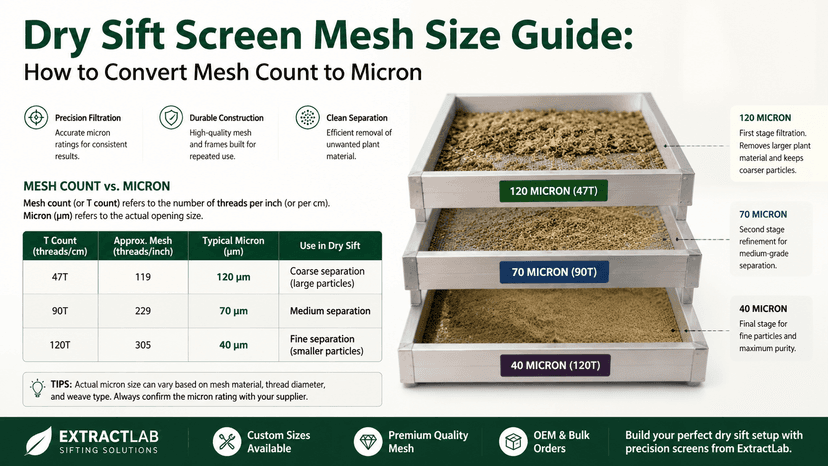
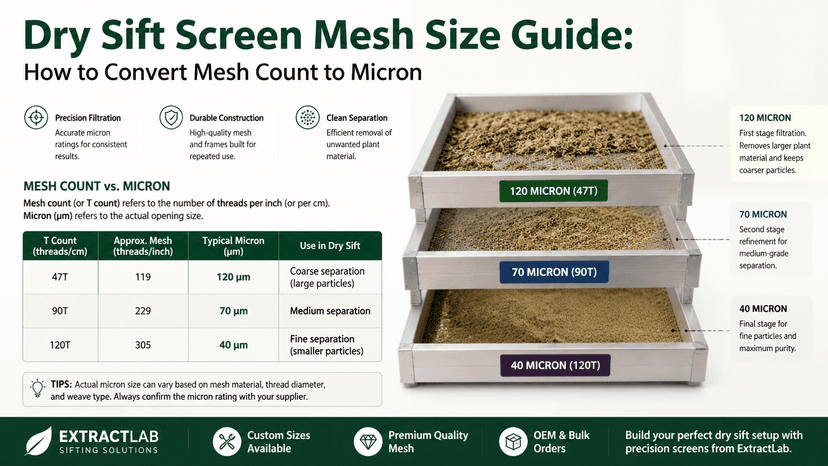
A micron (μm) is a unit of measurement equal to one-millionth of a meter. In bubble bag filtration systems, the micron rating refers to the size of the mesh openings that allow particles of certain sizes to pass through while retaining larger materials.
The smaller the micron number:
- The finer the filtration
- The smaller the particles retained
- The slower the flow rate
The larger the micron number:
- The faster the drainage
- The larger the particles filtered
- The higher the throughput
Understanding these differences helps users optimize separation efficiency and achieve more consistent filtration results.
Standard Micron Bag Size Chart
The following micron bag size chart represents the most commonly used bubble bag filtration sizes available on the market.
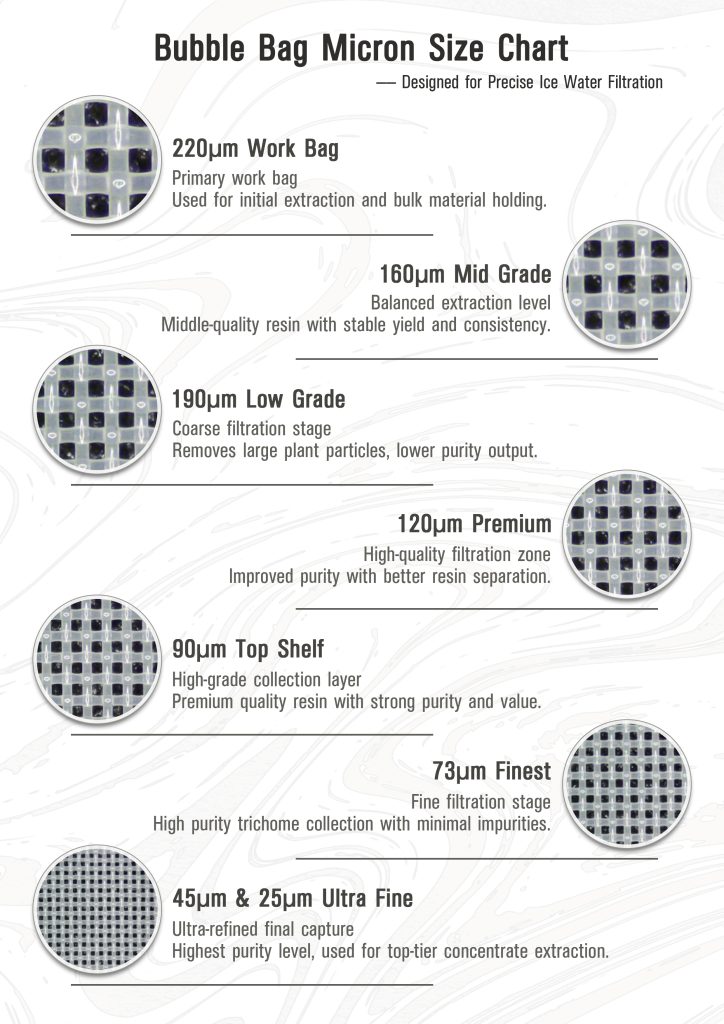
| Micron Size | Mesh Opening Size | Typical Function |
|---|---|---|
| 220 Micron | Extra Coarse | Initial filtration, removes large contaminants |
| 190 Micron | Coarse | Pre-filtering large particles |
| 160 Micron | Medium-Coarse | Intermediate separation |
| 120 Micron | Medium | General filtration stage |
| 90 Micron | Medium-Fine | Fine particle collection |
| 73 Micron | Fine | Precision separation |
| 45 Micron | Very Fine | Captures smaller particles |
| 25 Micron | Ultra Fine | Finest filtration stage |
Many commercial bubble bag kits use combinations of these sizes to create a multi-stage filtration process.
Why Micron Size Matters
Selecting the wrong micron size can lead to several problems:
Reduced Filtration Efficiency
If the mesh opening is too large, unwanted particles may pass through the filter.
Lower Product Quality
Improper separation can result in inconsistent filtration performance and reduced purity.
Slower Workflow
Using excessively fine bags in early filtration stages may cause clogging and reduce throughput.
Increased Operating Costs
Incorrect bag selection often leads to more frequent cleaning, replacement, or process adjustments.
For optimal results, many professionals use multiple micron sizes in sequence rather than relying on a single filter bag.
Common Bubble Bag Configurations
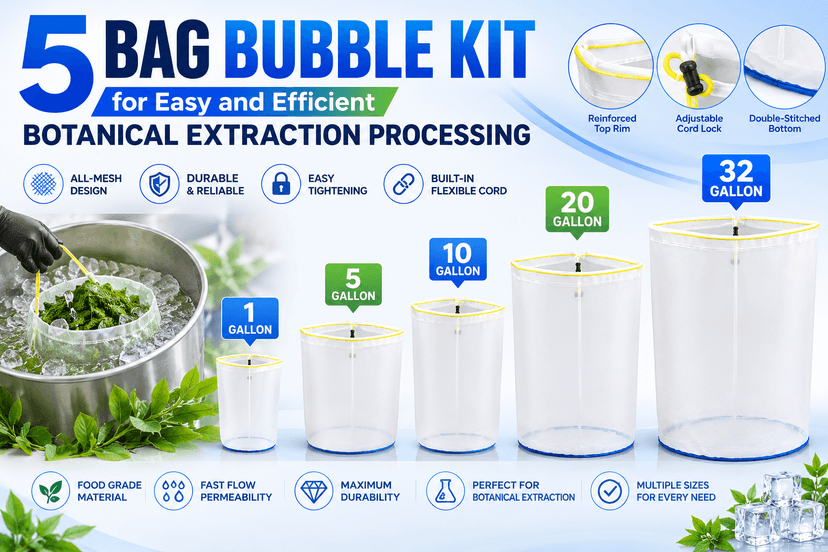
5-Bag Filtration System
A 5-bag setup is one of the most popular configurations due to its balance between efficiency and affordability.
Typical micron sizes include:
- 220μm
- 160μm
- 120μm
- 73μm
- 25μm
Benefits:
- Easy to operate
- Cost-effective
- Suitable for most filtration applications
- Faster setup and cleaning
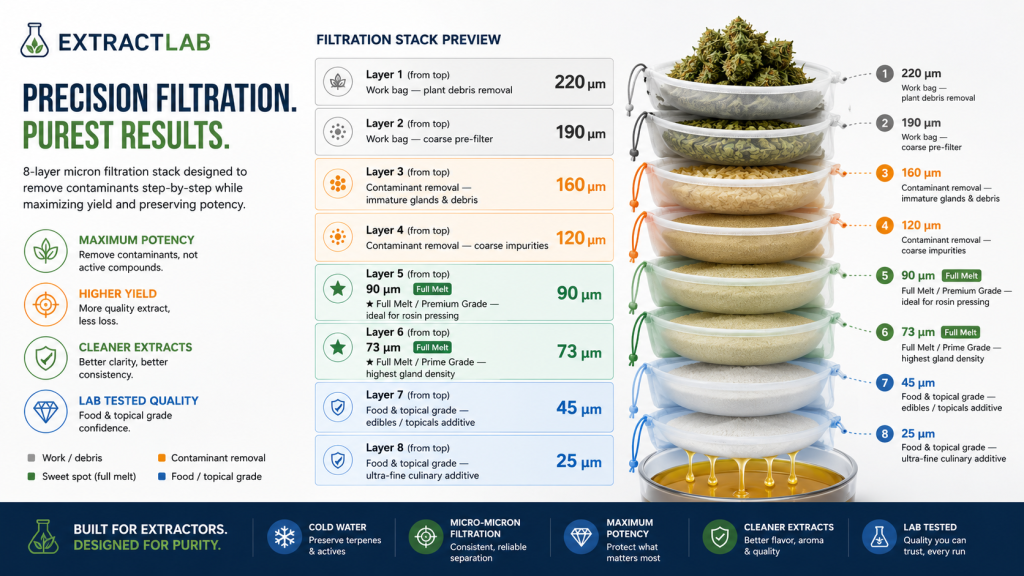
8-Bag Filtration System
For users seeking more precise particle separation, an 8-bag configuration offers greater control.
Typical micron sizes include:
- 220μm
- 190μm
- 160μm
- 120μm
- 90μm
- 73μm
- 45μm
- 25μm
Benefits:
- Improved separation accuracy
- Better consistency
- Enhanced filtration flexibility
- Greater process control
How to Read a Micron Bag Size Chart
When reviewing a micron bag size chart, keep the following principles in mind:
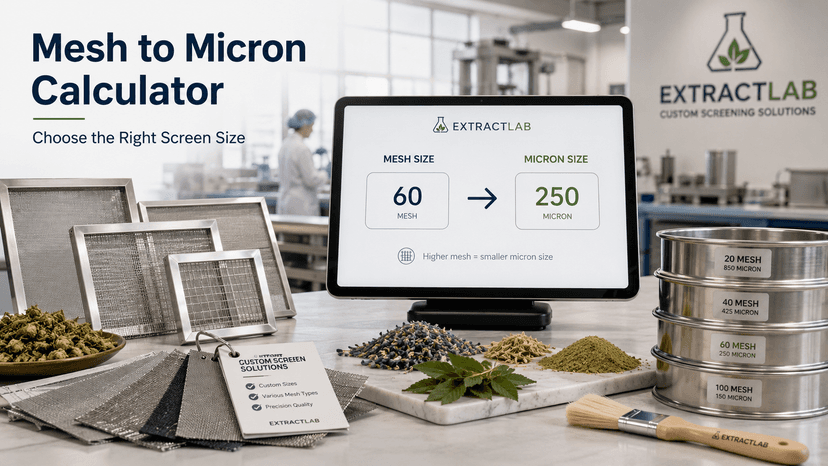
Larger Micron Numbers = Larger Openings
Examples:
- 220μm
- 190μm
- 160μm
These bags act as pre-filters and allow faster drainage.
Smaller Micron Numbers = Smaller Openings
Examples:
- 73μm
- 45μm
- 25μm
These bags provide finer filtration and retain smaller particles.
Filtration Progresses from Large to Small
A standard filtration sequence generally starts with the largest micron bag and moves progressively toward finer mesh sizes.
This staged approach improves filtration efficiency while reducing clogging.
Key Technical Parameters to Consider
While micron rating is important, several other technical specifications also influence filtration performance.
Mesh Material
Common materials include:
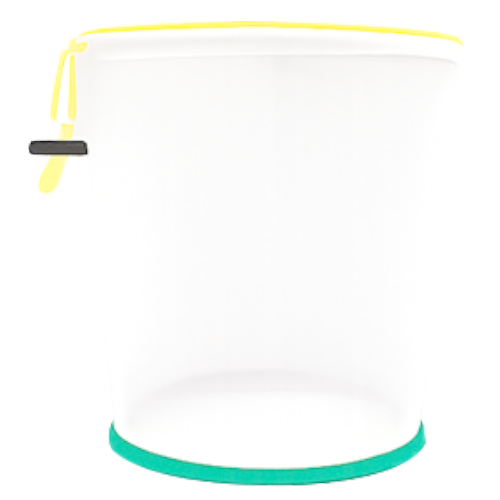
Nylon Mesh
Advantages:
- Excellent tensile strength
- High durability
- Precise mesh openings
- Long service life
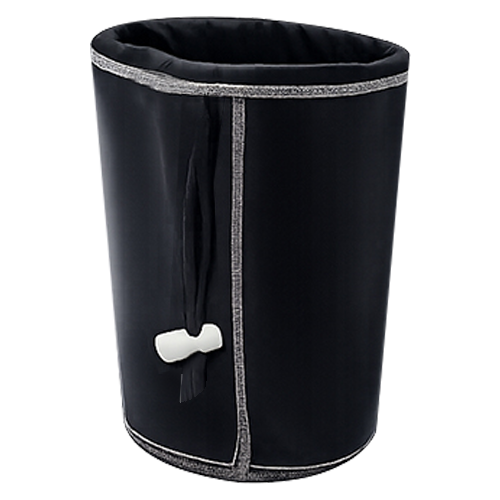
Nylon Canvas + Mesh
Advantages:
- Enhanced structural support
- Improved seam durability
- Better handling during operation
At ExtractLab, we offer both configurations depending on customer requirements.
Mesh Accuracy
High-quality bubble bags should maintain consistent mesh openings across the entire filtration surface.
Benefits include:
- Uniform filtration
- Reliable performance
- Reduced variability
Seam Construction
Professional manufacturing methods include:
- Double stitching
- Reinforced seams
- Industrial-grade thread
These features significantly improve product lifespan.
Material Safety
Premium filtration bags should feature:
- Food-grade materials
- Chemical-resistant fabrics
- Washable and reusable construction
Applications of Bubble Bags
Bubble bags are widely used in industries requiring precise particle separation and filtration.
Laboratory Filtration
Research facilities often require consistent filtration performance for sample preparation and material separation.
Botanical Processing
Bubble bags help achieve controlled particle size separation in botanical filtration workflows.
Industrial Separation
Manufacturers use multi-stage filtration systems to separate particles of varying sizes efficiently.
Educational and Research Institutions
Universities and testing facilities frequently use precision mesh bags for filtration experiments and material analysis.
Advantages of High-Quality Bubble Bags
Not all bubble bags are manufactured to the same standards. Premium products offer significant operational benefits.
Superior Filtration Accuracy
Consistent mesh openings provide predictable filtration results.
Increased Durability
High-strength nylon mesh withstands repeated use and cleaning cycles.
Better Flow Performance
Optimized mesh design balances filtration precision with efficient drainage.
Cost Savings
Reusable filtration bags reduce replacement frequency and lower operating costs.
Customization Flexibility
Professional manufacturers can tailor:
- Micron sizes
- Bag dimensions
- Handle designs
- Material specifications
- Branding and packaging
Why Choose ExtractLab as Your Bubble Bag Manufacturer?
ExtractLab is more than a supplier—we are a specialized manufacturer focused on high-performance filtration products.
OEM & ODM Services
We support:
- Private label production
- Custom logo printing
- Customized packaging
- Exclusive product designs
Precise Micron Control
Our manufacturing process ensures:
- Accurate mesh specifications
- Consistent filtration performance
- Strict quality control standards
Premium Materials
We use carefully selected:
- High-strength nylon mesh
- Reinforced stitching
- Industrial-grade fabrics
to maximize product reliability.
Global Supply Capability
ExtractLab supplies distributors, wholesalers, brands, laboratories, and industrial users across international markets.
Whether you require small-batch customization or large-volume production, our team can deliver flexible manufacturing solutions.
How to Select the Right Micron Bag Size
Before purchasing, consider the following factors:
Filtration Objective
Determine the particle size range you want to separate.
Number of Filtration Stages
More stages generally provide greater separation precision.
Flow Rate Requirements
Higher throughput applications may require larger micron sizes in early filtration stages.
Budget
A 5-bag system offers excellent value, while 8-bag systems provide more detailed separation capabilities.
Custom Requirements
If standard sizes do not meet your needs, custom micron configurations may be the best solution.
Conclusion
Understanding a micron bag size chart is essential when selecting the right bubble bag filtration system. The correct micron combination can improve filtration efficiency, increase consistency, and optimize workflow performance.
Whether you need a standard 5-bag kit, an advanced multi-stage filtration setup, or fully customized bubble bags, working with an experienced manufacturer ensures you receive reliable products tailored to your requirements.
Request a Quote from ExtractLab Today
Looking for a trusted bubble bag manufacturer and supplier?
ExtractLab provides premium-quality bubble bags with precise micron ratings, durable materials, OEM branding, and custom manufacturing services.
Contact our team today to discuss your project, request samples, or receive a competitive quotation for your next filtration solution.