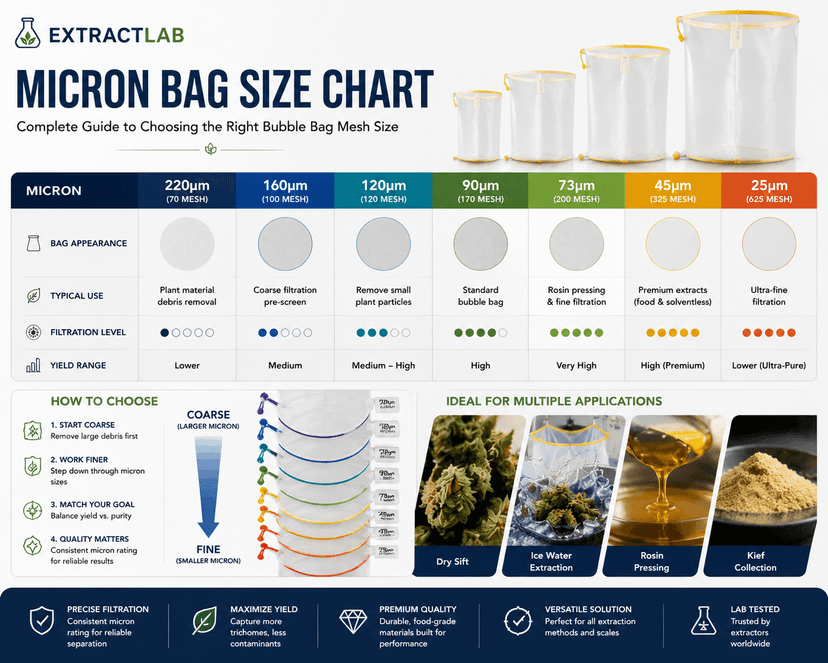
Choosing the correct micron configuration is essential for any filtration workflow using bubble bags. Micron size determines how particles are separated, which fractions are collected, and how clean the final material can be after washing, draining, and drying. For buyers and operators working with solventless extraction, the question is not only what size micron bags for bubble bags are available, but which combination delivers the right balance between yield, purity, workflow efficiency, and downstream processing value. A poorly matched micron setup can cause excessive plant contamination, slow drainage, difficult collection, and inconsistent results between batches.
The selection process becomes even more important when washed material will later be pressed into rosin. In that case, operators must understand the difference between wash filtration bags and rosin pressing bags. Micron bags for making bubble hash are used during ice water separation, while rosin bags for bubble hash are used later during heat and pressure extraction. Although both products are described by micron rating, they perform different technical functions. A complete workflow requires the correct micron bags for bubble hash during washing and the correct pressing bags when converting dried hash into rosin.
Understanding Micron Ratings in Bubble Bag Filtration
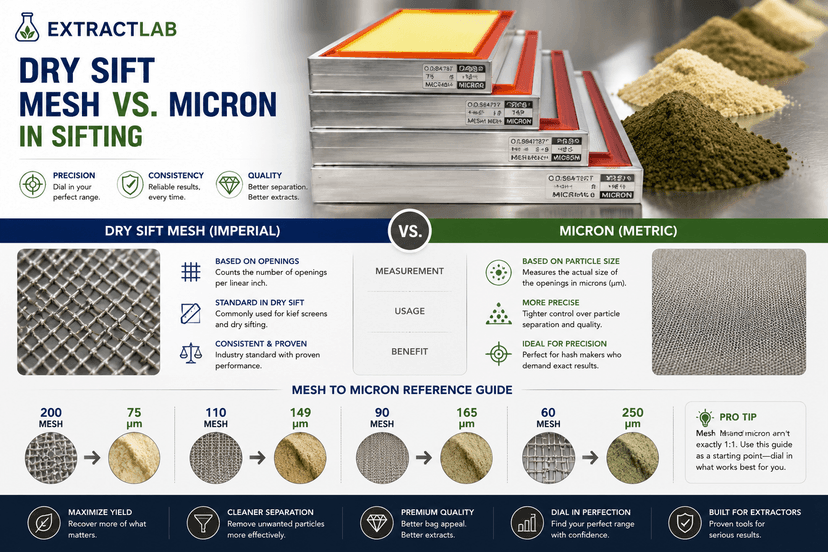
Micron rating refers to the size of the openings in the mesh material. A larger micron number means larger openings, while a smaller micron number means finer filtration. In a bubble bag system, different micron layers are used to separate plant material, resin particles, and finer sediment. This staged filtration process helps operators classify material more accurately instead of collecting all particles in a single screen.
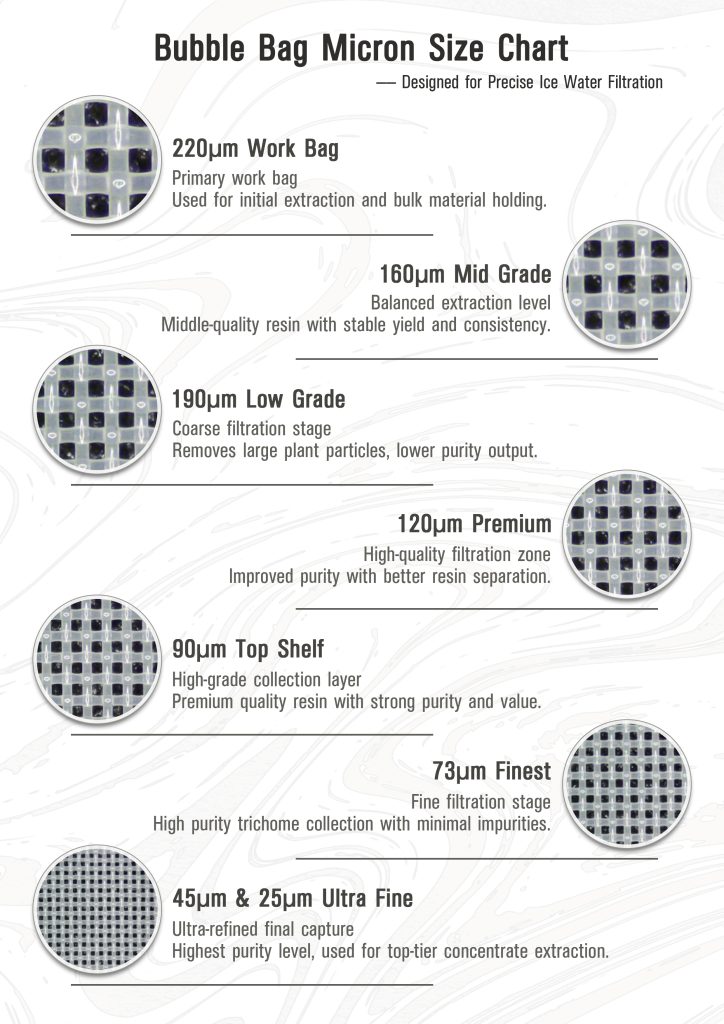
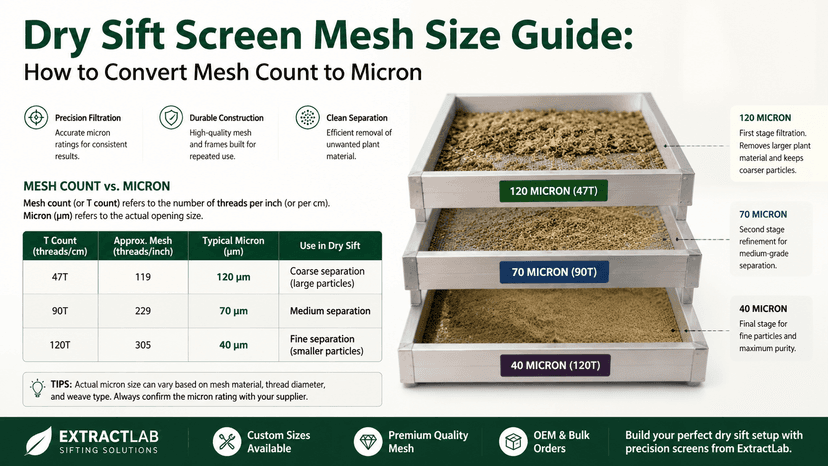
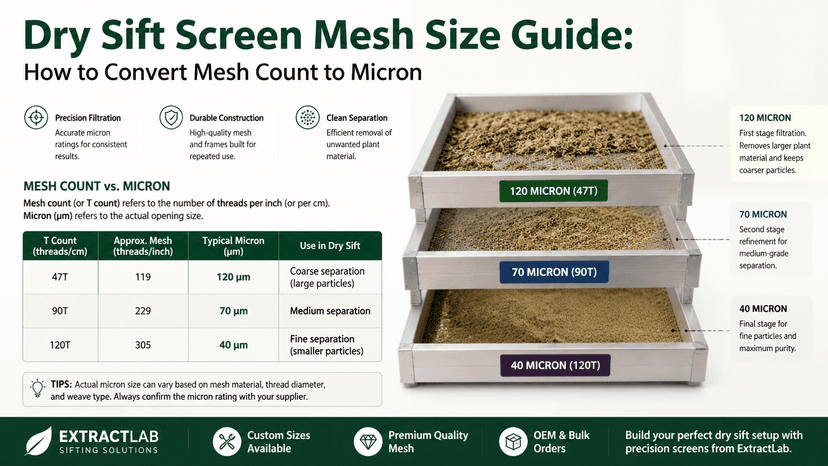
Common micron bags for making bubble hash include 220, 190, 160, 120, 90, 73, 45, and 25 micron bags. The 220 micron bag is often used as the work bag or primary coarse filter. It holds larger plant material while allowing resin-bearing water to pass through. The 190 and 160 micron bags may capture larger resin heads and some plant particles, depending on material condition and agitation intensity. Mid-range bags such as 120, 90, and 73 micron are often used for primary resin collection because they can capture desirable particle sizes with improved separation control.
Smaller bags such as 45 and 25 micron capture finer particles. These fractions may still have value, but they often require careful handling and drying because finer material can retain more moisture. When buyers ask what size micron bags for bubble bags should be used, they should first define the purpose of the process. A simple setup may prioritize speed, while a more detailed setup may prioritize resin grading and cleaner separation.
The quality of the mesh also matters. Accurate micron bags for bubble hash should maintain stable openings during washing, draining, and rinsing. If the mesh stretches or becomes distorted, the filtration performance can change even if the bag is labeled with a specific micron size. Food-grade material, reinforced seams, and smooth mesh surfaces contribute to long-term reliability and more consistent results.
What Size Micron Bags for Bubble Bags During Washing
For general washing workflows, a balanced micron set usually includes coarse, intermediate, and fine filtration layers. The coarse layers remove larger unwanted material first, while the mid-range and fine layers collect different resin fractions. This approach gives operators better control over product quality and makes it easier to evaluate which micron grades perform best with a specific material.
A basic setup may include 220, 160, 73, and 25 micron bags. This configuration provides coarse separation, one main collection range, and one fine collection layer. It is easier to operate and clean, making it suitable for beginners or users who want a simplified workflow. However, it offers less detail when separating different resin grades.
A more complete setup may include 220, 190, 160, 120, 90, 73, 45, and 25 micron bags. This larger configuration allows the operator to classify material more precisely. It can show whether the most desirable fraction is collecting in the 120, 90, 73, or 45 micron range. For professional workflows, this information is useful because different starting materials may produce different resin sizes.
When deciding what size micron bags for bubble bags are most suitable, operators should consider the starting material, batch volume, agitation method, and desired final product. Gentle washing can preserve cleaner resin fractions, while excessive agitation may create smaller plant particles that contaminate finer bags. Even the best bag set cannot fully compensate for poor process control. Micron selection must work together with temperature, wash time, and handling technique.
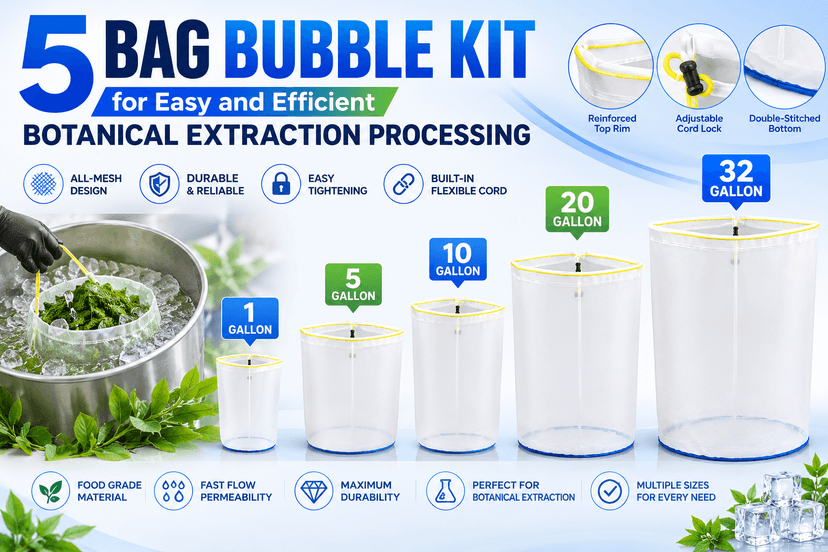
Micron bags for making bubble hash should also be selected according to capacity. A five-gallon set, a twenty-gallon set, and a thirty-two-gallon set may all include the same micron ratings, but their handling requirements are different. Larger systems place more stress on seams and mesh panels, so construction quality becomes more important as capacity increases.
What Micron Bags for Pressing Bubble Bags and Rosin Processing
After bubble hash has been washed, collected, and fully dried, it may be pressed into rosin. This stage uses a separate category of filtration bags. Operators searching what micron bags for pressing bubble bags are usually trying to identify the correct rosin bag size for dried hash. These bags are not used in the water washing stage. They are designed to hold hash under heat and pressure while allowing resin oil to flow through the mesh.
The question of what size micron bags for pressing bubble bags depends on hash quality, dryness, texture, and pressing method. Common rosin bag micron sizes for bubble hash include 15, 25, 37, and 45 micron. These sizes are much finer than many wash bags because the goal is to contain small hash particles during pressing. If the bag is too coarse, unwanted particulate may pass into the rosin. If the bag is too fine, oil flow may be restricted, which can reduce efficiency or increase pressure on the seams.
For many operators, 25 micron and 37 micron bags are practical starting points for pressing dried bubble hash. A 25 micron bag provides tighter containment and is often used for cleaner, finer material. A 37 micron bag may allow better flow while still offering controlled filtration. A 15 micron bag may be selected for very clean material when maximum particle retention is desired, though it requires careful pressure management. A 45 micron bag may support faster flow but may not be suitable for every grade of hash.
This is why buyers asking what size rosin bags for bubble hash should choose must evaluate the material before pressing. High-quality, fully dried hash can often be pressed through finer bags with good results. Mixed-grade or less refined hash may need a different micron choice to balance flow and containment. Rosin bags for bubble hash should always be matched to the material rather than selected only by habit.
Choosing the Best Rosin Bags for Bubble Hash
The best rosin bags for bubble hash are defined by more than micron rating. They must withstand heat, pressure, and mechanical stress during pressing. Strong seams, consistent mesh, and proper bag dimensions all influence performance. A weak rosin bag can rupture during pressing, causing contamination, material loss, and unnecessary cleanup. In production environments, this type of failure reduces cost efficiency and interrupts workflow.
The best bags for pressing bubble hash should also match the platen size and loading style of the press. Overfilled bags can create uneven pressure and increase the chance of blowouts. Underfilled bags may reduce efficiency because the material does not spread evenly under compression. Proper loading, pre-shaping, and gradual pressure application help the bag perform as intended.
When comparing rosin bags for bubble hash, buyers should look for consistent mesh structure and food-safe materials. The bag should maintain its shape during heating and compression. The micron rating should be reliable across the full surface, not just stated on the product label. Consistency is especially important when pressing multiple batches because small differences in bag performance can affect color, clarity, flow, and yield.
For users who want the best bags for pressing bubble hash, it is useful to keep several micron options available. A 25 micron bag may be ideal for one grade of hash, while a 37 micron bag may perform better with another. Testing small amounts first allows operators to identify the best combination before committing larger quantities. This reduces waste and helps build a repeatable pressing standard.
Building a Complete Micron Strategy
A complete micron strategy separates the washing stage from the pressing stage. During washing, micron bags for bubble hash are used to classify material in water. During pressing, rosin bags for bubble hash are used to contain dried material under heat and pressure. Although both are described by micron size, they are engineered for different conditions and should not be used interchangeably.
For washing, operators should choose micron bags for making bubble hash that provide enough separation for their desired quality level. A smaller set may be suitable for simple processing, while a full multi-bag set provides more grading control. The best choice depends on whether the user values speed, separation detail, or product classification. Accurate mesh and durable construction are important in every setup.
For pressing, operators should focus on what size rosin bags for bubble hash match the collected material. In most cases, 15 to 45 micron rosin bags are the practical range, with 25 and 37 micron options often used as balanced choices. The final decision should consider hash quality, moisture level, press temperature, pressure application, and desired oil clarity.
Choosing what micron bags to use for bubble bags requires a clear understanding of the full workflow. Coarse and mid-range wash bags support clean resin separation, while fine rosin bags support controlled pressing after drying. By selecting reliable micron bags for bubble hash, using suitable micron bags for making bubble hash, and pairing the material with the best rosin bags for bubble hash during pressing, operators can improve consistency, reduce waste, and build a more dependable solventless processing system.