Micro-Micron Cold Water Filtration and the Science of Preserving Plant Compounds
In modern botanical processing and refinement industries, Micro-micron Filtration has become one of the most important technologies for separating and preserving valuable plant compounds. Whether the focus is essential oils, aromatic extracts, or resin-based concentrates, the ability to control Particle Size Separation directly influences final quality.
Unlike conventional extraction methods that rely on heat or harsh mechanical processing, cold water micron filtration operates at low temperatures and uses layered mesh screens to separate materials gradually. This controlled environment helps protect sensitive compounds responsible for aroma, flavor, and chemical integrity.
This aligns closely with why Micro-micron Filtration is increasingly considered the most effective method for maintaining Flavours & Terpenes Preservation in plant-based extraction workflows.
Understanding Micro-Micron Filtration in Cold Water Systems
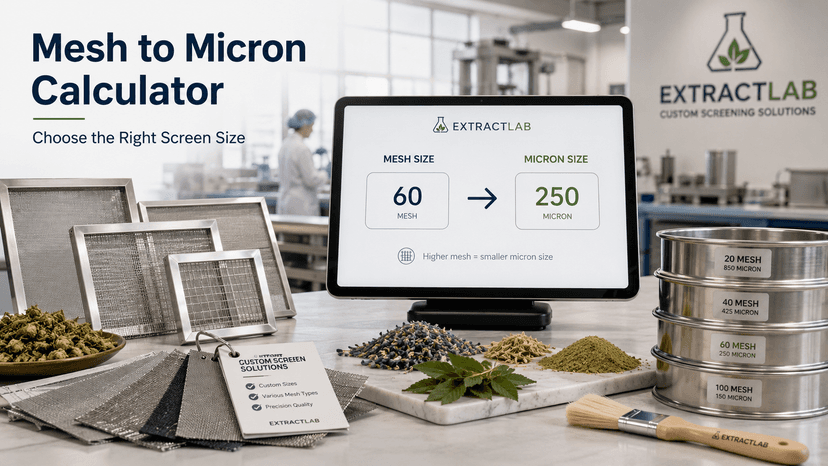
At its core, Micro-micron Filtration is a staged separation process using progressively smaller mesh sizes measured in microns (µm). A micron is one-millionth of a meter, and each filter layer allows only particles smaller than its opening to pass through.
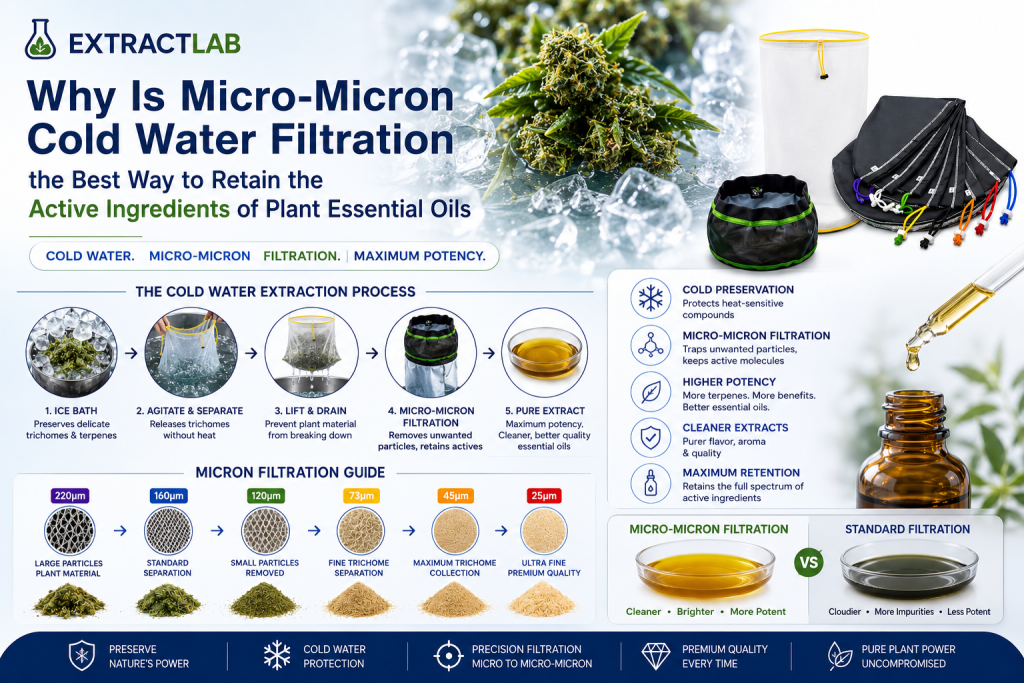
In cold water extraction systems, this principle is applied using stacked filtration bags or screens. As plant material is agitated in cold water, trichome structures or resin-bearing particles detach and move through a controlled filtration sequence.
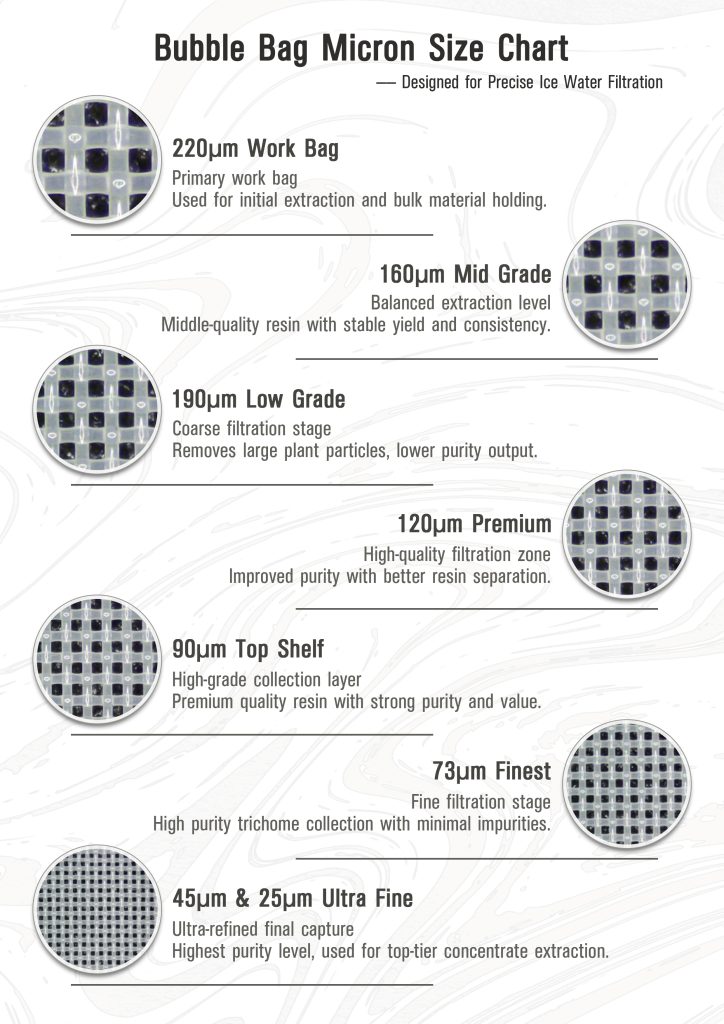
A typical system may include:
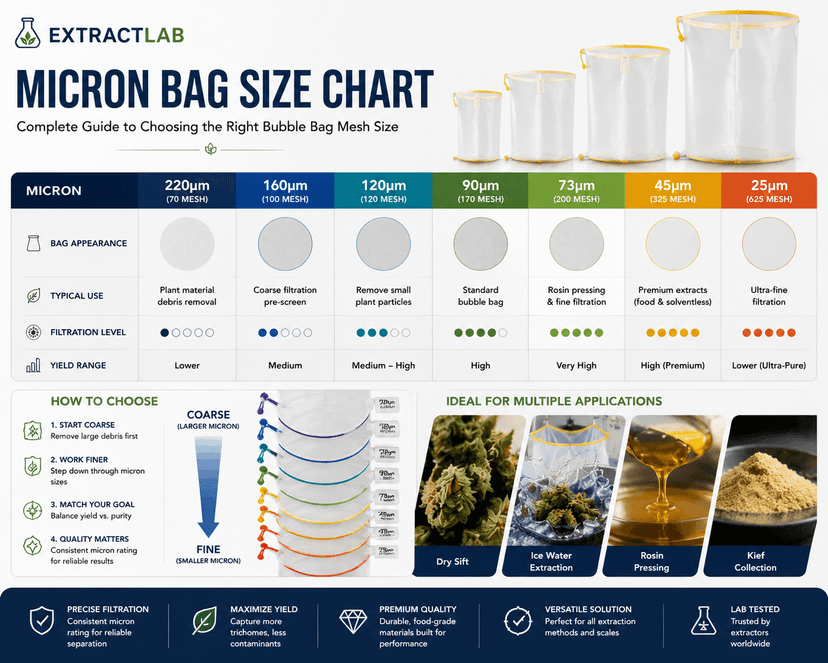
- 220 µm (coarse filtration)
- 160 µm (initial separation)
- 120 µm (medium filtration)
- 90 µm (refined separation)
- 73 µm (high-quality collection zone)
- 45 µm (fine filtration)
- 25 µm (ultra-fine separation)
Each stage performs a specific role in Particle Size Separation, ensuring that only materials of a defined size range pass through each layer.
This structured separation is what makes Micro-micron Filtration significantly more effective than single-stage filtering systems.
Why Particle Size Separation Matters for Plant Active Compounds
The concept of Particle Size Separation is not only mechanical—it directly impacts chemical and aromatic preservation.
Plant essential oils and volatile compounds are highly sensitive to:
- Heat exposure
- Oxygen exposure
- Mechanical stress
- Extended processing time
When improper filtration methods are used, these compounds degrade quickly, resulting in reduced aroma intensity and lower functional value.
Cold water Micro-micron Filtration minimizes these risks by:
- Reducing thermal degradation
- Limiting mechanical damage
- Preserving natural compound structure
This is especially important in industries focused on botanical refinement, natural aromatics, and high-value extract production.
Flavours & Terpenes Preservation Through Cold Water Micron Systems
One of the most critical advantages of cold water filtration is its ability to maintain Flavours & Terpenes Preservation throughout the process.
Terpenes and aromatic compounds are volatile by nature. When exposed to heat or aggressive processing conditions, they evaporate or degrade rapidly. This is why traditional high-temperature extraction methods often result in reduced aromatic complexity.
Cold water Micro-micron Filtration solves this problem by:
- Operating at low temperatures
- Minimizing oxidation
- Reducing friction-based degradation
- Allowing natural compound separation without heat stress
As a result, the final output retains a more complete aromatic profile, making it highly valuable for premium applications.
Multi-Layer Micron Systems and Precision Engineering
A major advantage of modern filtration technology is the use of multi-layer micron systems. Instead of relying on a single filter, operators use multiple mesh levels to gradually refine material.
This is where system design becomes critical.
For example, laboratory and industrial users often rely on structured filtration stacks such as:
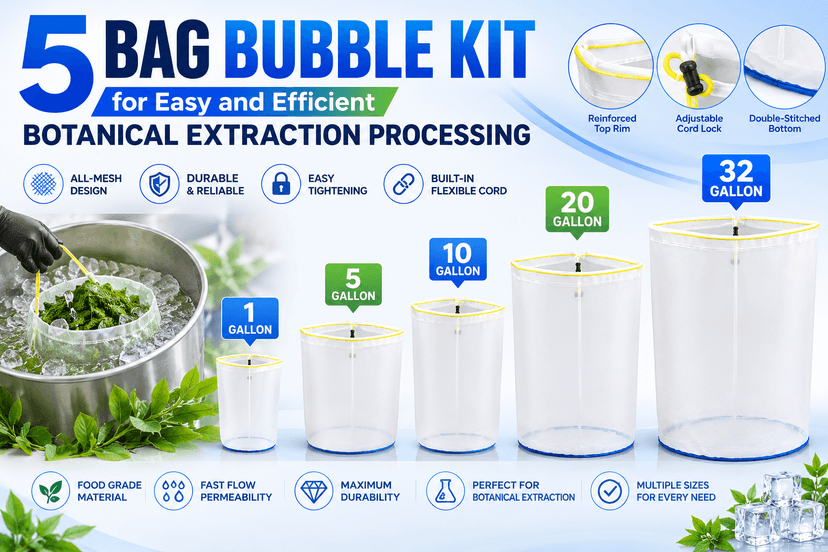
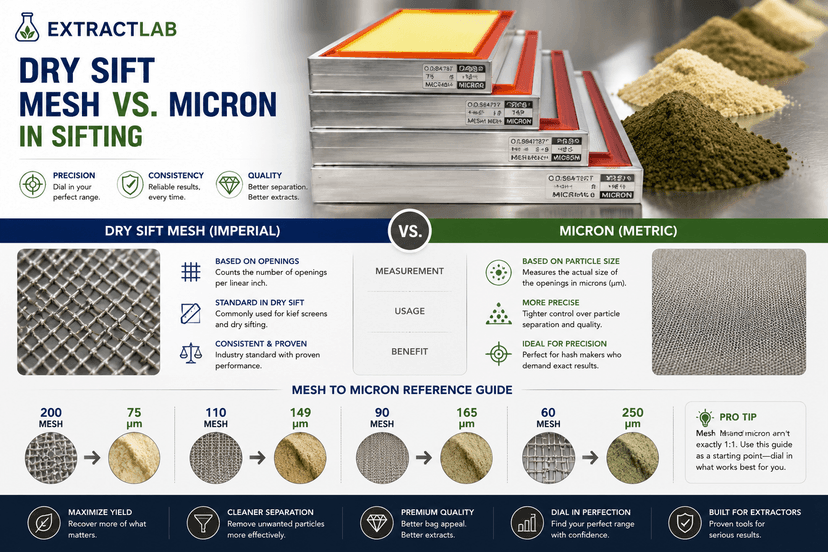
- 32 gallon Bubble Bags for large-scale cold water separation
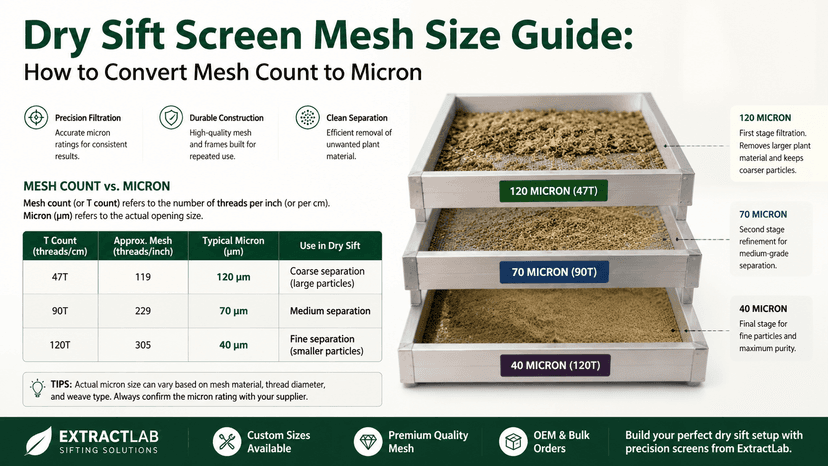
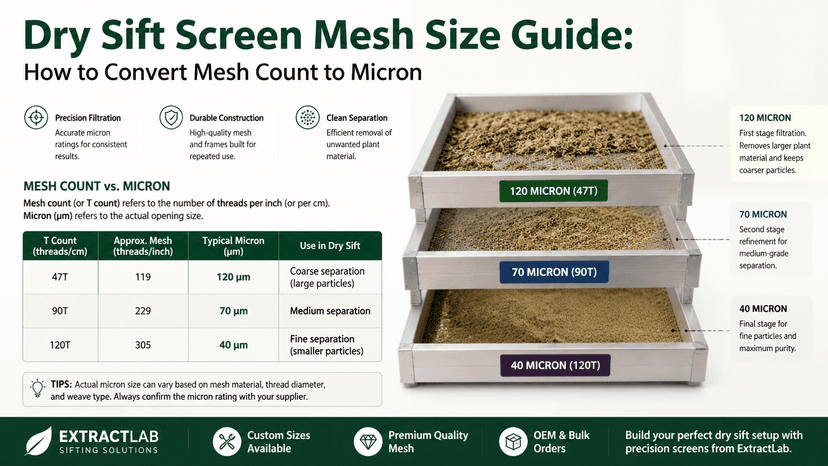
- Dry Sift Screen systems for complementary dry refinement workflows
These systems typically range from 25 µm to 220 µm, enabling highly controlled Particle Size Separation across multiple stages.
Why multi-layer systems matter:
- They improve consistency across batches
- They allow better classification of particle grades
- They reduce contamination between size fractions
- They enhance overall extraction efficiency
In high-end production environments, multi-layer Micro-micron Filtration is considered essential rather than optional.
Technical Parameters of Cold Water Micron Filtration Systems
From an engineering standpoint, Micro-micron Filtration systems are defined by several key parameters:
1. Micron Range Configuration
A full professional system typically includes:
- 25 µm to 220 µm filtration spectrum
- 5–8 layered separation stages
- Balanced flow rates between layers
2. Mesh Material Quality
High-quality filtration systems use:
- Food-grade polyester or nylon mesh
- Reinforced stitching for structural stability
- Anti-deformation frame support
3. Structural Volume Capacity
Common industrial configurations include:
- 1 gallon systems (R&D / small batch)
- 5 gallon systems (standard production)
- 32 gallon systems (industrial-scale extraction)
4. Temperature Control Compatibility
Cold water systems operate optimally under:
- 0–5°C processing environment
- Stable ice-to-water ratio control
- Minimal thermal fluctuation during agitation
These parameters ensure consistent Particle Size Separation and stable output quality across different production scales.
Applications of Micro-Micron Filtration Technology
Micro-micron Filtration is widely used across multiple industries beyond essential oil processing.
Botanical Extraction Industry
Used for separating plant-based compounds while preserving aromatic integrity.
Aromatic Oil Refinement
Supports high-quality fragrance and terpene retention workflows.
Laboratory Research
Enables controlled particle classification and compound analysis.
Industrial Scale Production
Supports scalable separation processes using systems like 32 gallon Bubble Bags.
Dry and Hybrid Processing Systems
Often paired with Dry Sift Screen systems for multi-stage refinement strategies.
This versatility is one reason why Micro-micron Filtration has become a cornerstone technology in modern precision extraction industries.
Advantages of EXTRACTLAB Micro-Micron Filtration Systems
As a professional manufacturer and supplier, EXTRACTLAB focuses on delivering engineered filtration systems designed for scalability, durability, and precision.
Key advantages include:
- Factory-direct manufacturing control
- Customizable micron configurations
- Scalable system sizes from small to industrial scale
- Reinforced mesh durability for long-term use
- Optimization for Flavours & Terpenes Preservation
Unlike generic suppliers, EXTRACTLAB systems are designed with industrial workflow requirements in mind, ensuring consistency across repeated production cycles.
Why Industrial Buyers Choose Multi-Layer Filtration Systems
From a commercial standpoint, buyers prioritize three key outcomes:
1. Process Stability
Multi-layer systems reduce variability between batches.
2. Product Quality
Improved Particle Size Separation leads to cleaner, more refined output.
3. Operational Efficiency
Larger systems reduce processing cycles and labor costs.
This is why systems like 32 gallon Bubble Bags are commonly used in production environments where scalability and consistency are critical.
Precision Extraction Solutions for Modern Production
Modern extraction industries are shifting toward fully integrated precision extraction solutions that combine:
- Controlled temperature environments
- Multi-stage Micro-micron Filtration
- Standardized process engineering
- Scalable production systems
EXTRACTLAB positions itself as a manufacturer focused on delivering these integrated solutions rather than standalone tools.
By combining engineering-grade mesh systems with scalable bag configurations and customizable micron ranges, operators can build complete workflows optimized for efficiency and consistency.
Conclusion
Micro-micron cold water filtration represents one of the most effective and controlled methods for preserving sensitive plant compounds. By combining low-temperature processing with structured Particle Size Separation, it is possible to maintain higher levels of aroma, flavor, and chemical integrity.
This is why Micro-micron Filtration systems are widely adopted in professional botanical processing environments and why they are considered essential in modern precision extraction solutions.
Whether using compact laboratory setups or industrial-scale systems like 32 gallon Bubble Bags, the principle remains the same: controlled separation leads to better preservation.
Work with EXTRACTLAB for Industrial-Grade Filtration Systems
If you are looking to upgrade your production efficiency or develop a more reliable filtration workflow, EXTRACTLAB provides factory-direct manufacturing, custom micron configurations, and scalable system solutions.
Explore our full range of Micro-micron Filtration systems, Dry Sift Screen solutions, and industrial Bubble Bag configurations designed for professional use.
Contact EXTRACTLAB today to request technical specifications, customization options, or bulk supply pricing for your precision extraction workflow.