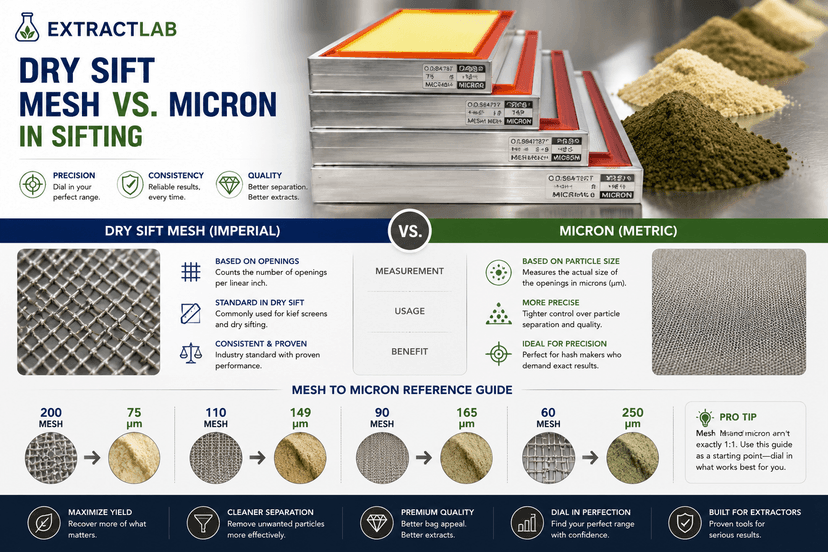
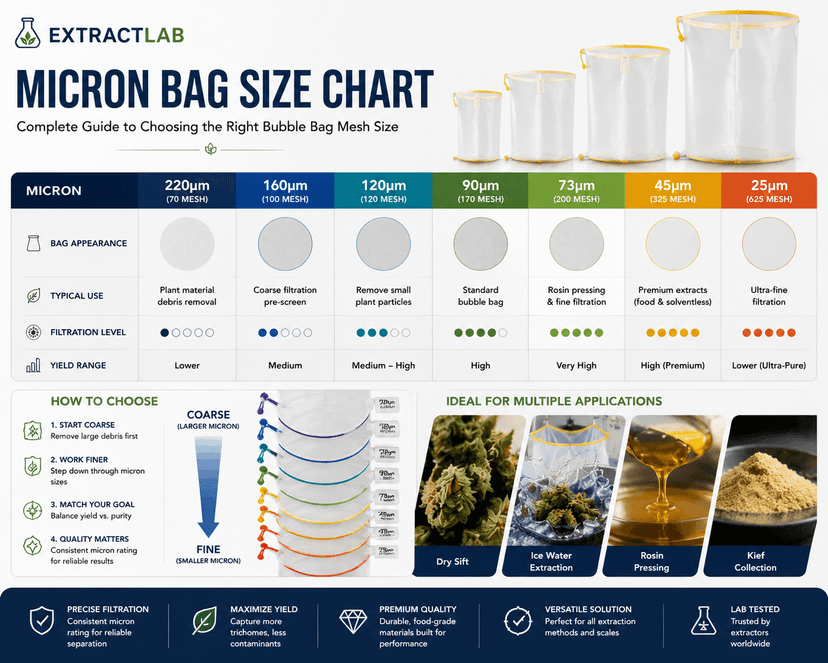
Choosing the correct micron configuration is one of the most important steps in solventless extraction. In bubble bag systems, micron size determines how material is separated, which fractions are collected, and how clean the final output will be. Whether working with small batches or large-scale setups, understanding what micron bags for bubble bags are needed helps operators build a more consistent and efficient workflow.
At the same time, micron selection is not only relevant for washing. It also plays a key role in post-processing stages such as pressing. When operators move from bubble hash production to rosin extraction, questions like what micron bags for pressing bubble bags and what size rosin bags for bubble hash become equally important. A complete system must therefore consider both washing filtration and pressing filtration as connected steps.
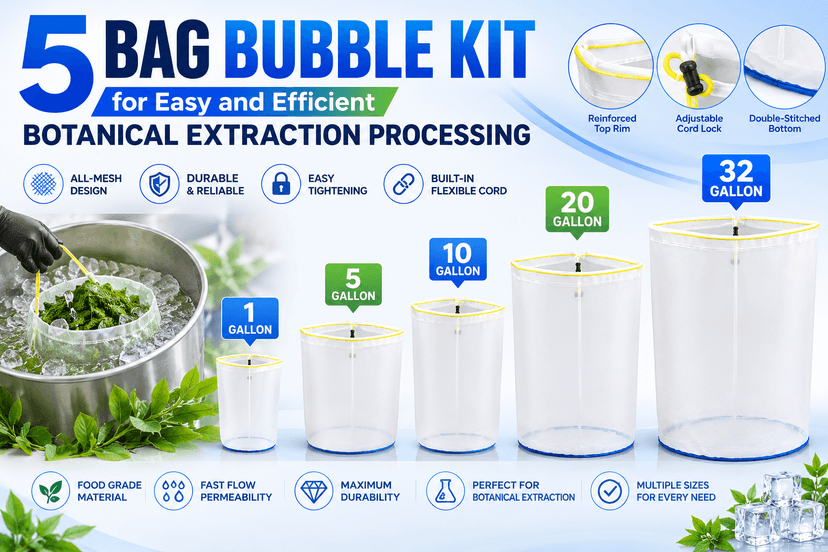
ExtractphytoLab offers a full range of All Mesh Bubble Bag systems designed for different capacities, including 1 gallon, 5 gallon, 10 gallon, 15 gallon, and 32 gallon formats. These systems are built to support scalable workflows across different production levels:
- 1 gallon all mesh bubble bag
- 5 gallon all mesh bubble bag
- 10 gallon all mesh bubble bag
- 15 gallon all mesh bubble bag
- 32 gallon all mesh bubble bag
These products allow users to match micron filtration strategy with batch size and processing needs.
Understanding Micron Bags for Bubble Hash
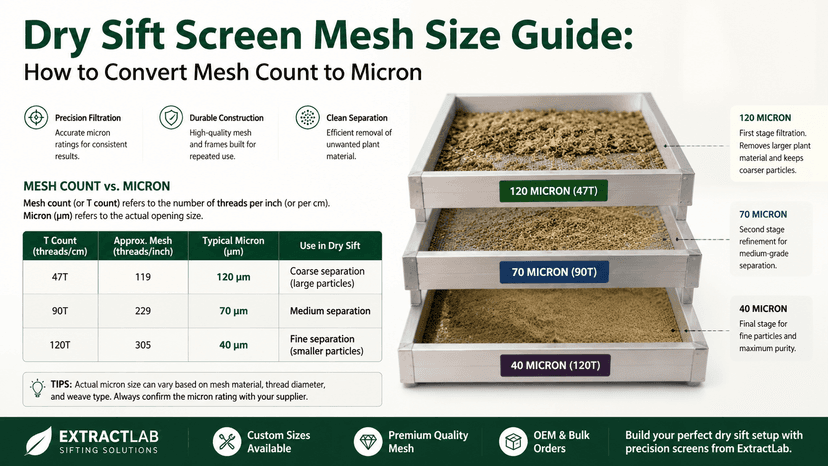
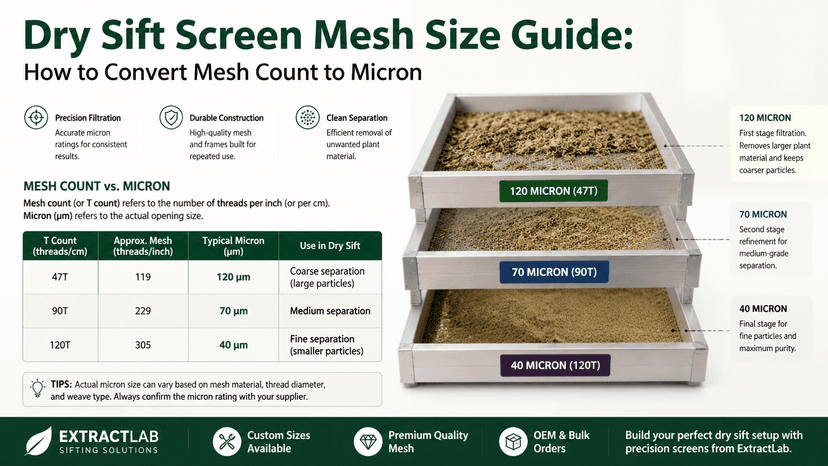
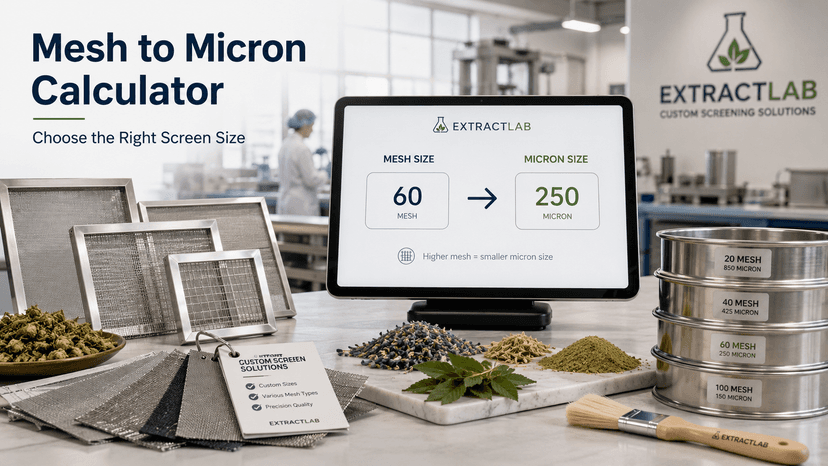
Micron bags for bubble hash are filtration tools that separate resin particles based on size using mesh openings measured in microns. Larger micron numbers represent larger mesh openings, while smaller micron numbers capture finer particles.
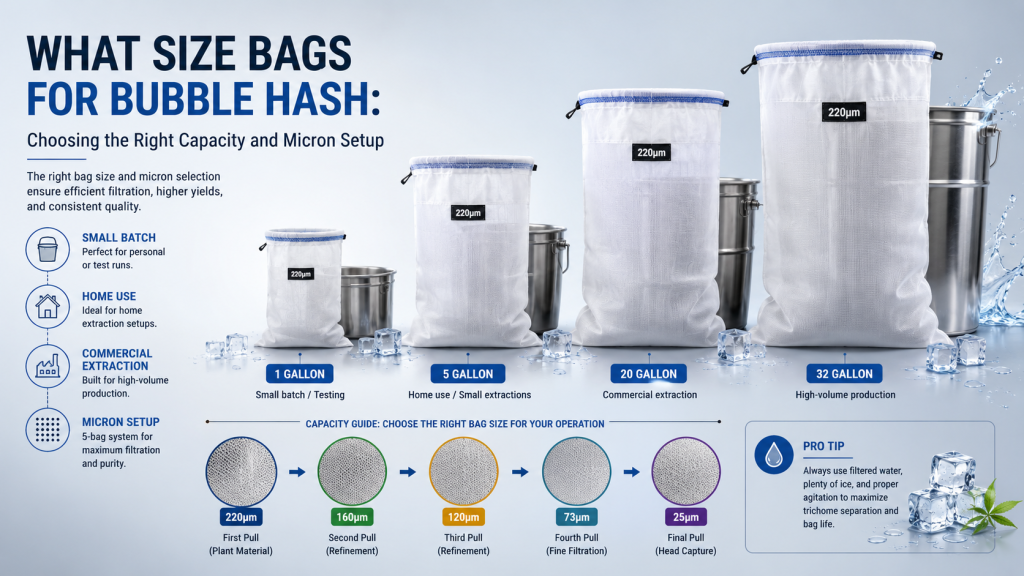
A typical bubble bag system uses multiple micron stages such as:
- Coarse filtration (removing plant material)
- Mid-range collection (primary resin fractions)
- Fine filtration (smaller resin particles and sediment)
When selecting micron bags for making bubble hash, operators should consider the quality of starting material, agitation method, and desired final grade. Different plants produce different resin sizes, meaning there is no universal micron setup that works for every batch.
For example, mid-range micron layers often capture the most usable resin, while finer layers provide additional grading control. Coarser layers mainly serve to protect downstream bags from contamination.
What Micron Bags for Bubble Bags Should You Use?
The question what size micron bags for bubble bags depends on whether the goal is speed, yield, or grading precision.
A simplified system may use fewer micron layers, focusing on basic separation. A more advanced system uses multiple micron stages to separate resin into narrower quality ranges. This improves classification but increases processing time.
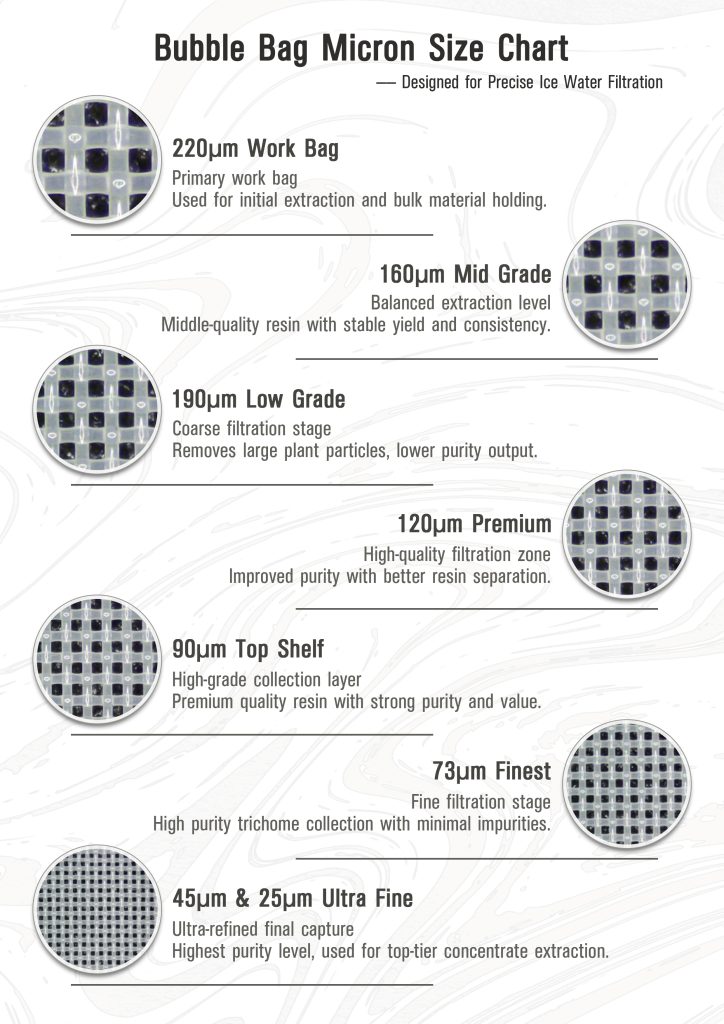
A typical micron range includes:
- 220μm (work bag / coarse filtration)
- 190μm – 160μm (large particle removal)
- 120μm – 90μm (mid-grade collection)
- 73μm (high-value resin range in many workflows)
- 45μm – 25μm (fine filtration)
The correct choice depends on whether the operator prioritizes yield efficiency or detailed separation control.
For deeper technical understanding of how micron size affects separation behavior, see: Why micron size matters in filtration the key to better separation and consistent results
Micron Strategy for Pressing Bubble Bags
Once bubble hash is collected and dried, it may be used for rosin extraction. At this stage, micron selection changes from water filtration to heat pressing filtration.
This is where operators begin asking:
- what micron bags for pressing bubble bags
- what size micron bags for pressing bubble bags
- rosin bags for bubble hash
- what size rosin bags for bubble hash
Unlike wash bags, pressing bags must withstand heat and pressure while containing fine material.
Common rosin bag micron ranges include:
- 15μm – 25μm (fine, high-clarity pressing)
- 37μm (balanced flow and retention)
- 45μm (faster flow, slightly less filtration)
Best rosin bags for bubble hash
The best rosin bags for bubble hash are those that balance:
- Particle retention (preventing blowouts)
- Flow efficiency (allowing oil release)
- Heat resistance (maintaining structure under pressure)
Operators typically match bag size to hash cleanliness and moisture level.
For more processing context, see: How to make rosin the ultimate 2026 guide to solventless extraction
Best Bags for Pressing Bubble Hash
When selecting best bags for pressing bubble hash, the key factors are:
- Micron accuracy
- Seam strength
- Heat tolerance
- Material stability under pressure
A poorly matched pressing bag can reduce yield or introduce contamination. Therefore, pressing bags should always be selected based on input material quality rather than a fixed universal size.
Matching Micron Bags with ExtractphytoLab Bubble Bag Systems
ExtractphytoLab’s All Mesh Bubble Bags are designed to support flexible micron configurations across different gallon sizes:
- Small systems (1–5 gallon): ideal for testing, R&D, or small batches
- Mid systems (10–15 gallon): balanced production workflows
- Large systems (32 gallon): high-capacity processing environments
Each system can be paired with different micron strategies depending on production goals.
Product reference:
- 1 Gallon: 1 gallon all mesh bubble bag single bag
- 5 Gallon: 5 gallon all mesh bubble bag single bag
- 10 Gallon: 10 gallon all-mesh bubble bag single bag
- 15 Gallon: 15 gallon all mesh bubble bag single bag
- 32 Gallon: 32 gallon all mesh bubble bag single bag
This scalability allows operators to standardize micron selection while adjusting only batch volume.
Rosin Bags for Bubble Hash Workflow Integration
After filtration, rosin bags for bubble hash are used in the pressing stage. The selection of micron size directly affects:
- Oil clarity
- Flow rate
- Final yield
This makes pressing filtration just as important as washing filtration in the overall process.
Conclusion
Understanding what micron bags for bubble bags to use requires separating two key decisions:
- Bubble hash filtration (water-based separation using micron mesh)
- Rosin pressing filtration (heat and pressure-based extraction)
By combining correct micron strategy with properly sized systems such as ExtractphytoLab’s 1–32 gallon All Mesh Bubble Bags, operators can build a scalable, consistent, and efficient solventless workflow that supports both production quality and operational control.