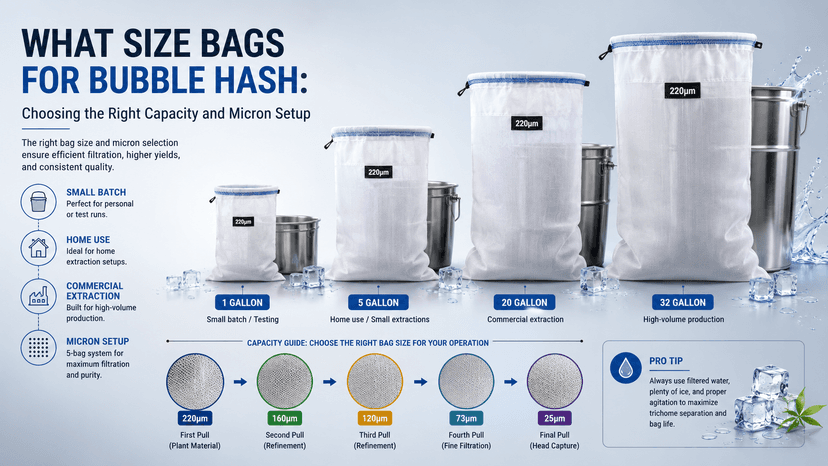
Choosing the right screen opening is one of the most important steps in botanical separation, dry sifting, bubble filtration, and laboratory particle classification. Yet many buyers still struggle with one basic question: what is the difference between mesh and micron?
A screen may be described as 60 mesh, 90 mesh, 120 mesh, or 200 mesh. Another supplier may describe a similar screen by micron rating, such as 250 micron, 165 micron, 125 micron, or 75 micron. Without a reliable reference, it can be difficult to compare products, choose the correct screen, or communicate specifications clearly with a manufacturer.
That is why EXTRACTLAB developed a practical Mesh to Micron Calculator for botanical extraction and sifting applications. This tool helps users quickly convert mesh count to micron opening, compare nominal screen sizes, and better understand which screen may be suitable for different separation stages.
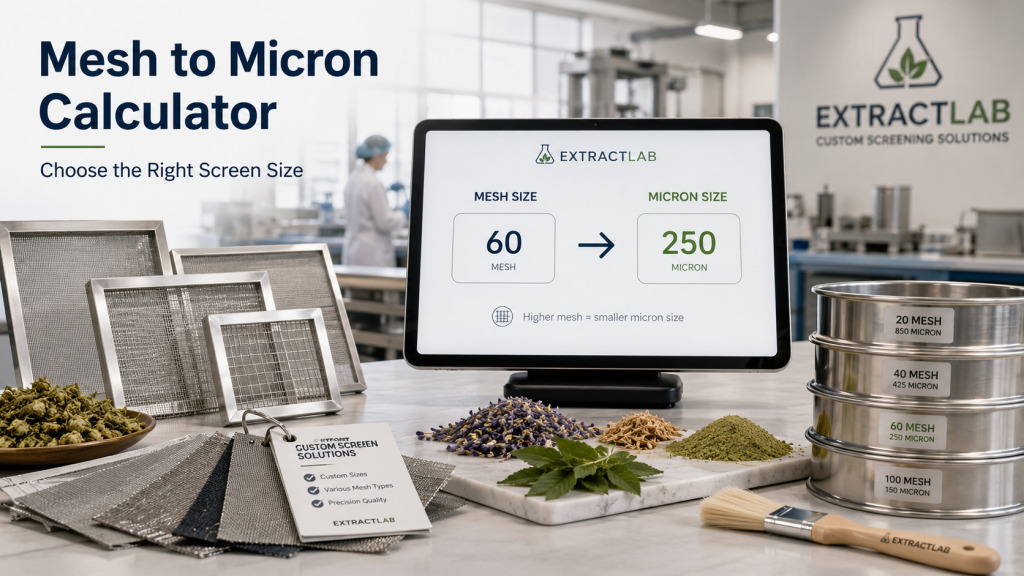
Whether you are selecting dry sift screens, bubble hash bags, rosin filter bags, or custom framed mesh screens, understanding mesh-to-micron conversion can help you make better purchasing decisions and improve process consistency.
What Does Mesh Mean?
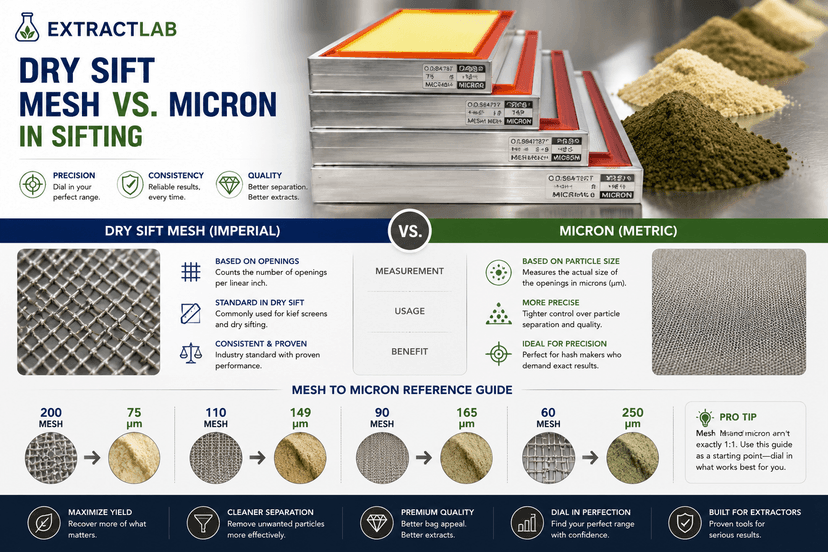
Mesh refers to the number of openings per linear inch in a screen. For example, a 100 mesh screen has approximately 100 openings across one linear inch.
In general, a higher mesh number means smaller openings, while a lower mesh number means larger openings. However, mesh count alone does not tell the full story. The actual opening size also depends on the wire diameter or thread thickness used in the mesh.
This is why two screens with the same mesh count may not always have exactly the same micron opening if they are made from different wire or fabric constructions.
For botanical processing, this detail matters. A small difference in opening size can affect how material flows through the screen, how much fine material is collected, and how clean the final separation becomes.
What Does Micron Mean?
A micron, also called a micrometer, is a unit of measurement equal to one millionth of a meter. In filtration and sifting, micron rating describes the approximate size of particles that can pass through a screen opening.
For example:
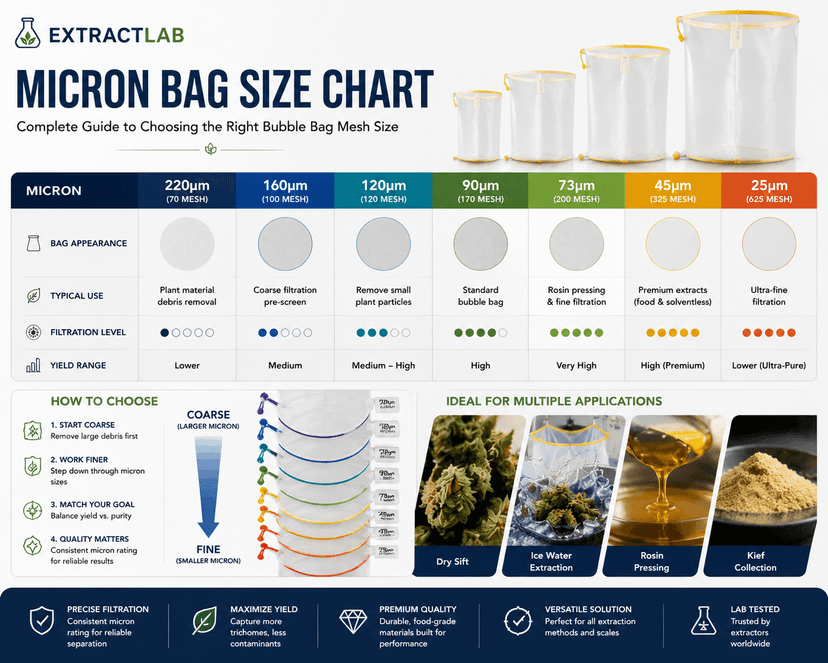
- A 220 micron screen allows larger particles to pass through.
- A 160 micron screen provides medium-coarse separation.
- A 90 micron screen offers finer classification.
- A 45 micron screen is used for very fine separation.
Micron ratings are often easier to understand than mesh numbers because they directly describe the approximate opening size. This is why many botanical extraction products, such as bubble bags and dry sift screens, are sold by micron rating.
Why Mesh to Micron Conversion Matters
Mesh to micron conversion is useful because different suppliers, industries, and product categories use different terminology.
A dry sift screen supplier may list a product as 90 mesh. A bubble bag manufacturer may list a comparable product as 165 micron. A laboratory technician may need to match both values to an internal SOP.
Without conversion, buyers may accidentally choose the wrong screen size.
Using a Mesh to Micron Calculator helps users:
- Compare mesh and micron specifications
- Select the correct screen opening
- Reduce ordering mistakes
- Communicate clearly with manufacturers
- Improve separation consistency
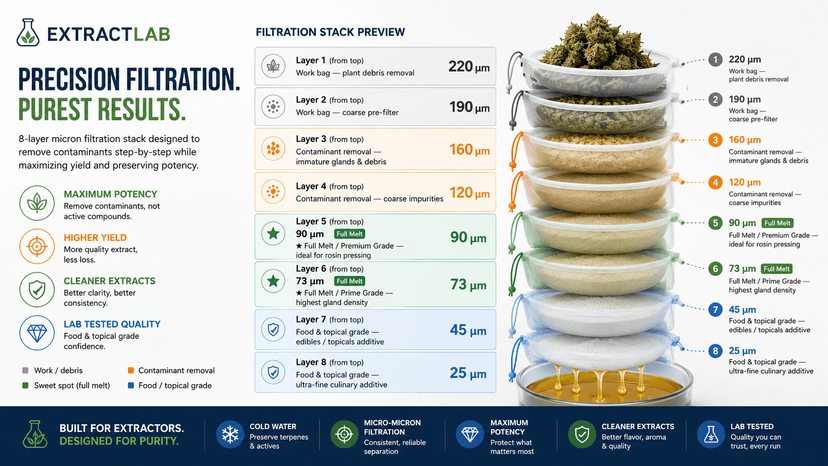
- Plan staged filtration systems
- Match dry sift screens with filter bags
For commercial operations, this is especially valuable because incorrect screen selection can lead to lower yield, higher contamination, slower processing, and inconsistent product quality.
How the EXTRACTLAB Mesh to Micron Calculator Helps
The EXTRACTLAB Mesh to Micron Calculator is designed for botanical extraction users, laboratory technicians, equipment buyers, and processing teams.
Instead of manually searching through conversion charts, users can enter a mesh count or micron value and quickly understand the nearest standard screen opening.
The tool helps answer practical questions such as:
- What micron size is close to 90 mesh?
- Which screen opening should I choose for finer botanical separation?
- How do I compare mesh count with micron rating?
- Which screen size is suitable for pre-screening?
- Which micron stage should I use for more refined separation?
The calculator is especially useful when planning custom screen orders, because it gives buyers a clearer starting point before requesting a quotation.
Common Mesh and Micron Applications
Different mesh and micron sizes are used for different separation goals. While the exact choice depends on material type and processing method, the following ranges are commonly used in botanical sifting and filtration.
Coarse Separation
Larger openings are typically used for initial screening, removing oversized particles, or preparing material for finer separation.
Common uses include:
- Botanical pre-screening
- Large particle removal
- Initial material grading
- High-flow separation
This stage helps reduce processing load before moving material through finer screens.
Medium Separation
Medium micron ranges are often used when users need a balance between flow rate and particle control.
Common uses include:
- Dry sift preparation
- Herbal material classification
- Powder grading
- General botanical processing
For many commercial users, medium screens are the most practical starting point because they provide good throughput while improving material consistency.
Fine Separation
Fine micron screens are used when tighter particle control is needed.
Common uses include:
- Fine botanical particle collection
- Cleaner grading
- Laboratory sample preparation
- Final separation stages
Fine screens may reduce flow rate compared with larger openings, but they provide better control over particle size.
Mesh Count vs Micron Rating: Which One Should You Use?
Both mesh and micron ratings are useful, but they serve slightly different purposes.
Mesh count is helpful when comparing traditional screen specifications, especially in industrial wire mesh or woven mesh products.
Micron rating is more intuitive when discussing filtration performance, because it directly describes the opening size.
For botanical extraction and sifting applications, micron rating is usually easier for buyers to understand. However, if you are sourcing from a factory or comparing technical specifications, both values may be needed.
That is why a reliable mesh to micron reference is important. It allows you to move between both systems without confusion.
Why Standard Conversion Charts Are Not Always Enough
Many mesh-to-micron charts are useful, but they are not always exact for every screen material.
The actual opening size can vary depending on:
- Wire diameter
- Thread thickness
- Weaving method
- Mesh material
- Screen tension
- Manufacturing tolerance
- Applicable standard
For example, a stainless steel woven mesh and a synthetic monofilament mesh may not behave exactly the same, even if the nominal mesh count looks similar.
This is why EXTRACTLAB recommends using conversion tools as a practical reference, then confirming final specifications with the manufacturer before ordering custom screens.
Choosing the Right Screen for Botanical Sifting
When selecting a screen, do not look at micron size alone. A good screen should match your material, workflow, and equipment.
Consider Your Material Type
Dry botanical material, powders, flowers, leaves, and fibrous materials may require different screen openings. Fine powders may need tighter control, while coarse material may require larger openings for better flow.
Define Your Separation Goal
Are you removing large particles, collecting fine material, or creating multiple grades? The goal determines the screen size.
Think About Flow Rate
Smaller micron openings provide finer separation, but they may slow down processing. Larger openings improve flow but provide less particle control.
Evaluate Screen Material
Nylon, polyester, and stainless steel each offer different advantages. Nylon is flexible and cost-effective. Polyester provides dimensional stability. Stainless steel offers high durability for demanding environments.
Match the Screen to Your Equipment
Custom framed screens should fit the equipment or workflow accurately. Frame dimensions, mesh tension, and edge finishing all affect usability.
EXTRACTLAB Custom Screen Manufacturing
EXTRACTLAB is more than a calculator provider. We are a professional manufacturer of custom screens, dry sift screen sets, micron filter bags, and botanical separation solutions.
Our factory supports:
- Custom mesh sizes
- Custom micron ratings
- Aluminum framed screens
- Stainless steel mesh screens
- Nylon and polyester mesh options
- OEM branding
- Private label packaging
- Bulk production
- Custom product development
After using the Mesh to Micron Calculator, customers can contact EXTRACTLAB to turn their selected specification into a real product.
This is especially useful for buyers who need custom dimensions, special mesh openings, or screen products designed for specific equipment.
Technical Specification Options
EXTRACTLAB can manufacture screen solutions based on different technical requirements.
| Specification | Available Options |
|---|---|
| Product Type | Dry Sift Screen, Framed Screen, Filter Bag, Custom Mesh Product |
| Mesh Material | Nylon, Polyester, Stainless Steel, Custom Mesh |
| Micron Range | Customizable Based on Application |
| Frame Material | Aluminum Alloy, Stainless Steel, Custom Structure |
| Shape | Rectangular, Square, Round, Custom |
| Application | Botanical Sifting, Filtration, Separation, Extraction Preparation |
| Branding | OEM Logo, Private Label |
| Packaging | Standard or Customized Export Packaging |
| Order Type | Sample, Wholesale, OEM, Custom Manufacturing |
This flexibility allows customers to source products that match their process instead of adjusting their process around standard inventory.
Applications of Mesh to Micron Planning
Dry Sift Screen Selection
Dry sift screens often use multiple mesh stages. A conversion calculator helps users understand which screen openings are suitable for coarse, medium, or fine separation.
Bubble Bag Filtration
Bubble bags are usually described in microns. If a customer is comparing mesh data with bag micron ratings, the calculator provides a helpful reference.
Laboratory Separation
Lab technicians often need repeatable particle classification. Mesh-to-micron conversion helps align screen selection with testing requirements.
Botanical Processing
For commercial botanical processors, correct screen size improves consistency before extraction, packaging, or further processing.
Custom Equipment Manufacturing
Equipment builders and distributors can use the calculator to define screen specifications before ordering custom products.
Why Work with EXTRACTLAB?
EXTRACTLAB combines practical tools with factory manufacturing capability. Instead of only providing information, we help customers move from specification planning to actual product sourcing.
Customers choose EXTRACTLAB because we offer:
- Own factory manufacturing
- Custom screen development
- Accurate micron solutions
- OEM and private label service
- Factory-direct pricing
- Stable quality control
- Engineering support
- Global supply capability
Whether you need one custom screen design or ongoing wholesale production, our team can support your project from specification to delivery.
Final Thoughts
Mesh and micron conversion may seem simple, but it plays an important role in botanical separation, dry sifting, filtration, and custom screen manufacturing. Choosing the wrong screen opening can affect flow rate, separation accuracy, yield, and final material quality.
The EXTRACTLAB Mesh to Micron Calculator helps users quickly compare screen openings, understand standard references, and make better screen selection decisions before ordering.
For buyers, processors, laboratories, and equipment brands, this tool is a practical starting point for building more accurate and efficient separation systems.
Contact EXTRACTLAB for Custom Screen Solutions
Need help choosing the right mesh or micron size for your application?
EXTRACTLAB provides custom dry sift screens, micron filter bags, framed mesh screens, and OEM botanical separation products manufactured directly from our own factory.
Contact EXTRACTLAB today to discuss your screen specifications, request a quotation, or develop a custom mesh solution for your processing workflow.