Can you replace a rosin filter bag with another supplier’s bag if the size and micron label match? Treat it as a candidate replacement, not an approved equivalent. Material details, finished dimensions, joining construction and the evidence supporting claims can differ even when the catalogue description looks similar.
The EXTRACTPHYTO rosin filter bag range provides standard and custom options. This guide helps procurement teams qualify a second source or change supplier without silently changing the approved product. It does not prescribe pressing settings or guarantee equivalent process results.

Recover the current approved specification
Collect the existing purchase description, drawing, material information, sample approval and inspection records. Identify which requirements are mandatory and which were preferences. If the original order simply says “73 micron bag,” record the missing information rather than treating that phrase as a complete specification.
Use an identified, unused reference sample where available. Record its source and condition. A used or damaged bag can help identify a product, but its dimensions and appearance may no longer represent the supplied condition. Retain written requirements alongside the sample so approval does not depend entirely on one physical object.
Build an equivalence matrix
List the incumbent requirement, the candidate supplier’s proposal, supporting evidence and approval status for each characteristic. Useful rows include material identity, nominal opening and its verification basis, finished dimension definitions, joint construction, seam orientation, packaging and required traceability.
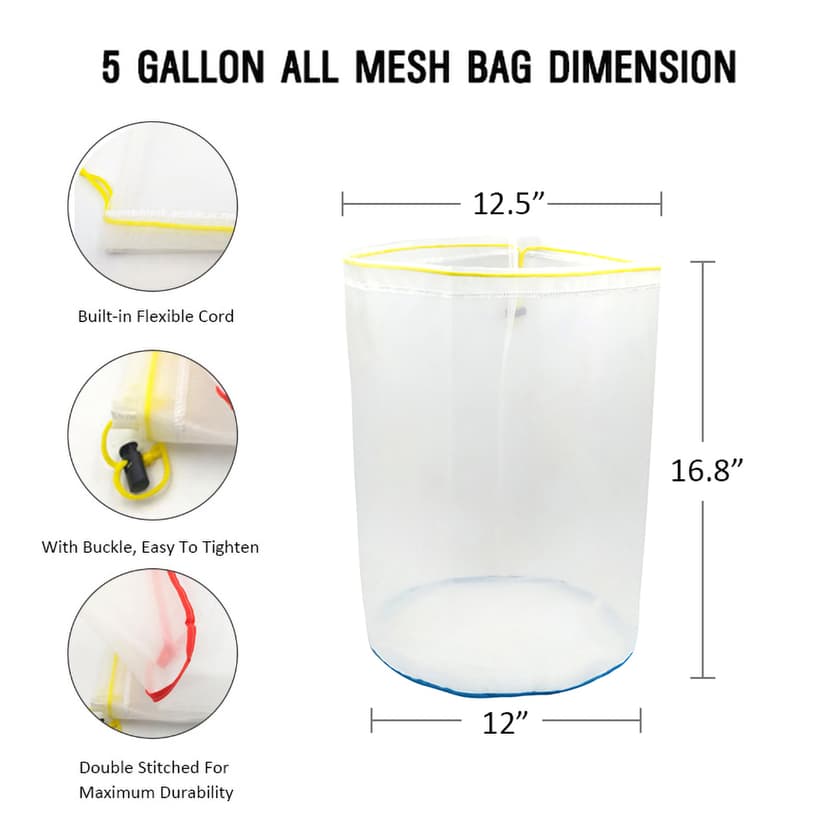
The EXTRACTPHYTO 2 × 3 inch listing identifies nylon mesh, 25, 37, 73, 90, 120 and 160 micron choices, and sewn or welded options. Selecting the same nominal size and micron leaves construction choices to resolve. Do not assume that every combination is available on identical commercial terms; have the selected version confirmed.
Resolve deviations before requesting bulk approval
Classify each proposed difference as accepted, rejected or requiring evaluation. For example, a supplier may offer a different joining construction while keeping the same nominal width. That is a specification change to assess, not a paperwork correction.
Ask whether supporting material documents cover the actual mesh and finished construction being quoted. Broad marketing phrases do not establish compliance with a buyer’s particular requirement. If a required property has no suitable evidence, leave it unresolved rather than inferring it from a material name or product photograph.
Agree the sample evaluation before it starts
- Assign a sample code linked to the supplier, proposed specification and batch where available.
- Define the number of samples and selection basis with the responsible quality team.
- List the checks, methods, acceptance criteria and required records.
- Separate dimensional and visual inspection from any application evaluation.
- Identify who may approve a deviation and who releases the supplier for purchasing.
- Agree what changes require a new evaluation.
Use the dimensional receiving worksheet for measurement definitions and the joint construction guide for seam requirements. These support the qualification record; neither alone proves the candidate suitable for every intended application.
Use controlled comparisons, not impressions
If application evaluation is required, use a buyer-approved protocol with suitable qualified personnel and manufacturer-approved conditions. Keep the variables and observations defined in advance. Otherwise, a change in the input material, equipment or measurement method may be mistaken for a supplier effect.
This article provides no universal sample count, process setting or pass threshold. The responsible team should choose criteria that reflect the intended use and consequences of failure. Record unfavorable results as well as favorable ones; repeating a test until it passes is not a documented disposition.
Release a specific version, not an unrestricted supplier promise
State exactly what approval covers: supplier, item, specification revision, construction and packaging. A qualified sample does not automatically approve all sizes, all micron variants or later manufacturing changes. Ask for advance notification of changes affecting the agreed specification and define when new samples are required.
During the transition, keep old and new stock distinguishable. Record which approved version is received and issued. If a problem appears, this makes it possible to investigate the affected supply without treating every similar-looking bag as the same item.
Bring the evidence into the commercial decision
Compare the confirmed price, sample and inspection costs, order minimums and delivery commitments after technical differences are understood. A lower price is useful only for an acceptable supply scope. A completed qualification record also makes subsequent reorders clearer and reduces repeated specification questions.
When requesting an EXTRACTPHYTO alternative, provide your own requirements and documents you are entitled to share. Mark unknown fields explicitly and request a written deviation list. We can then discuss a candidate configuration without claiming that a catalogue match is already a validated substitute.
Request a configuration review
EXTRACTPHYTO is a China-based manufacturer. Send your purchasing requirements with your company, product reference, quantity and destination. Include the title of this guide and the documents you need confirmed. You can also email [email protected]. Availability, testing scope and custom requirements must be confirmed in the quotation.