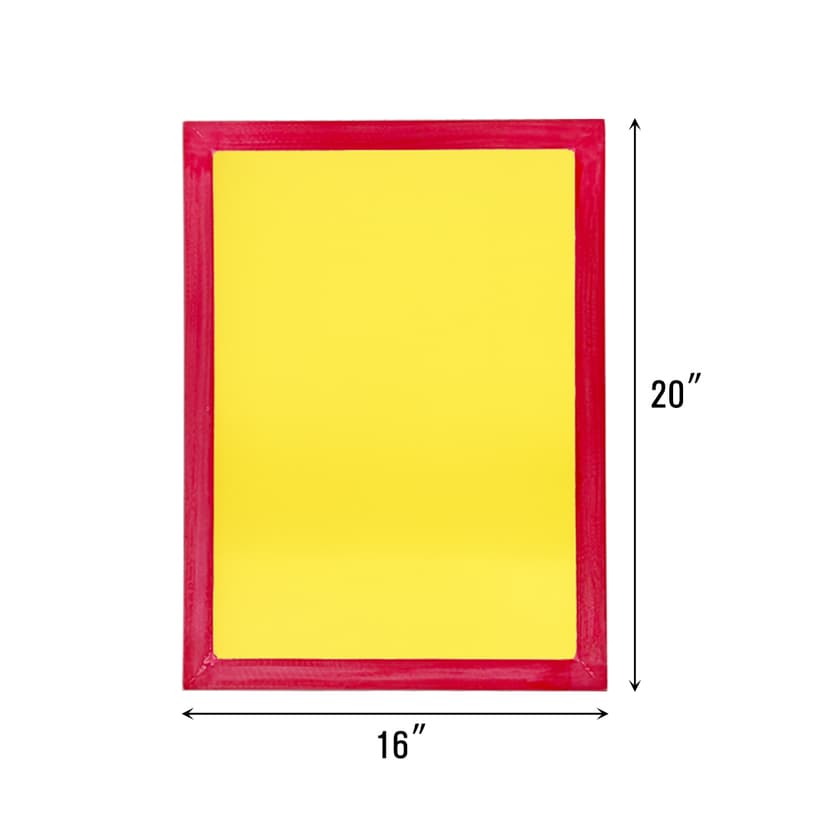
Will two dry sift screens stack correctly because both are sold as 16 × 20 inches? Not necessarily. Nominal length and width do not describe the mating surfaces, locating features or separation between mesh layers. A replacement order needs an interface specification as well as a mesh specification.
The EXTRACTPHYTO dry sift screen range supports individual and set purchases. This guide addresses mixing a replacement frame with an existing assembly, rather than choosing a micron sequence or measuring frame flatness.

Start with the existing assembly
Identify the manufacturer, item reference and revision of the frames already in use. Photograph the complete assembly, then the upper and lower faces of one empty frame. Include any corner pieces, lips, feet, locating pins or separate spacers. Do not infer hidden features from a top-view catalogue image.
The 16 × 20 inch listing identifies an aluminum frame with polyester mesh and offers individual or bundle purchasing. It does not publish a universal interlocking interface or promise cross-brand compatibility. Ask whether the proposed replacement can be assessed against your existing assembly.
Define the contact surfaces
On a drawing, mark which frame surface supports the next frame. Record the frame profile, corner geometry and any locating feature separately from overall length and width. Two frames with matching outside dimensions can have different seating widths or corner projections.
Specify whether the proposed arrangement simply rests on a support or uses a manufacturer-designed locating system. Do not describe a frame as locking, interlocking or secured unless that feature has been confirmed. A close fit in a photograph is not evidence of retention during handling.
Check separation and access
Ask for the assembled clearance between the relevant surfaces, including the mesh attachment area and any accessory tray. The frame height alone may not equal the separation between mesh surfaces. A nominal stack height also does not establish permissible loading or movement.
Request confirmation that the intended arrangement avoids unintended contact with the mesh and permits the manufacturer-approved handling method. Do not introduce improvised spacers or clamps to force a mismatch to fit. Any additional component belongs on the approved assembly drawing.
A practical interface schedule
- Existing and proposed frame references, with drawing revisions.
- Outside envelope and corner details, using named measurement points.
- Upper and lower seating faces and their orientation.
- Locating features, if present, with agreed mating dimensions.
- Mesh attachment position and required separation from adjacent components.
- Accessories and support arrangement included in the assessment.
- Agreed fit-check method, acceptance criteria and responsible approver.
Keep missing information marked “to confirm.” Do not assign a generic clearance or maximum stack count. Those values depend on the complete design and intended use.
Approve a first replacement before expanding the order
For an unfamiliar interface, ask whether a sample or first article can be supplied for a documented fit review. Compare it with the identified reference assembly, rather than with an arbitrary frame that happens to be available. Record whether seating is correct, locating features engage as intended and mesh surfaces remain clear under the approved check.
A successful empty fit check establishes only the characteristics checked. It does not validate load capacity, filtration performance or every possible stack arrangement. If the supplier changes a frame profile or corner component, review the affected interface again before releasing a larger order.
Keep geometry checks connected but distinct
Use the frame dimensions guide to distinguish outside size from usable mesh area. Use the squareness and flatness guide when defining geometric acceptance. Those records support interface approval but do not replace a drawing of how the components fit together.
Can matching micron ratings prove compatibility? No. Micron rating describes the mesh opening designation, not the frame interface. Approve the mesh and assembly fit as separate requirements.
Request a configuration review
EXTRACTPHYTO is a China-based manufacturer. Send your purchasing requirements with your company, product reference, quantity and destination. Include the title of this guide and the documents you need confirmed. You can also email [email protected]. Availability, testing scope and custom requirements must be confirmed in the quotation.