Does plate size tell you whether an intended loading arrangement will fit? No. Plate length and width describe a surface footprint. Buyers also need the open gap, available movement and access around the intended configuration. These dimensions must be confirmed for the selected machine and any approved accessories.
When reviewing EXTRACTPHYTO press machines, separate internal loading geometry from the external workbench footprint. This guide is a purchasing drawing checklist, not a processing recipe or an instruction to modify a press.

Ask what each dimension actually measures
Opening height should identify the distance between specified opposing surfaces in a defined open position. Ask whether the quoted value is a maximum opening, a normal loading position or a different reference condition. The word “daylight” sometimes describes an open gap, but require a drawing definition rather than assuming all suppliers use it identically.
Stroke describes travel between defined positions. Actuator travel and usable platen travel are not necessarily interchangeable in every mechanism. Neither word by itself establishes which loaded thicknesses the machine can accommodate.
Loading access concerns the available path into and out of the working area. Uprights, guards, handles and swing-away components may affect that path. A large open gap does not alone prove convenient access.
Use a catalogue model as a reference, not a missing drawing
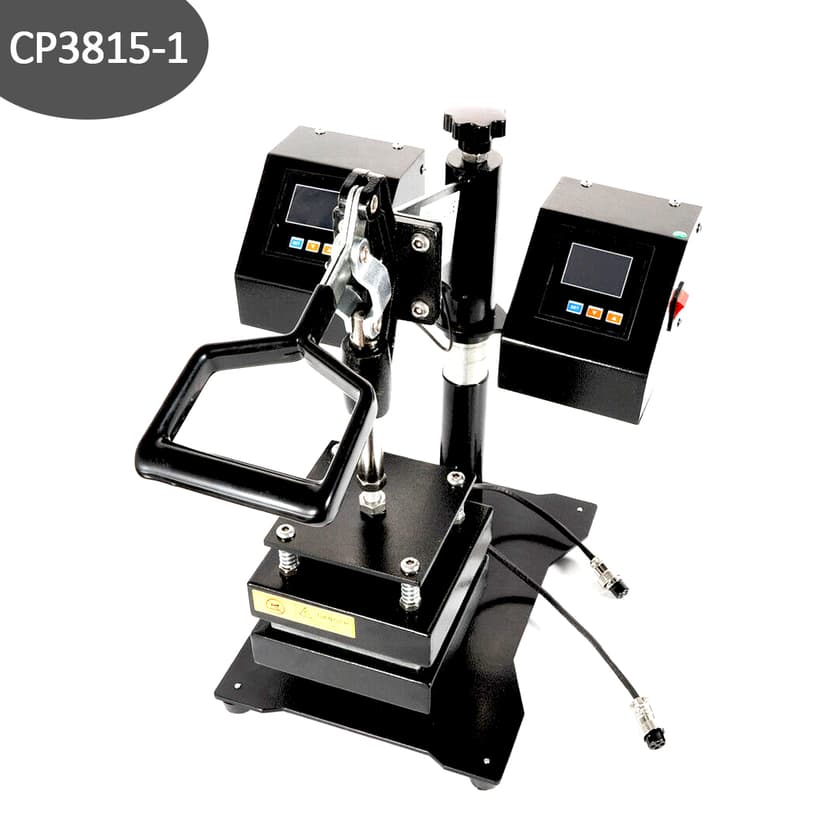
The CP3815-1 listing identifies a manual model and lists a 12 × 12 cm plate option. That plan dimension cannot be converted into a loading height or stroke. Request those values specifically if they are essential to your purchase.
Confirm the exact version and intended application with the supplier. A model name, photograph or larger plate surface is not evidence that an accessory or particular use is supported. Do not estimate clearances from image proportions.
Describe the complete proposed arrangement
Send a dimensioned outline of the intended loading envelope and identify any proposed fixtures or accessories. Label each item and distinguish supplied components from buyer-provided ones. Ask the manufacturer to confirm compatibility and the permitted configuration before ordering.
Separate the height of the arrangement from the access needed to place and remove it. Avoid treating a simple subtraction of nominal heights as sufficient operating clearance. Any required allowance should come from the manufacturer’s approved arrangement and operating instructions, not an arbitrary number in a buying guide.
Build a drawing request that can be answered
- Machine model, configuration revision and ordered plate option.
- Open-gap dimension with reference faces and position identified.
- Relevant platen travel and the definition of any quoted actuator stroke.
- Loading-path width and depth, including obstructions and supplied guards.
- Drawing of the proposed accessory or fixture, with supplier approval status.
- Permitted loading envelope and any restrictions requiring clarification.
- External moving-part envelope for bench and room planning.
Keep unresolved fields marked “supplier to confirm.” Do not approve a substitution solely because its advertised tonnage and plate size match the original model.
Verify the agreed geometry before dispatch
Request a unit-linked drawing, dimensional report or demonstration that shows the agreed reference positions. Any movement or powered demonstration should be performed by trained personnel following the manufacturer’s procedure. Buyers should not place measuring tools or hands between moving or hot platens to improvise a check.
Record whether the evidence covers the actual ordered version and whether proposed accessories were included in the assessment. Where a dimension differs, ask for an explanation and a revised compatibility review before accepting the change.
Keep three purchase decisions connected
Internal fit, external space and performance acceptance are related but separate decisions. Use the workbench-space guide for external clearances and the factory acceptance guide for the broader evidence plan. This article does not publish a verified opening height or stroke for CP3815-1; those remain model-specific quotation questions.
Request a confirmed quotation
EXTRACTPHYTO is a China-based manufacturer. Send your purchasing requirements with your company, product reference, quantity and destination. Include this article’s title and identify the drawings or records you need confirmed before ordering. You can also email [email protected].