Should you remesh a dry sift screen or replace the complete frame? Compare the condition of the frame, whether a qualified supplier accepts it for remeshing, and the total cost and lead time of returning it to an agreed specification. A reusable-looking frame is not proof that a remeshing service is available or that the restored screen will match the original.
For purchasing teams, this is an asset-replacement decision. The useful comparison is between an accepted, documented remeshing proposal and an equivalent new screen, with both options assessed against the same receiving criteria.

Separate mesh damage from frame condition
Record the visible issue before requesting quotations. A mesh tear, local detachment or a loose-looking surface does not establish the condition of the frame underneath. Photograph the complete frame, all corners, the mesh attachment area and the affected region. Identify the item so the supplier can connect the photographs to the correct frame.
Visible distortion, damaged joints, damaged attachment surfaces or uncertain dimensions require assessment before reuse is accepted. Do not promise a customer that replacing the fabric alone will restore the assembly. Equally, do not discard a frame solely because the mesh is damaged when a qualified service provider may be able to assess it.
Obtain a written feasibility decision
Ask the proposed service provider whether it accepts that frame design, material, size and condition. Confirm whether it works on third-party frames and whether an initial photographic assessment must be followed by physical inspection. Record what happens if the frame is rejected after receipt, including return handling and any assessment charge.
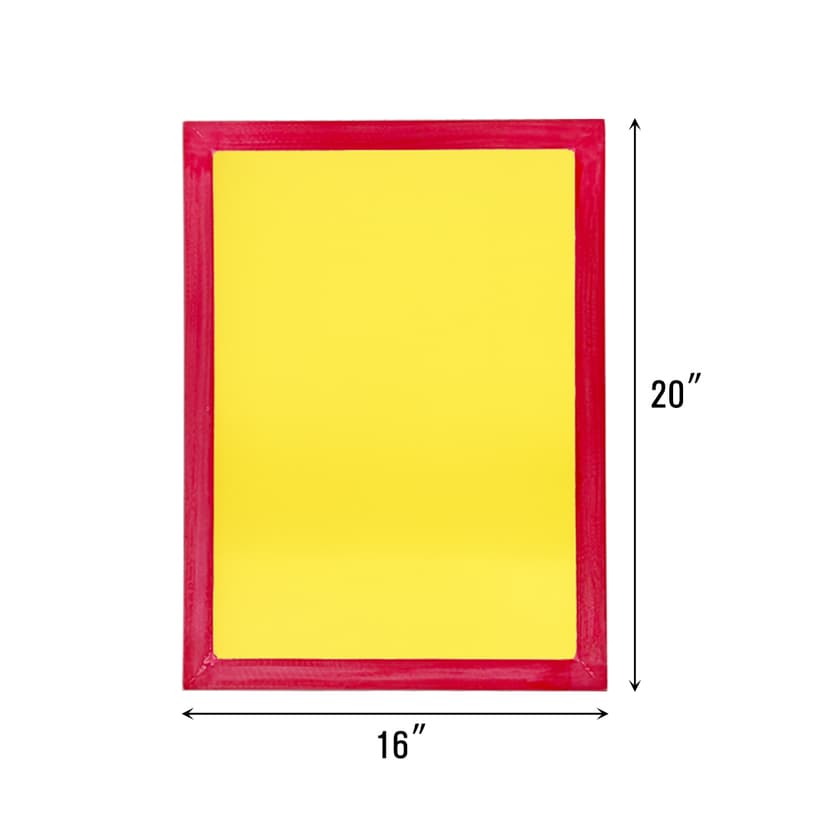
The current EXTRACTPHYTO dry sift screen catalogue confirms aluminum frames with polyester mesh and the ability to buy individual screens or complete sets. It does not establish a published remeshing service, repair price, turnaround time or warranty. Ask about feasibility first; this article is not an offer of a repair service.
Compare both options on the same basis
| Decision item | Remeshing proposal | New-screen proposal |
|---|---|---|
| Frame suitability | Condition assessment and acceptance of the existing frame | Confirmed new frame dimensions and compatibility |
| Mesh specification | Agreed replacement fabric and nominal opening | Agreed fabric and nominal opening for the new assembly |
| Verification | Inspection evidence after work is complete | Inspection evidence for the supplied assembly |
| Logistics | Outbound and return transport where applicable | Delivery to the same destination |
| Timing | Assessment, work and transport time | Production or availability confirmation plus transport time |
| Commercial scope | Assessment, work, exclusions and remedy terms | Unit price, exclusions and remedy terms |
Use quoted amounts, not assumed savings. A repair quotation that excludes transport is not directly comparable with a delivered replacement price. If unavailable equipment has a measurable cost in your business, show your own estimate separately and state how it was calculated. Do not attach a generic downtime value to every buyer.
Recover the specification before ordering
Find the original purchase record or approved drawing where possible. Record outside dimensions, usable opening, frame profile and any stacking interface separately. A nominal size such as the 16 × 20 inch screen listing is a catalogue identifier; confirm which physical dimensions it describes before ordering a replacement for an existing stack.
Record mesh material and the specified opening in microns. If only a mesh-count label remains, ask for the original fabric specification rather than treating the count as a universal opening size. For the dimensional schedule, refer to frame size versus usable area. For an agreed tension record, refer to comparing supplier tension reports. These are supporting checks, not evidence that a damaged frame is repairable.
Example decision: one damaged screen in an existing set
Suppose one screen is damaged and the other frames still meet your requirements. Request two clearly separated proposals: assessment and remeshing if accepted, and one complete replacement screen matched to the documented interface. There is no need to assume that the entire set must be replaced when an individual assembly is available.
If the existing frame cannot be accepted, the remeshing option is no longer a comparable offer. If both options are feasible, compare confirmed delivery dates, total scope and inspection requirements. Keep the approval tied to the identified frame and specification revision so it cannot be reused for a different item without review.
Before returning the screen to inventory
Check identification, visible condition, dimensions and the agreed inspection evidence on receipt. Retain the supplier’s work or supply record alongside the original specification. A completed repair invoice is a commercial record; it does not by itself confirm that your receiving checks have passed.
Ask about a replacement or a feasibility assessment
EXTRACTPHYTO is a China-based manufacturer of dry sift screens. For a new individual frame or set, send the required specification and quantity. If you are exploring remeshing, state that explicitly and request confirmation of service availability before arranging any return shipment.
Request a quotation from EXTRACTPHYTO or email your requirements to [email protected]. Include your company, product specification, quantity and destination so the response can address your actual order.