Can two dry sift screens have the same micron opening but different open-area percentages? Yes. In a square-mesh model, the opening and the thread width together determine the proportion of open space. A micron label alone therefore cannot identify the mesh’s open area.
For buyers comparing EXTRACTPHYTO dry sift screens, this is a fabric-specification question. It is separate from selecting a frame size or choosing a micron for a particular process. Comparing these properties separately helps a buyer recognize when two quotations describe different fabrics.

Keep three different measurements separate
| Property | Meaning | Unit |
|---|---|---|
| Mesh aperture | The clear opening between adjacent threads | Micrometres or millimetres |
| Mesh open area | The projected proportion of the fabric occupied by openings | Percent |
| Frame clear opening | The exposed rectangular fabric area inside the frame | Square inches or square millimetres |
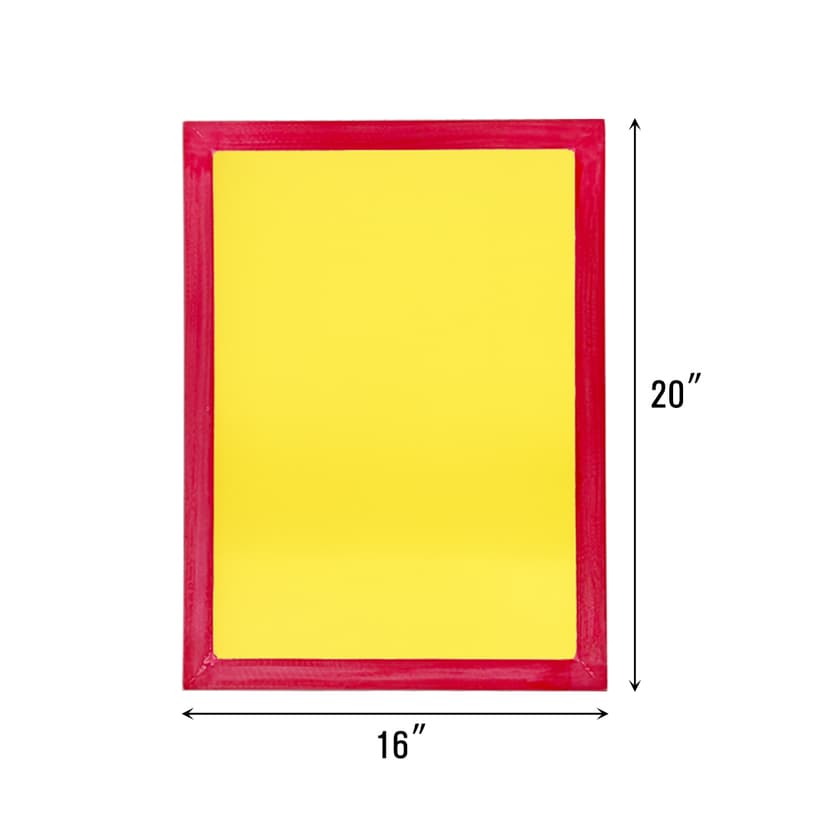
A screen described as 16 × 20 inches does not disclose its open-area percentage. Nor does a stated aperture disclose the clear dimensions inside its frame. Use the separate frame dimensions and usable-area guide when comparing the physical footprint.
Read the square-mesh calculation correctly
For an ideal regular square mesh with equal geometry in both directions, let w be the aperture and d the projected thread width. One repeat occupies an area of (w + d)², while its opening occupies w². The resulting geometric open area is:
Open area (%) = [w ÷ (w + d)]² × 100
Both dimensions must use the same units. United Wire’s definitions and formulae gives this square-mesh relationship for wire cloth. Here it is used as an ideal geometric illustration, not as a measured specification for an EXTRACTPHYTO polyester fabric. Confirm the actual weave and the supplier’s calculation or measurement basis.
Compare two hypothetical fabrics
The following numbers are illustrative only. Neither row is an EXTRACTPHYTO product offer or a recommended processing specification.
| Illustrative fabric | Aperture w | Thread width d | Calculated open area |
|---|---|---|---|
| A | 100 µm | 50 µm | 44.4% |
| B | 100 µm | 100 µm | 25.0% |
The aperture is identical, but the repeat spacing is different. Fabric A has more projected open space in this model. That calculation does not prove that it is stronger, lasts longer or delivers proportionally greater production output. Those are separate questions requiring evidence relevant to the actual fabric and application.
Know when the simple model is insufficient
Do not apply the square formula unchanged to an unidentified weave or unequal openings in the two fabric directions. Ask whether a reported percentage is nominal, calculated from design dimensions or measured on the supplied fabric. Also ask whether the record concerns loose fabric or the mounted screen.
A photograph may show the weave but generally does not provide a reliable numerical aperture or thread measurement without scale and a defined method. For documented aperture verification, use the screen aperture report guide. Keep any reported tolerance beside the property it actually describes.
What the catalogue confirms and what to request
The 16 × 20 inch screen listing identifies polyester mesh and an aluminum frame, with custom mesh options and individual-frame orders. It does not provide a verified open-area value for every selectable fabric. Do not fill that gap with a percentage copied from another supplier or inferred from a product photograph.
Ask for the proposed fabric reference, weave description, aperture in both directions, thread dimensions, open-area basis and any agreed tolerances. Carry the same fabric reference into the quotation and approved sample record. If a substitute is proposed, compare those fields before deciding whether a new evaluation is needed.
Request a fabric-specific quotation
EXTRACTPHYTO is a China-based manufacturer offering standard and custom dry sift screens. Send the frame requirements separately from the mesh requirements. State whether you need an open-area figure for comparison or a documented acceptance requirement, and ask the team to confirm what evidence is available for the proposed fabric.
Request an EXTRACTPHYTO quotation or email [email protected]. Include your company, selected specification, quantity, destination and this article’s title so the team can identify your requirements.