What should a buyer inspect where the mesh joins a dry sift screen frame? Check the attachment against an approved reference: its location, continuity, visible condition and clearance from the specified working area. Mesh opening and frame dimensions alone do not describe the quality of that joint.
This guide covers incoming visual inspection and purchasing evidence for dry sift screens. It does not set a universal adhesive strength or prescribe a destructive bond test.

Identify the construction being ordered
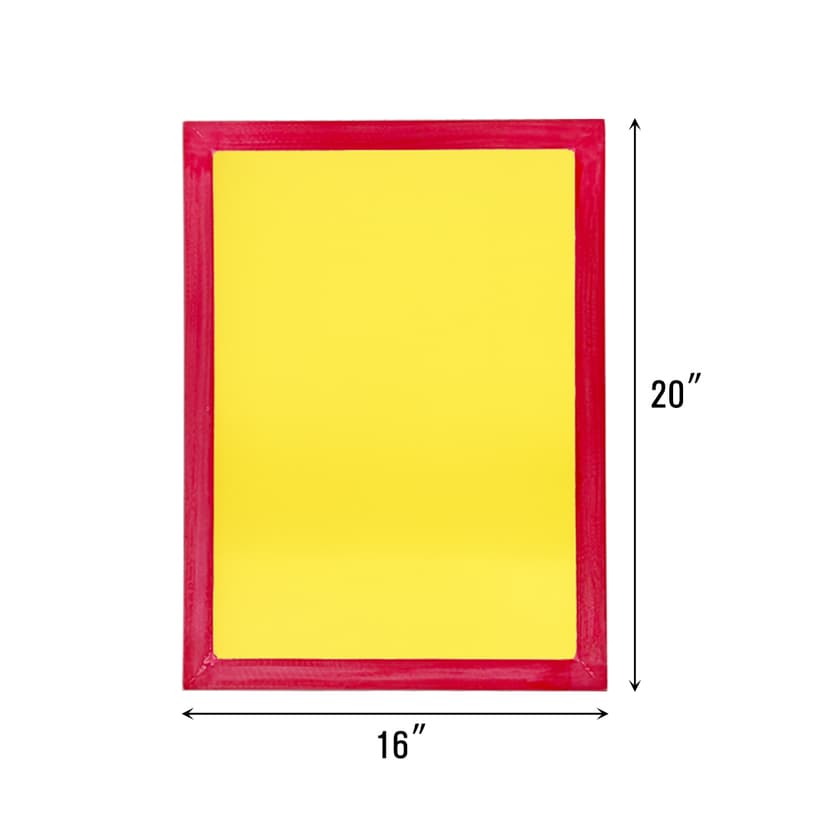
The 16 × 20 inch product listing describes polyester mesh, an aluminum frame and a glued attachment. It also supports individual frames and bundle purchases. These are useful specification starting points, but the page does not establish a numerical bond-strength limit or an acceptable detached length.
Ask for a drawing or approved sample photograph showing the intended bonded region and the boundary of the usable mesh. Identify the mesh reference, frame profile and attachment-system revision. If the supplier cannot disclose a proprietary adhesive formulation, ask for a controlled system reference and the information necessary to assess your intended use.
Separate appearance from attachment condition
Color differences, a visible glue line and excess adhesive are different observations. A visible line is not automatically a defect; an apparently neat edge is not proof of strength. Compare the actual construction with the agreed reference rather than accepting or rejecting it on appearance alone.
Record visible lifting, gaps, loose strands, cracking, debris and adhesive extending into the required working area. Describe where each observation occurs. Avoid writing “poor quality” when a photograph and a marked location can communicate the actual condition. Do not pull, peel or probe the mesh to improvise a strength test.
Prepare a repeatable inspection record
- Purchase order, supplier item code and frame or package identifier.
- Drawing revision and approved reference photograph.
- Overview of both faces and close-ups of each corner and any suspect region.
- Location of the observation using named edges or marked corners.
- Whether the required usable area appears obstructed.
- Inspection result, unresolved question and person responsible for disposition.
Where dimensions are required, agree measurement points and suitable methods in advance. Photographs should include a scale where useful, but perspective-distorted images should not be treated as precision measurements. Keep the original images linked to the inspected unit.
Agree acceptance criteria before dispatch
A practical specification distinguishes cosmetic variation, obstruction of the working area and apparent attachment separation. Ask the supplier and your quality team to define acceptable conditions for each. Do not invent a millimeter allowance after the shipment arrives merely to make a disputed unit pass.
If bond strength is a purchase requirement, request an agreed test method, sample preparation, conditioning, sampling basis and acceptance criteria. A visual inspection cannot replace that test. A result from a separate adhesive coupon also needs an explanation of how it relates to the supplied frame assembly.
Resolve an observation without losing its evidence
Keep questionable units identifiable and separate from accepted stock while the supplier reviews the record. Ask for a written decision: acceptance against the specification, additional inspection, replacement or an approved repair proposal. Do not apply new adhesive before the condition is documented and the proposed action is agreed.
After any approved corrective work, repeat the affected checks and retain both records. The remeshing versus replacement guide addresses the separate replacement decision. The cleaning compatibility guide covers chemical exposure; a sound-looking joint does not establish compatibility with a cleaner.
Does solvent-resistant mean indefinitely durable?
No. A general material description does not establish service life, allowable loading or compatibility with every exposure. Keep those questions separate from the receiving inspection and request evidence for any property that is essential to your purchase.
Request an order-specific quotation
EXTRACTPHYTO is a China-based manufacturer of botanical separation equipment. Send your purchasing requirements with your company, product reference, quantity and destination, or email [email protected]. Include this guide’s title and the evidence you need. Availability, inspection scope and any additional testing must be confirmed in the quotation.