When it comes to filtration systems, one question consistently stands out:
What micron bubble hash bags should you use?
Whether you are working in plant extraction, resin separation, or any form of fine filtration, choosing the correct micron size can significantly impact your final results. Many users focus on materials, equipment, or techniques—but overlook the single most important factor: micron selection.
The truth is simple:
The micron size determines what passes through and what gets captured.
In this guide, we’ll break down everything you need to know—from basic definitions to advanced strategies—so you can confidently choose the best micron setup for your needs.
What Does “Micron” Mean in Filtration?
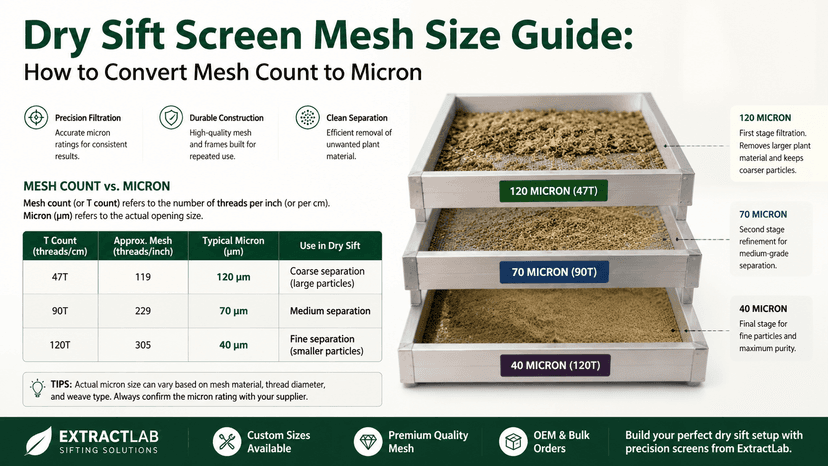
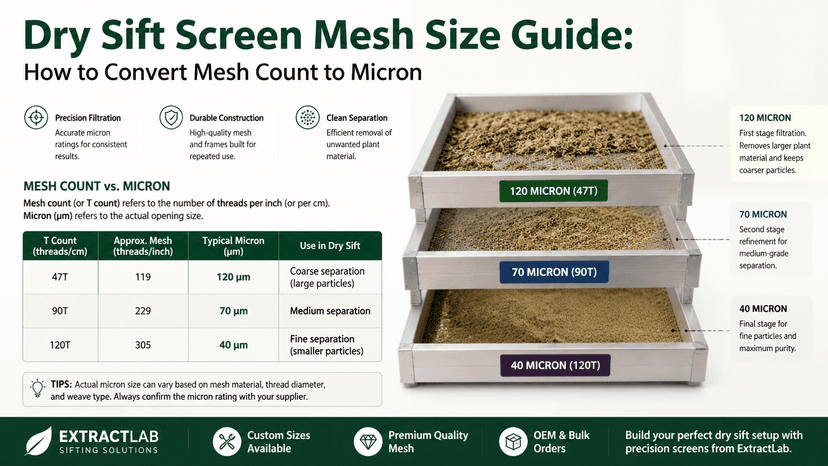
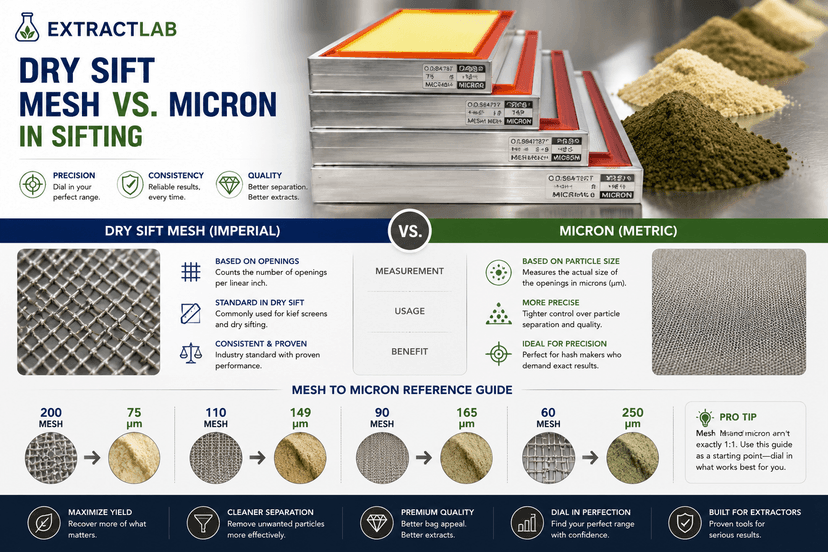
A micron (μm) is a unit of measurement equal to one-millionth of a meter. In filtration systems, it refers to the size of the openings in the mesh or filter material.
- Smaller micron = finer filtration
- Larger micron = coarser filtration
Think of it like a sieve:
- A large mesh lets more material pass through
- A fine mesh captures smaller particles
This is why micron size directly affects:
- Filtration precision
- Yield efficiency
- Final product quality
Standard Micron Sizes and Their Roles
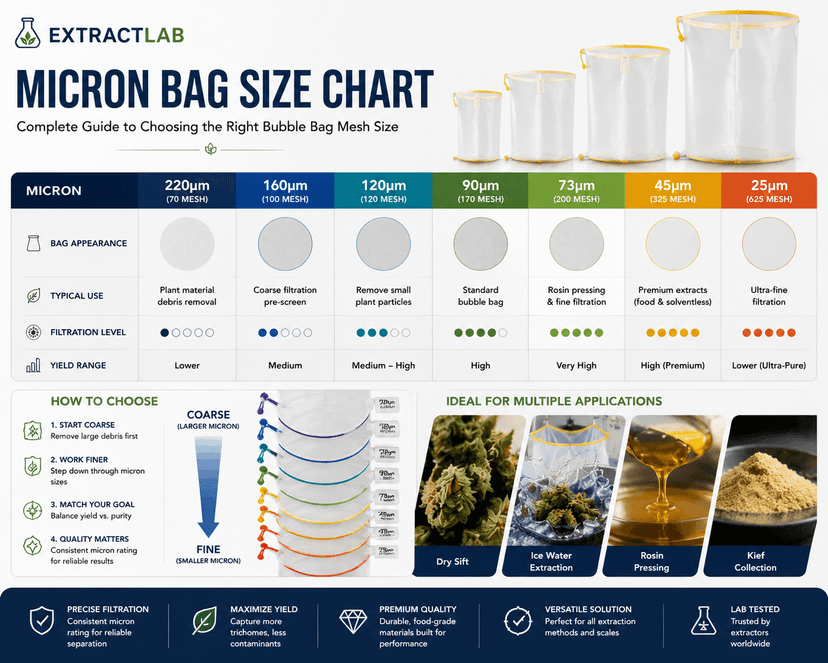
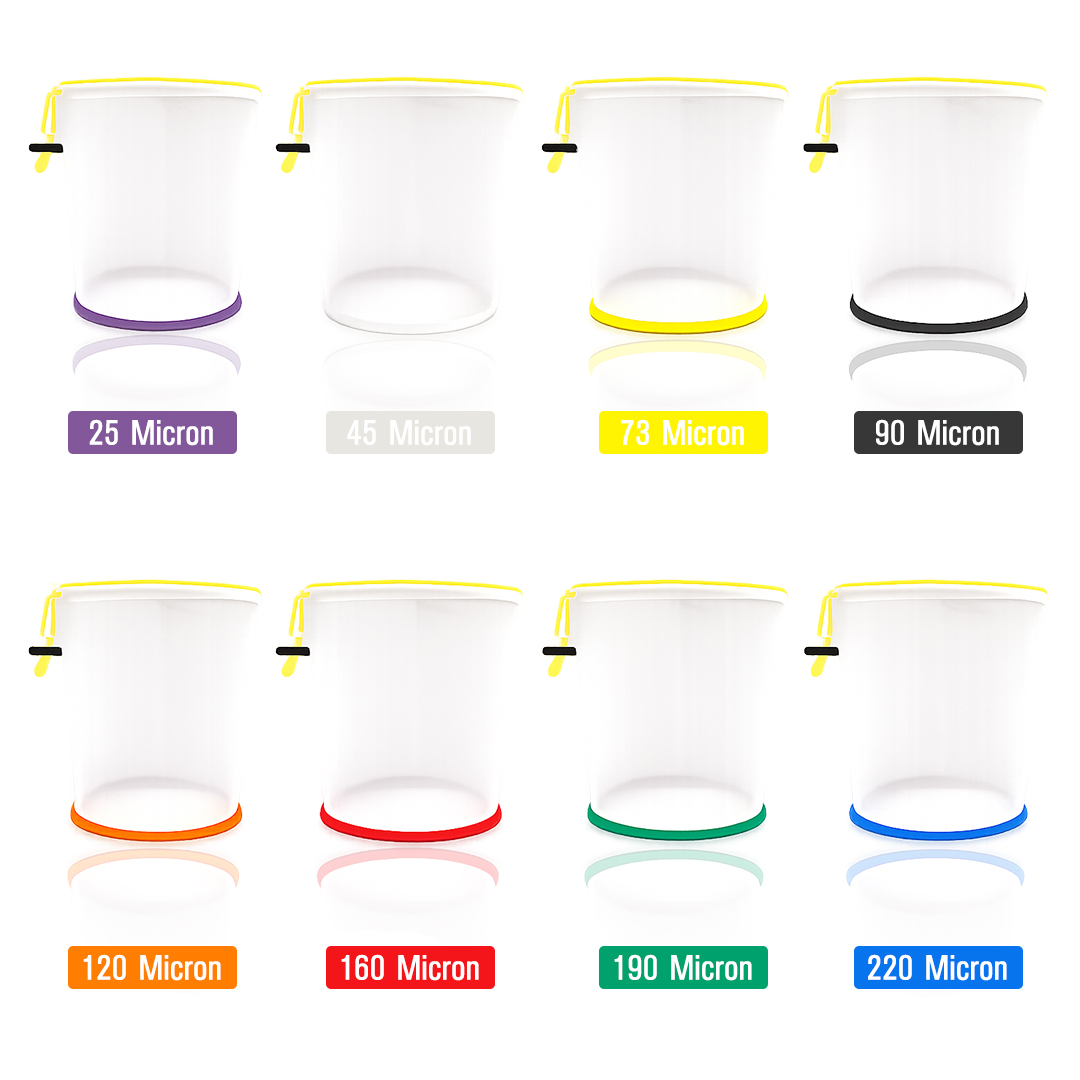
Most filtration bag systems use a combination of micron sizes to achieve layered separation. Below is a commonly used structure:
| Micron Size | Function | Filtration Level |
|---|---|---|
| 220μm | Removes large contaminants | Very Coarse |
| 160μm | Pre-filtration | Coarse |
| 120μm | General separation | Medium |
| 90μm | Controlled filtration | Medium-Fine |
| 73μm | Fine separation | Fine |
| 45μm | Micro filtration | Very Fine |
| 25μm | Final refinement | Ultra Fine |
Each layer serves a specific purpose. Using only one micron size limits your control and reduces efficiency.
For a full breakdown, see our Micron Filter Guide
Why Micron Selection Matters
Choosing the wrong micron size can lead to several issues:
1. Loss of Valuable Material
If the mesh is too large, smaller particles will pass through and be lost.
2. Reduced Purity
If the mesh is too fine, unwanted materials may be trapped together with desired particles.
3. Poor Filtration Efficiency
Incorrect combinations can slow down the process or clog the system.
Single Bag vs Multi-Bag Systems
Single Micron Setup
- Limited control
- Inconsistent results
- Higher risk of contamination
Multi-Micron Setup
- Step-by-step filtration
- Better separation accuracy
- Higher overall efficiency
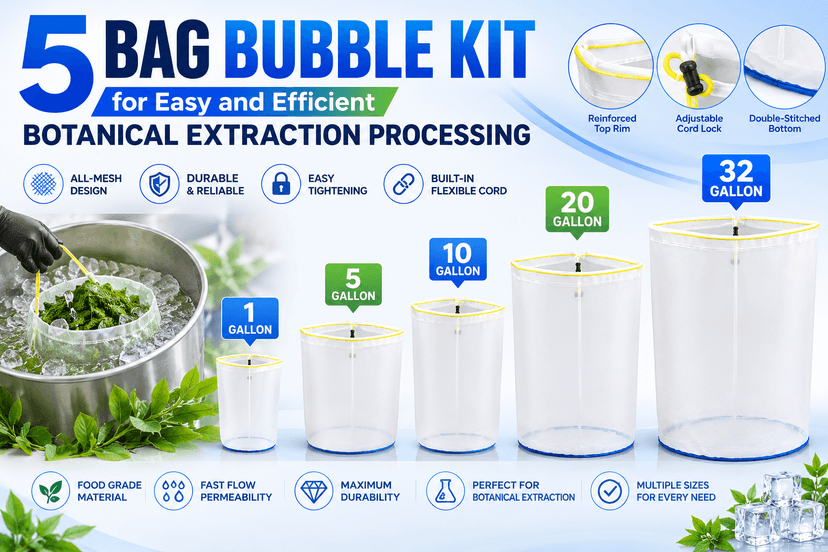
This is why most professionals use complete filtration sets rather than individual bags.
Explore professional setups in our Bubble Hash Bags collection
How to Choose the Best Micron Bubble Hash Bags
The “best” micron setup depends on your goal. Let’s break it down:
Goal 1: Maximum Yield
If your priority is collecting as much material as possible:
- Use larger micron sizes (120μm – 220μm)
- Faster filtration
- Higher volume
Trade-off: lower purity
Goal 2: Maximum Purity
If you want cleaner, more refined results:
- Use smaller micron sizes (25μm – 73μm)
- Capture finer particles
- Better quality output
Trade-off: lower yield
Goal 3: Balanced Performance
For most users, the best approach is a multi-stage combination:
Recommended setup:
- 220μm → remove large debris
- 120μm → primary filtration
- 73μm → fine separation
- 25μm → final collection
This provides both efficiency and quality.
Understanding Filtration Strategy
Micron selection is not just about size—it’s about sequence.
A proper system works like a funnel:
- Start with coarse filtration
- Gradually move to finer layers
- Finish with ultra-fine capture
This process ensures:
- Minimal loss
- Controlled separation
- Consistent output
Common Mistakes to Avoid
Even experienced users make these errors:
❌ Using Only One Micron Size
This limits your ability to separate materials properly.
❌ Choosing Microns Randomly
Each micron has a role. Without structure, results become inconsistent.
❌Ignoring Material Type
Different materials behave differently during filtration.
❌ Overloading Fine Mesh Bags
This causes clogging and reduces efficiency.
Pro Tips for Better Filtration Results
If you want to improve performance, follow these tips:
Use Cold Conditions
Lower temperatures improve separation efficiency.
Avoid Over-Mixing
Gentle processing helps maintain structure.
Clean Bags Immediately
Proper maintenance extends lifespan and ensures consistent results.
Learn more in our Filter Bags cleaning guide
Choosing the Right Bag Material
Micron size is critical—but so is material quality.
Look for:
- Durable stitching
- Food-grade mesh
- Strong seams
- Reinforced bottoms
High-quality bags maintain micron accuracy over time.
Browse durable options in our Filter Bags collection
How Many Bags Do You Really Need?
This depends on your level:
Beginners
3–5 bags
Simple, affordable, easy to manage
Intermediate
5–8 bags
More control and flexibility
Professional
Full multi-stage systems
Maximum precision and efficiency
Real-World Application Scenarios
Micron filtration bags are used in:
- Plant extraction workflows
- Herbal processing systems
- Essential oil filtration
- Laboratory separation processes
- Solventless extraction methods
The principles remain the same across industries:
Control particle size through filtration layers
Final Thoughts
So, what micron bubble hash bags should you use?
The answer depends on your goals—but one rule always applies:
The best results come from using multiple micron sizes in a structured system.
Instead of relying on a single filter, build a layered approach that allows you to control every stage of the process.
If you’re serious about improving your filtration efficiency, investing in a high-quality multi-micron setup is the smartest move you can make.
CTA
Looking to upgrade your filtration system?
Explore our full range of Bubble Hash Bags designed for precision, durability, and consistent performance.
Not sure which micron is right for you? Check out our Micron Filter Guide for a complete breakdown.