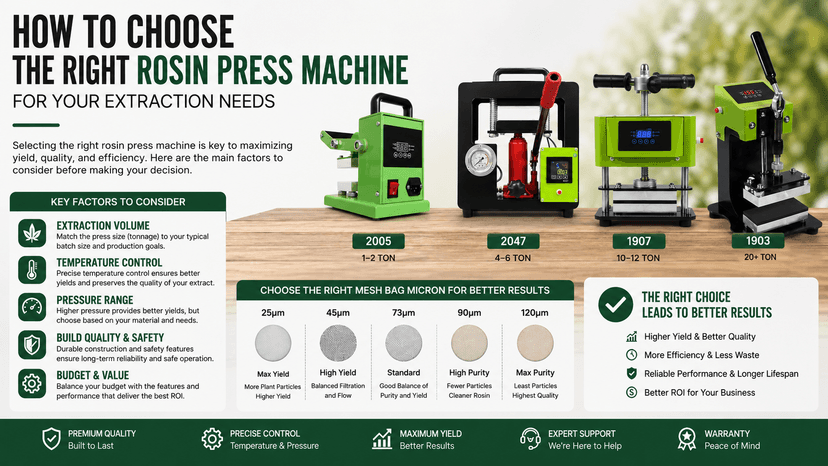
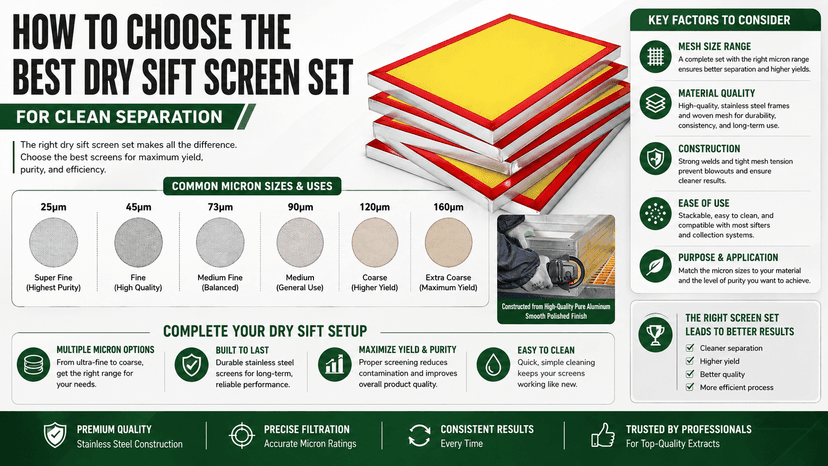
A rosin press machine is a solventless extraction device that uses controlled heat, pressure, and time to separate oil from suitable botanical materials. Unlike extraction methods that rely on chemical solvents, rosin pressing is based on mechanical force and thermal transfer. The material is placed between heated plates, pressure is applied, and the released oil flows out for collection. For operators seeking a cleaner and more controlled processing method, a rosin press machine provides a practical way to manage temperature, pressing duration, and pressure consistency in one workflow.
In professional and small-batch production environments, the main value of a rosin press machine is repeatability. Manual pressing can produce inconsistent results if pressure, plate temperature, or pressing time changes from batch to batch. A properly designed machine helps reduce that variation by allowing users to set and monitor key parameters. This makes the equipment useful for laboratories, product development rooms, boutique extraction operations, and facilities that need predictable solventless processing performance.
How a Rosin Press Machine Works
A rosin press machine works by combining heat and pressure over a fixed period of time. The material is usually placed inside a filter bag or between pressing sheets, then positioned between two heated platens. Once the machine reaches the target temperature, the platens close and apply pressure. Under these conditions, the oil inside the material becomes less viscous and moves outward, where it can be collected after the pressing cycle.
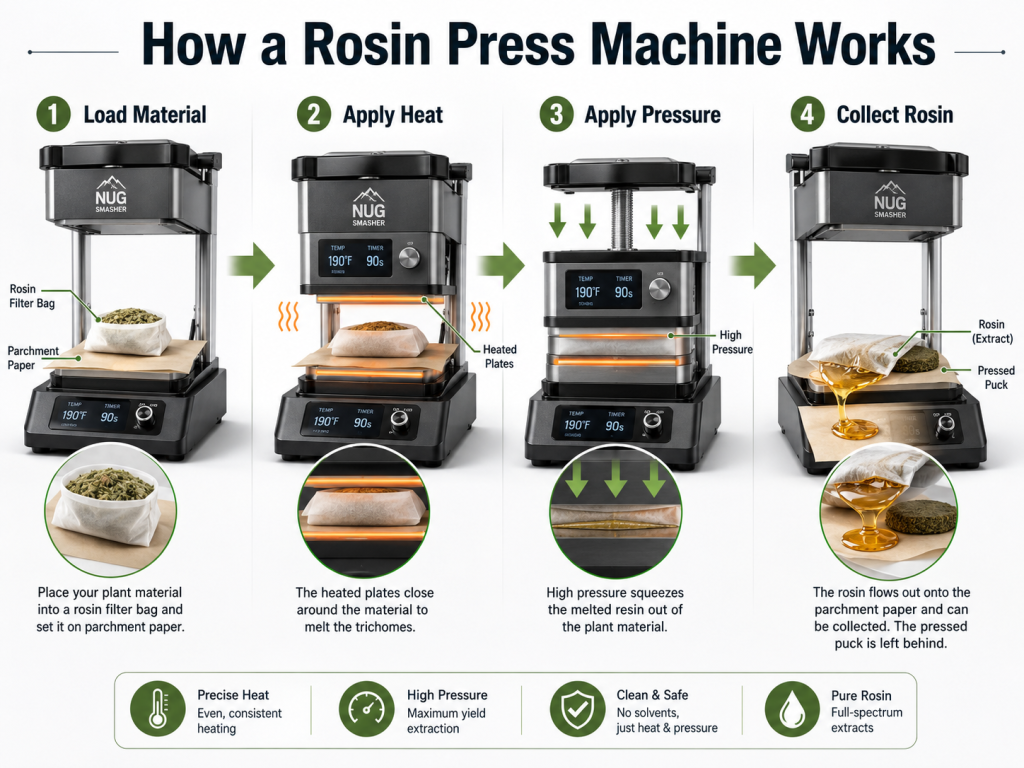
The three most important variables are temperature, pressure, and time. Temperature affects flow behavior and material response. Pressure determines how efficiently oil is forced out of the material. Time controls how long the material remains under heat and compression. A good rosin press machine allows these variables to be adjusted based on material type, thickness, moisture level, and desired output quality.
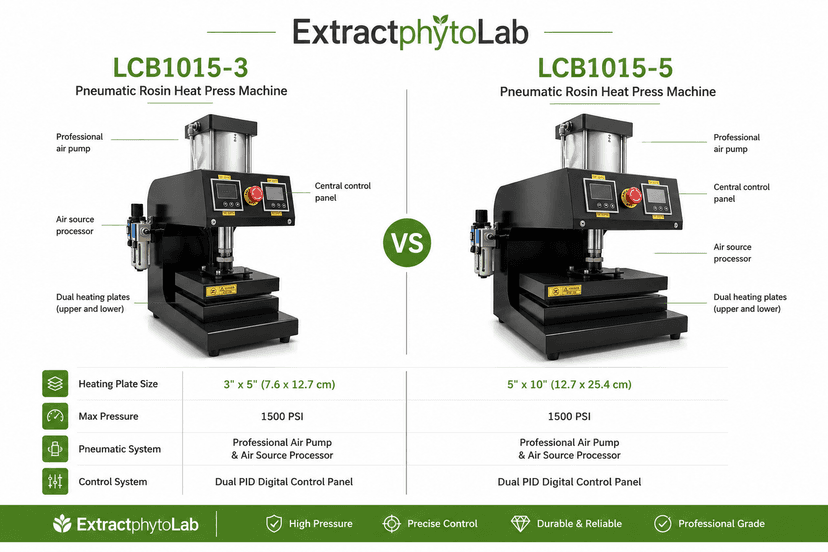
Pneumatic rosin press machines use compressed air to generate controlled pressing force. This structure reduces the physical effort required from the operator and improves consistency compared with purely manual systems. In a pneumatic system, an air pressure regulator allows the user to adjust the applied force through a control knob. The LCB1015-5 and LCB1015-3 pneumatic models both include integrated air pressure regulation and LCD control for time and temperature adjustment. (extractphyto.com)
For production users, automation also improves safety and workflow control. When the set pressing time is complete, the machine can release or lift automatically depending on the model design. Emergency stop functions are also important because heated plates and compression force create operational risk. The LCB1015-5 and LCB1015-3 models include an emergency stop button that lifts the upper heating platen when pressed, providing a faster response during urgent situations. (extractphyto.com)
Key Components and Technical Parameters
The heating platens are the core contact surfaces of a rosin press machine. They distribute heat across the material and influence pressing uniformity. Plate size should be selected according to the amount of material being processed and the size of the filter bag or pressing pouch. Smaller plates can be suitable for compact batches, while larger plates support broader material coverage. Both the LCB1015-5 Pneumatic Rosin Heat Press Machine and the LCB1015-3 Pneumatic Rosin Heat Press Machine are available with 10×15 cm, 12×12 cm, and 15×20 cm plate size options. (extractphyto.com)
Pressure capacity is another major specification. The LCB1015-3 is rated for a 0–2.5 ton pressure range, while the LCB1015-5 is rated for a 0–5 ton pressure range. This difference matters for buyers comparing compact and higher-force pneumatic systems. A lower pressure range may be suitable for lighter-duty or smaller-batch operation, while a higher pressure range provides additional force capacity for users who need more compression control. (extractphyto.com)
Temperature and time control determine how precisely the machine can adapt to different materials. Both models offer a 0–250°C temperature range and a 0–999 second time range, supporting flexible process settings across different pressing conditions. The LCD display panel provides time and temperature control and allows switching between Celsius and Fahrenheit, which improves usability for operators working with different measurement preferences. (extractphyto.com)
Power and electrical compatibility should also be reviewed before purchasing. Both machines are listed with 1100W power and 110V or 220V voltage options. This allows buyers to select a version that matches their facility’s electrical setup. The LCB1015-3 has a listed gross weight of 39 kg and packing size of 53×34×60 cm, while the LCB1015-5 has a listed gross weight around 60–61 kg depending on plate configuration and a packing size of 65×50×75 cm. (extractphyto.com)
Why Pneumatic Rosin Press Machines Are Used
A pneumatic rosin press machine is often selected when users need more consistent pressure control than manual operation can provide. Manual systems depend heavily on operator strength and technique, which can create variation between batches. Pneumatic systems use compressed air to drive the pressing mechanism, helping operators apply pressure more evenly and repeat the same process settings with less physical effort.
This consistency supports operational efficiency. When pressing time, temperature, and pressure are controlled more precisely, users can compare batch results more accurately. If output changes, it becomes easier to identify whether the difference came from the material, moisture condition, filter bag, or machine settings. This is important for facilities that need repeatable solventless extraction procedures rather than one-time experimental pressing.
A pneumatic rosin press machine also reduces labor intensity. In repeated production cycles, manual pressing can become tiring and less consistent over time. Pneumatic operation allows the machine to perform the force application while the operator focuses on material preparation, loading, collection, and documentation. This can improve workflow stability, especially when multiple cycles are performed in one session.
Safety and maintenance design should not be overlooked. Aviation air connectors, integrated pressure regulation, cooling features, and emergency stop systems can improve daily usability. The LCB1015 product pages describe aviation air connectors for reliable air connections and easier maintenance, along with a fan that activates when the heating plate reaches 80°C to help reduce electrical component temperature and support service life. (extractphyto.com)
Choosing Between the LCB1015-3 and LCB1015-5
The LCB1015-3 and LCB1015-5 are both pneumatic rosin heat press machines, but they serve slightly different pressure requirements. The LCB1015-3 provides a 0–2.5 ton pressure range, making it suitable for users who need pneumatic automation in a more compact force category. It is also lighter than the 5-ton model, which may be relevant for smaller workspaces or buyers with limited equipment handling requirements. (extractphyto.com)
The LCB1015-5 provides a higher 0–5 ton pressure range. This additional capacity can be valuable for operators who want more available pressing force, especially when working with larger plate configurations or material loads that require stronger compression. The higher-force model is heavier and larger in packed dimensions, so buyers should consider available workspace, bench strength, compressor compatibility, and handling requirements before selection. (extractphyto.com)
Both models share several important features, including pneumatic automatic operation, 1100W power, 110V or 220V voltage options, LCD time and temperature control, 0–250°C temperature range, and 0–999 second timer capability. Both also use adjustable air pressure regulation and include emergency stop functionality. These shared features make the selection mainly a question of pressure capacity, machine size, and intended production intensity. (extractphyto.com)
For buyers building a small or medium solventless processing workflow, the LCB1015-3 may be appropriate when lower pressing force is sufficient and compact equipment handling is preferred. For users who expect heavier-duty pressing demand or want more pressure headroom, the LCB1015-5 may provide better long-term flexibility. In both cases, the machine should be matched with proper filter bags, pressing sheets, material preparation procedures, and operator training.
Operating and Maintenance Considerations
Correct operation begins with stable power connection, air compressor connection, pressure adjustment, and temperature and time setup. The product guidance for both LCB1015 models describes connecting the power plug, switching on the machine, connecting to an air compressor, adjusting the regulator, setting temperature and time, placing the material after the buzzer indicates target temperature, and starting the pressing cycle. (extractphyto.com)
Operators should not treat one temperature or time setting as universal. Different materials and thicknesses require different settings. The product maintenance notes state that different items require different temperature and time settings because material and thickness vary. This is an important point for process development: pressing should be adjusted through controlled testing rather than guesswork. (extractphyto.com)
Routine maintenance supports long-term reliability. The machine should be turned off and unplugged when not in use. The product pages also note that the heat plate cools down automatically to room temperature if the heat press remains unused for more than 30 minutes. Keeping the machine clean, checking connectors, monitoring temperature behavior, and inspecting electrical and pneumatic components help reduce downtime. (extractphyto.com)
A rosin press machine is not only a pressing device; it is a process-control tool. Its value depends on how well it supports consistent heat, stable pressure, controlled timing, and safe operation. For users comparing pneumatic systems, the LCB1015-3 and LCB1015-5 offer two pressure categories within the same general operating concept. By choosing the right pressure range, plate size, voltage configuration, and workflow setup, buyers can build a more dependable solventless pressing process with improved consistency and long-term operating efficiency.