Does a micron specification prove that a finished rosin filter bag has no unintended openings? No. A mesh aperture describes an opening in the mesh. Finished-bag integrity also depends on the condition of the fabric and its joined edges. Evidence about one characteristic should not be presented as proof of every other characteristic.
This guide helps purchasing teams request appropriate evidence for rosin filter bags. It addresses what a specification or inspection can establish, rather than recommending a micron size or an operating recipe.

What the product listing establishes
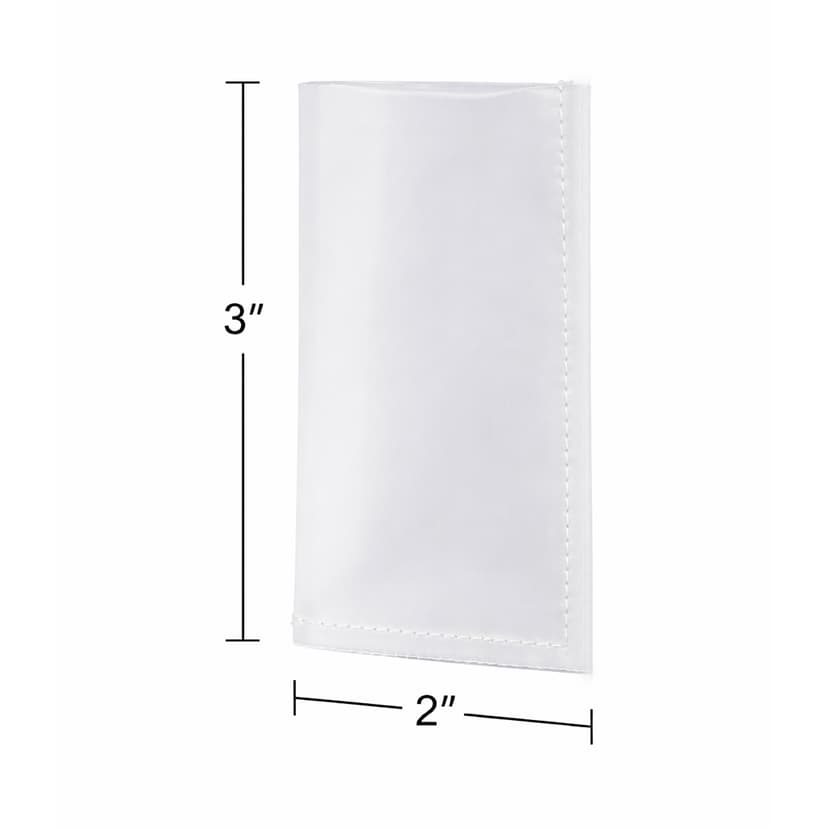
The 2 × 3 inch filter bag listing identifies nylon mesh and 25, 37, 73, 90, 120 and 160 micron options. It also describes sewn or welded construction options. Confirm the exact combination in the quotation: the options shown across a product range are not an inspection record for a particular supplied lot.
A selected micron label does not, by itself, state an aperture tolerance, a test method or an absolute particle-retention guarantee. If any of these is important to the purchase, ask the supplier to define it and provide applicable evidence before approving the order.
Separate three kinds of evidence
Mesh evidence concerns the fabric: its identity, specified opening size and the method used to assess that size. Ask whether a report refers to incoming mesh stock, a sample cut from finished bags or another material. Record the relationship between the tested material and the order.
Construction evidence concerns the completed bag: the agreed seam or joint, its continuity, visible damage and other unintended openings. A fabric report cannot establish that every finished joint is acceptable. Conversely, a photograph of a neat seam does not measure mesh aperture.
Application evidence concerns performance under defined conditions. Neither a visual inspection nor an aperture report proves suitability for every use. Agree any necessary evaluation separately, including the configuration, conditions, acceptance criteria and limits of the conclusion.
Specify what “integrity” means for acceptance
A filter bag is porous by design. “No leakage” is therefore ambiguous unless it identifies what must be retained, where unintended passage is being checked and under what conditions. Avoid using that phrase as an unexplained purchase requirement.
For a receiving check, buyers can agree defect descriptions such as a tear, a visible gap in a joined edge or a construction mismatch against the approved sample. Keep the normal filling opening distinct from a defect. Reference photographs can help people classify the same observation consistently, but photographs do not demonstrate the absence of smaller defects outside their resolution.
The sewn versus welded seam guide covers construction choices. This evidence review should accompany the selected construction, rather than assume one joining method guarantees integrity in all conditions.
Ask questions that expose gaps in a supplier report
- Which product, mesh specification and lot does the report identify?
- Was the inspected item mesh stock or a completed bag?
- Which characteristic was measured, and by what method?
- How many items were examined, and how were they selected?
- What acceptance criteria were agreed before inspection?
- What remains untested or outside the report’s scope?
A result from selected samples does not mean every item was examined. A report without a lot relationship may be useful background information, but it should not be described as acceptance evidence for your shipment. Request clarification rather than filling missing fields with assumptions.
Handle an observed defect without guessing its cause
Record the bag’s lot, ordered specification, condition on arrival and the location of the observation. Retain photographs and affected items where practical. Distinguish evidence of pre-existing damage from observations made after handling or use; a later opening alone does not identify when or why it formed.
Compare against documented retained samples and ask the supplier to investigate against the agreed requirements. This article does not set a universal defect allowance, seam-strength value or operating limit. Those require an order-specific agreement and an appropriate evaluation.
Request evidence with your quotation
EXTRACTPHYTO is a China-based manufacturer of botanical separation equipment. Send your purchasing requirements, including company, bag size, micron option, construction, quantity and destination. Identify whether you need mesh measurements, finished-bag inspection evidence or an agreed application evaluation, and confirm availability, cost and lead time in writing.
You can also email [email protected]. The questions above are a purchasing framework, not a claim that every EXTRACTPHYTO order includes a particular test, certification or report.