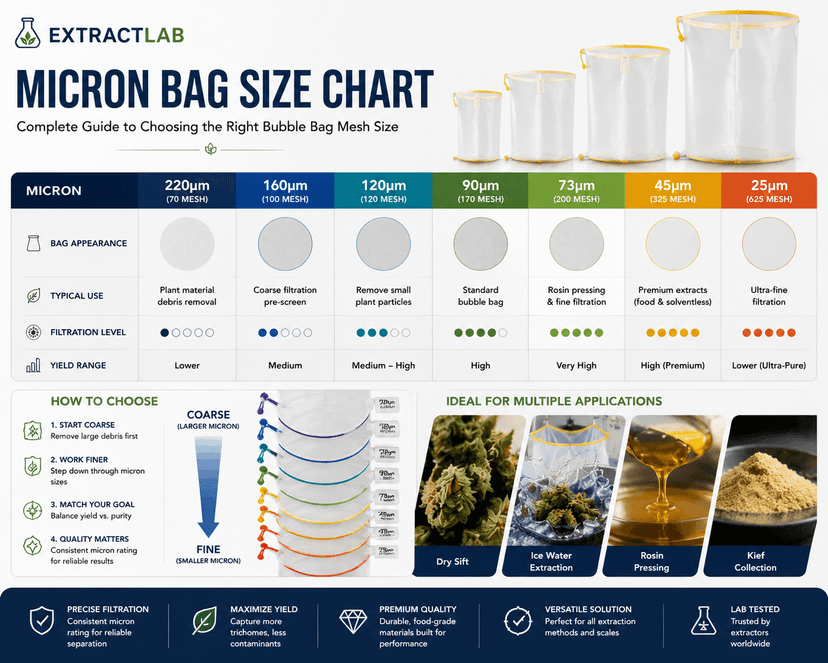
Introduction: Why the 75 Micron Screen is the Industry Legend
In the pursuit of solventless perfection, there is one measurement that stands above the rest: 75 micron. If you are looking to separate the legendary “melt” from the common “kief,” the 75 micron dry sift screen is your most vital tool.
At this precise measurement, we are no longer just sifting; we are performing surgical isolation. The 75-micron mesh is the gateway that allows mature, resin-rich trichome heads to pass through while ruthlessly excluding the broken stalks and plant debris that ruin purity. In this comprehensive guide, we will explore why the 75 micron dry sift screen is the cornerstone of every professional lab and how to master its use for world-class results.
1. The Science of the 75-Micron Aperture
To understand why 75 micron (75μm) is the “sweet spot,” we have to look at the biology of the plant.
-
The Anatomy of a Resin Head: Most premium, capitate-stalked trichomes reach their peak potency when they are between 70 and 110 microns in diameter.
-
The Filtration Logic: A 75 micron dry sift screen acts as a precision filter. It is just wide enough to let the most potent, oil-filled heads slide through, but it is tight enough to catch the vast majority of “cystolith hairs”—those tiny, needle-like leaf fragments that cause hash to burn black instead of liquefying.
[Image Suggestion: Microscopic view of 75-micron mesh filtering resin heads]
2. Micron vs. Mesh: The Technical Breakdown
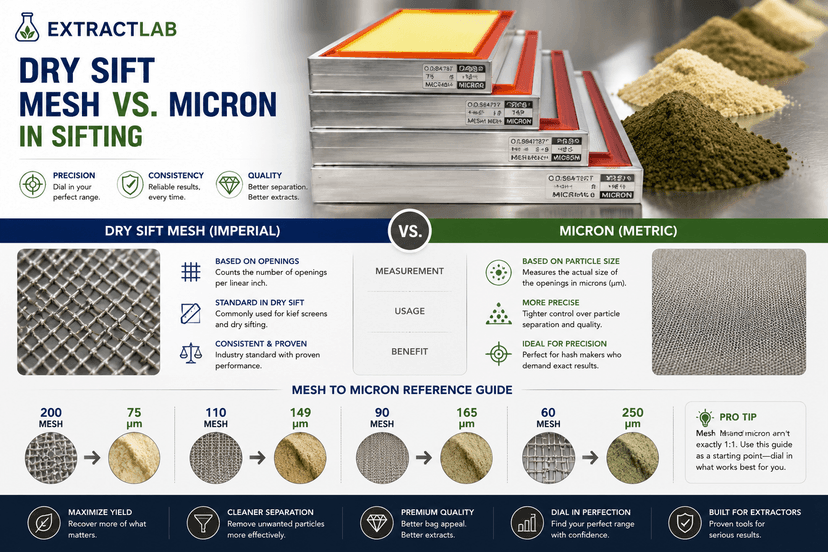
One common point of confusion is the conversion between microns and mesh. For the 75 micron dry sift screen, accuracy is everything.
-
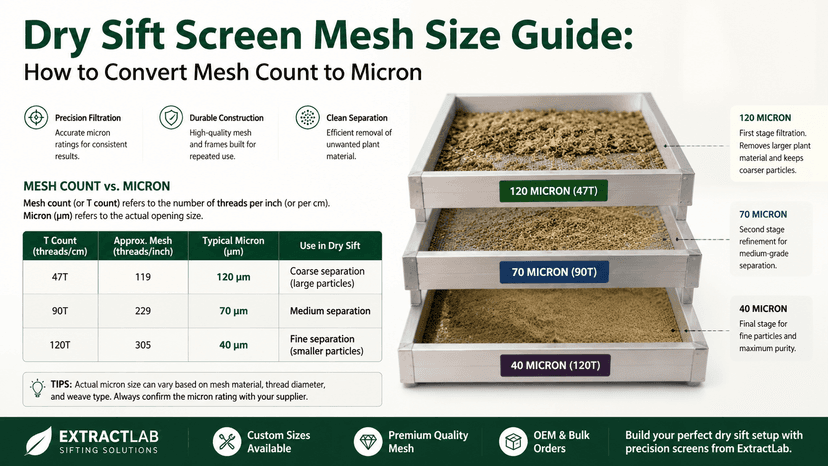
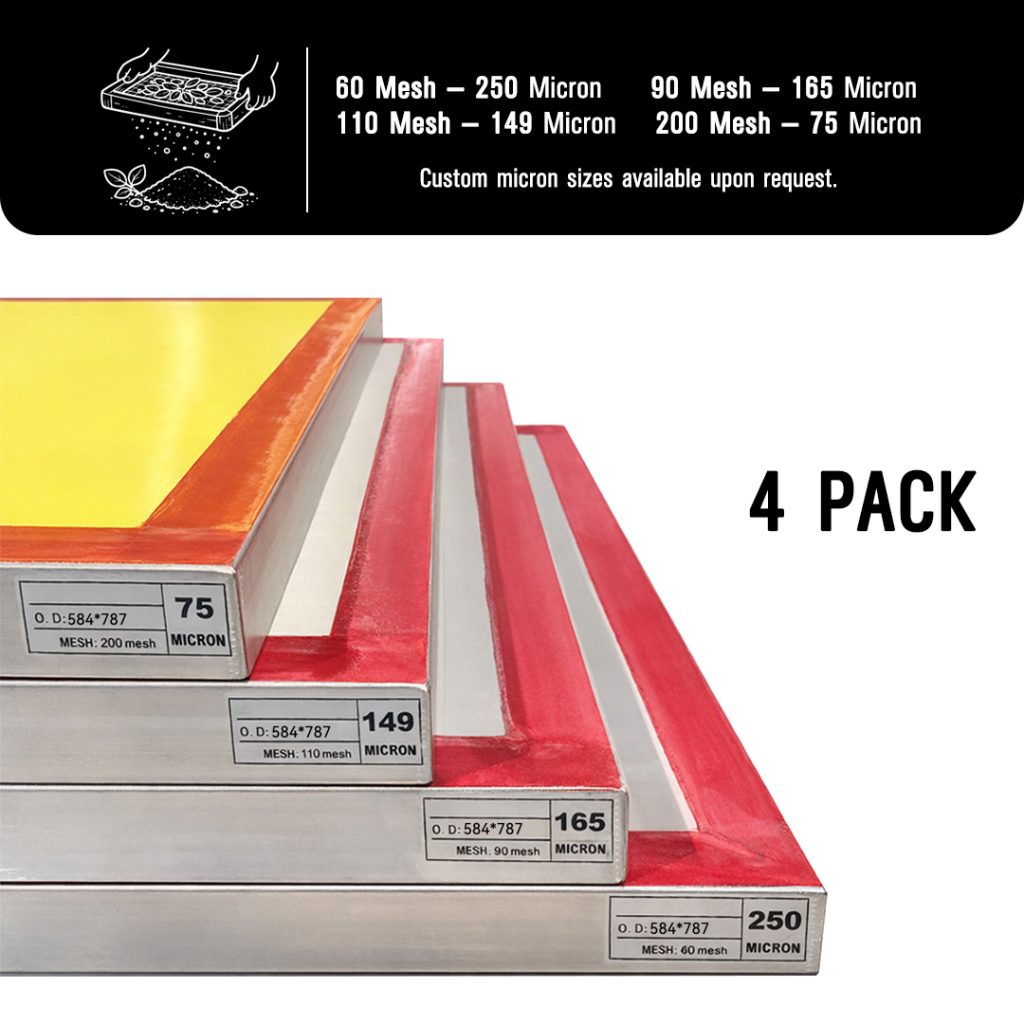
75 Micron ≈ 200 Mesh: In the US Standard Sieve system, a 75μm opening corresponds roughly to a 200 Mesh.
-
Why Precision Matters: When you are aiming for 6-star quality, a 5-micron variance can change your entire result. Professional-grade dry sift mesh must be high-tension and chemically resistant to ensure the hole size remains constant under the physical stress of sifting.
3. The 4-Screen Fractional System: Where 75µm Fits
A 75 micron dry sift screen should never work alone. To protect its delicate mesh and ensure purity, it must be part of a stacked dry sift screen set.
-
The Scalper (220µm – 250µm): Removes the “macro” waste—leaves and stems.
-
The Cleaner (140µm – 160µm): Removes the “micro” waste—broken stalks and hair.
-
The Collector (75µm – 90µm): This is the Keeper Screen. This is where your highest-quality material is isolated.
-
The Fines (Below 45µm): Catching the dust and immature heads that fall through the bottom.
By using the 75 micron layer as your penultimate filter, you ensure that the resin collected is free from the pressure of the plant material above it.
4. Aluminum vs. Wood: Why Professionals Choose Metal
For a fine 75 micron dry sift screen, the frame material is a deal-breaker.
-
The Wood Problem: Wood is organic. It swells with humidity and shrinks in dry air. This constant movement ruins the tension of a 200-mesh screen. A sagging screen creates “pockets” where resin heads get stuck and oxidize.
-
The Aluminum Solution: We use sandblasted aluminum frames. Aluminum is immune to humidity and allows the mesh to be stretched “drum-tight.” This tension is essential for the rebound effect—the vibration that causes resin heads to dance across the screen and fall through without being crushed.
5. Mastering Static Tech with Your 75 Micron Screen
This is where the magic happens. To reach the “White Gold” status, you must use Static Technology.
The 75 micron dry sift screen is the perfect surface for static separation. Because the mesh is so fine, it creates a high surface-area-to-weight ratio. By using a PVC card or parchment-wrapped tool to move the material, you create a static charge that pulls the pure resin heads through the screen while the non-charged plant matter stays on top.
The Pro Secret: If you find your 75μm sift still has a slight green tint, it’s not the screen’s fault—it’s the humidity. Always work in a cold, dry room (under 35% RH) to maximize the efficiency of your 75 micron dry sift screen.
6. Maintenance: Protecting Your Investment
A high-quality dry sift mesh at 75 microns is a precision instrument. If it gets “blinded” (clogged), your yield will vanish.
-
Cleaning: Use only 99% Isopropyl Alcohol and a soft-bristled brush.
-
Storage: Always store your screens vertically. Never stack weight on the mesh, as it can cause micro-tears in the 75μm openings.
-
Temperature: Never use heat to dry your screens. Heat can cause the glue holding the mesh to the aluminum frame to fail.
7. Comparison: 75 Micron vs. Other Sizes
| Feature | 75 Micron (75μm) | 120 Micron (120μm) | 200 Micron (200μm) |
| Purity Level | ⭐⭐⭐⭐⭐⭐ (Full Melt) | ⭐⭐⭐⭐ (High Grade) | ⭐⭐ (Commercial) |
| Main Function | Final Isolation | High-Yield Cleaning | Scalping/Pre-Filter |
| Best For | Dabbing/Flagging | Rosin Pressing | Edibles/Infusions |
| Mesh Equiv. | 200 Mesh | 120-140 Mesh | 70-80 Mesh |
FAQ: Everything You Need to Know About 75 Micron Screens
Q: Why choose 75 micron over 90 micron?
A: While 90μm offers a higher yield, the 75 micron dry sift screen is more restrictive, resulting in a cleaner “melt.” If purity is your goal, 75μm is the winner.
Q: Can I use this screen for dry ice hash?
A: You can, but be careful. Dry ice is aggressive and can force plant matter through even a 75μm mesh. We recommend using it as a secondary cleanup screen for dry ice extraction.
Q: Is stainless steel better than nylon for 75 microns?
A: For long-term durability and chemical cleaning, stainless steel 75 micron dry sift screens are superior. They hold tension better and don’t react with the terpenes in the resin.
Conclusion: Don’t Compromise on the Final Step
In the solventless world, your reputation is built on the purity of your end product. The 75 micron dry sift screen is not just a piece of equipment; it is the final filter between you and the highest tier of quality.
Whether you are a connoisseur looking for the perfect melt or a commercial producer aiming for the top shelf, investing in a high-tension, aluminum-framed 75-micron screen is the single most effective move you can make. Stop settling for “green kief” and start producing the golden, sand-like resin that only a true 75 micron dry sift screen can provide.
[Explore our Professional-Grade 75 Micron Dry Sift Screen Collection Here]