Introduction: Why Small Batches Lead to Big Results
In the world of solventless concentrates, bigger isn’t always better. While massive commercial washes have their place, the 1 gallon bubble bag has become the secret weapon for those chasing “6-star” full melt. Why? Because extraction is a game of temperature control and physical agitation. In a smaller vessel, you have a higher degree of control over the “vortex,” ensuring that your delicate trichome heads are separated without being shattered into oblivion.
Whether you are a home grower processing your personal harvest or a professional lab running a “test wash” to check a new strain’s viability, your equipment is the only thing standing between a golden concentrate and a green, plant-filled mess. This guide dives deep into the engineering, the microns, and the methodology of the 1-gallon extraction world.
1. The Anatomy of a High-Quality 1 Gallon Bubble Bag
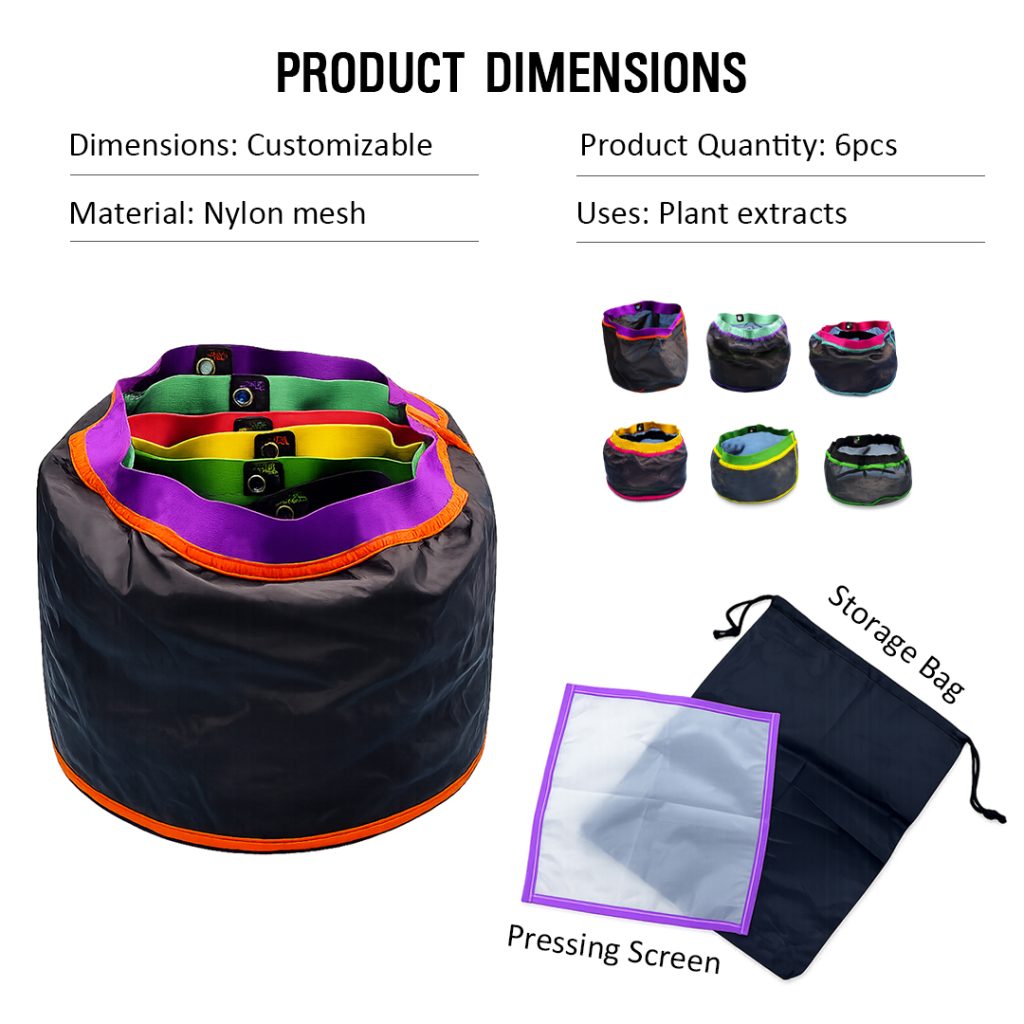
Not all bags are created equal. If you’ve ever bought a cheap set off a generic marketplace, you’ve likely dealt with flaking plastic, clogged mesh, or—worst of all—leaking seams. When we talk about professional-grade 1 gallon bubble bags, we are looking at three critical engineering factors.
All-Mesh vs. Side-Wall Mesh
This is the most debated topic in the extraction community.
-
Side-Wall Mesh (Traditional): These bags have mesh only at the bottom. While they are durable, they can be slow to drain, leading to “trichome trapping” in the corners where the fabric meets the mesh.
-
All-Mesh Bags: These are the modern gold standard. The entire bag is a filter. This allows for lightning-fast drainage, which is crucial for keeping your water ice-cold. Fast drainage means your resin spends less time sitting in water, preserving the volatile terpenes that give your hash its “soul.”
Monofilament Nylon: The Gold Standard
The mesh itself should be made of high-tenacity monofilament nylon. Unlike cheaper multifalament polyester, monofilament nylon has a smoother surface. This means the trichome heads don’t get “stuck” in the weave; they slide right through to the collection layer.
Heat-Pressed Seams
If your bags are stitched with traditional thread, you have a contamination risk. Thread can fray, and those tiny fibers end up in your dabs. Look for 1 gallon bubble bags with heat-pressed or reinforced waterproof seams to ensure zero fiber shedding.
2. Understanding the Micron Stack: What Each Bag Does
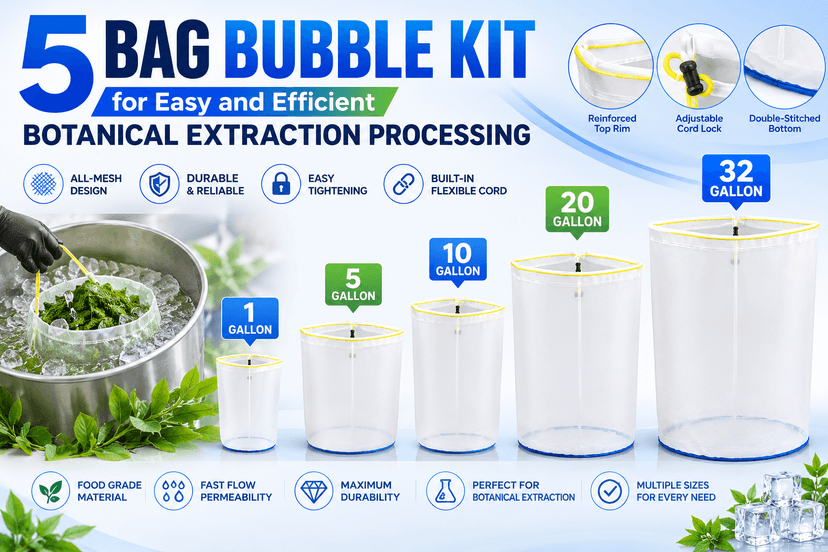
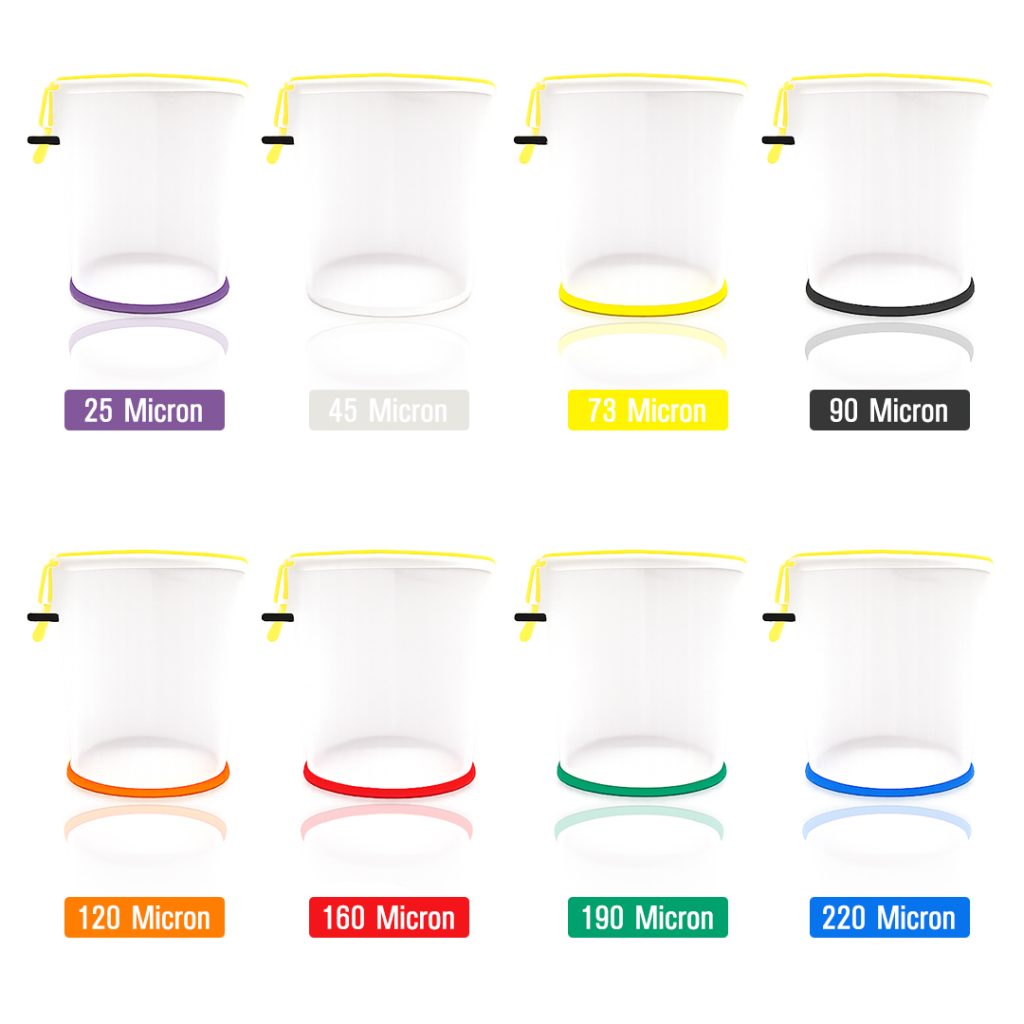
A standard 1 gallon bubble bag set usually comes in 4, 5, or 8-bag configurations. But what do those numbers actually mean for your final product?
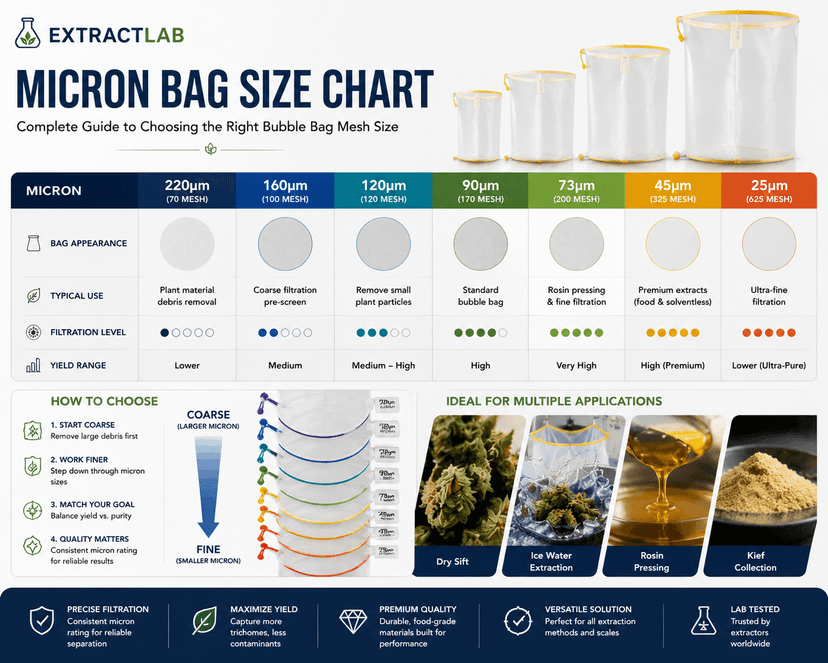
| Bag Size (Micron) | Role in the Stack | The “Grade” of the Hash |
| 220μm | The Workhorse (Work Bag) | Catching leaves, stems, and heavy debris. |
| 160μm | The Guard | Catching “trash” trichomes and broken hairs. |
| 120μm | The High Grade | Premium resin heads (cultivar dependent). |
| 90μm | The Sweet Spot | Often the best quality; the “Full Melt” zone. |
| 73μm | The Legend | The universal standard for 5-star and 6-star hash. |
| 45μm | The Collector | Small/immature heads; great for edibles or rosin. |
| 25μm | The Foundation | Catching the “fines”; very slow draining. |
The “Sweet Spot” Strategy
For 1-gallon washes, many pros prefer a 5-bag kit. It provides enough separation to get high purity without the “drainage fatigue” of an 8-bag set. In a small 1-gallon bucket, every second counts to keep the temperature near $0^{\circ}C$.
3. The Physics of the 1-Gallon Wash
Why use 1 gallon bubble bags instead of 5-gallon bags? It comes down to Fluid Dynamics.
-
Vortex Control: In a 1-gallon bucket, your hand-stirring or drill-mixing creates a much tighter vortex. This allows for a “gentle but firm” agitation that snaps the trichome stalks without pulverizing the leaves.
-
Ice-to-Water Ratio: It is much easier to maintain a consistent “slurry” consistency in a 1-gallon setup. You can precisely control the amount of ice, ensuring that the water stays at peak density to keep the trichome heads buoyant.
-
Minimal Loss: If you are washing only 28-50 grams of material, a 5-gallon bag will “eat” your yield. The surface area is too large, and the resin gets lost in the fabric. A 1-gallon bag ensures that every precious gram is collected at the bottom of the mesh.
4. Step-by-Step: Maximizing Yield with 1 Gallon Bags
Step 1: The Pre-Soak
Never start stirring immediately. Your material is brittle when dry. Let it soak in the ice water for 15-20 minutes inside your 220μm work bag. This rehydrates the plant matter, making it “leathery” and less likely to break into tiny green particles that contaminate your mesh.
Step 2: The Gentle Wash
Don’t treat your material like a blender. You want to wash the heads off, not grind them. For 1-gallon batches, a 10-minute gentle stir is often more effective than a 30-minute aggressive one.
Step 3: The Cold Rinse
After pulling your bags, use a sprayer with distilled ice water. This “rinses” the resin heads together in the center of the mesh and washes away any lingering water-soluble pigments (like anthocyanins) that can turn your hash purple or brown.
5. Maintenance: How to Make Your Bags Last for Years
A professional 1 gallon bubble bag is an investment. If you don’t clean it, the microscopic holes in the mesh will become “blinded” by residual oils.
-
The ISO Rule: Never soak your entire bag in Isopropyl alcohol. It can degrade the waterproof coating on the sidewalls. Instead, use a soft toothbrush dipped in ISO to spot-clean only the mesh after every use.
-
Cold Water Only: Never use hot water to clean your bags. It will melt the resin and smear it permanently into the fibers.
-
Air Dry: Always hang your bags to dry completely before storing. Mold is the number one killer of bubble bags.
FAQ: Common Questions About 1 Gallon Bubble Bags
Q: How much material can I fit in a 1 gallon bubble bag?
A: Ideally, you should process between 28g to 56g (1-2 oz) of dry material, or up to 150g of fresh frozen material per wash. Overloading the bag will lead to poor filtration and “green” hash.
Q: Can I use 1-gallon bags in a 2-gallon bucket?
A: Yes! Using a slightly larger bucket can actually give you more “swing room” for stirring, as long as the bags can still be secured over the rim.
Q: Why is my 25-micron bag taking so long to drain?
A: The 25μm mesh is incredibly fine. If it’s stalling, it’s likely because it’s doing its job—catching the smallest particles. Lightly tapping the side of the mesh can help clear the “clog” and speed up drainage.
Conclusion: Small Batch, Top Shelf
If you are serious about your concentrates, the 1 gallon bubble bag is a non-negotiable part of your toolkit. It offers the precision, control, and efficiency that larger bags simply cannot match for boutique extractions.
Stop settling for “bulk” quality. By focusing on high-quality monofilament mesh and the right micron stack, you can turn your harvest into a shimmering pile of golden resin. Whether you’re chasing the “white sand” look or looking for the perfect rosin starter, your journey starts with the right bag.
[Ready to elevate your extraction? Explore our Professional 1 Gallon Bubble Bag Kits here.]
[Ready to elevate your extraction? Explore our Professional 32 Gallon Bubble Bag Kits here.]