Introduction: The Gatekeeper of Your Extraction Process
In the world of solventless extraction, the 200 micron dry sift screen is often the unsung hero of the lab. While most beginners obsess over the fine 73μm or 90μm layers where the “gold” is caught, veteran extractors know that your final product is only as clean as your first filtration step.
If you’ve ever found tiny leaf fragments or “green dust” in your premium melt, your primary filtration failed. This is where the 200-micron mesh (approximately 70-80 mesh) comes in. It serves as the ultimate gatekeeper, ensuring that only the resin heads pass through while the bulk of the plant contaminant stays behind.
1. Understanding the 200 Micron Spec: Mesh vs. Micron
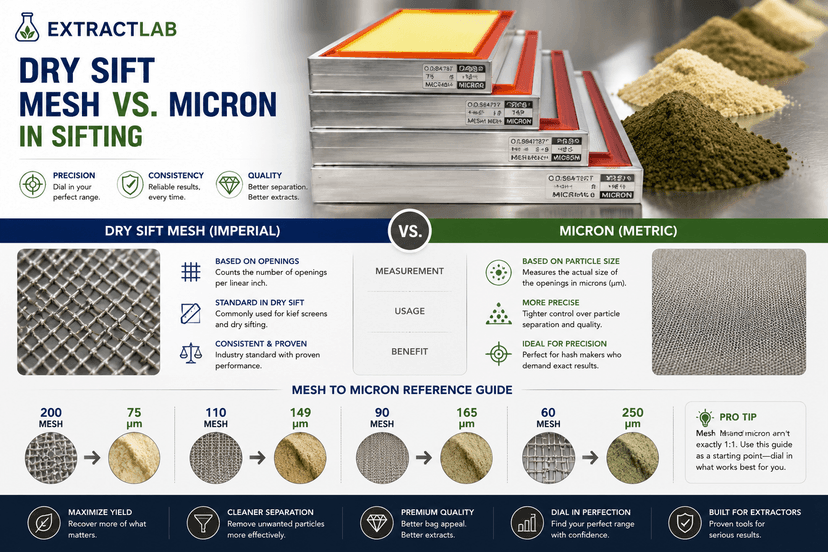
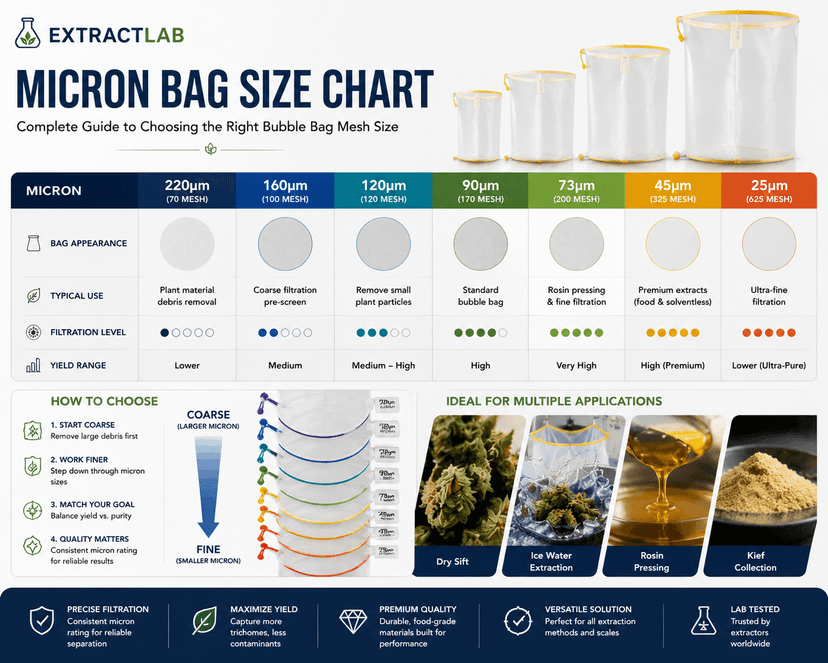
When shopping for a dry sift screen, the terminology can get confusing. A 200 micron dry sift screen refers to the actual size of the aperture (the holes).
-
The 70 Mesh Conversion: In the US Mesh standard, 200 microns is roughly equivalent to a 70 mesh screen.
-
Why 200μm? This specific size is strategically chosen because the largest mature trichome heads rarely exceed 150-160 microns. By using a 200-micron buffer, you allow even the largest, most potent resin glands to fall through freely without the risk of clogging, while catching nearly 100% of the stems, seeds, and broken leaf matter.
2. Why the 200 Micron Layer is Non-Negotiable
You might wonder: “Can’t I just skip to the 120μm screen?” Technically, yes. Practically, no.
Prevent “Blinding” and Clogging
If you place raw plant material directly onto a fine 100-micron screen, the weight and volume of the leaves will “blind” the mesh. Resin heads get trapped under the leaf pile, and you’ll find yourself shaking the screen for hours with minimal yield. The 200 micron dry sift screen handles the “heavy lifting,” allowing the finer screens below to work in a low-pressure environment.
Quality Control
By isolating the 200μm+ fraction, you are effectively “scalping” your material. Everything caught on top of this screen is waste or “mulch.” Everything that passes through is your “working stock” that is ready for precision grading.
3. Aluminum vs. Wood: Choosing the Right Frame
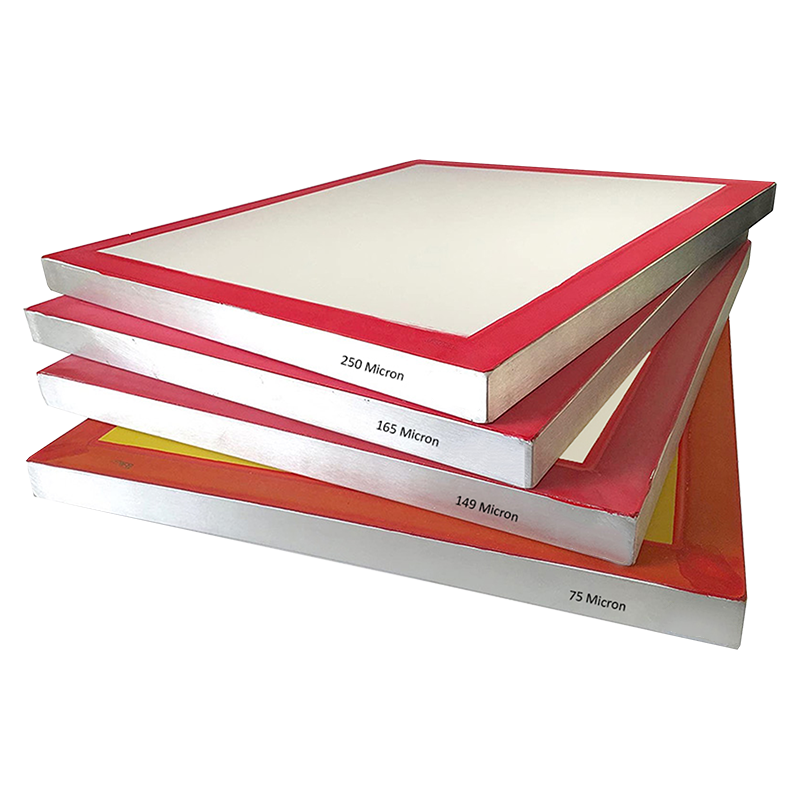
For a 200-micron screen, durability is paramount because this layer takes the most physical abuse.
-
The Weakness of Wood: Wooden frames are prone to warping. As soon as a frame warps, the mesh loses tension. A sagging dry sift mesh creates “pockets” where material pools, forcing you to use more physical force, which in turn grinds plant matter through the holes.
-
The Aluminum Advantage: Professional dry sift screen sets use sandblasted aluminum. Aluminum is lightweight, easy to clean with 99% ISO, and keeps the mesh “drum-tight.” This tension is critical for the “rebound effect”—when you tap the frame, the resin heads bounce and separate from the stalks effortlessly.
4. How to Use the 200 Micron Screen Like a Pro
Achieving high-purity sift isn’t just about the equipment; it’s about the technique.
The “Light Touch” Method
When working with your 200 micron dry sift screen, avoid the temptation to “scrub” the material against the mesh. Instead, use a gentle side-to-side shaking motion or a light “tapping” on the side of the frame. This allows gravity to do the work without forcing contaminants through.
Static Tech Integration
Even at 200 microns, static electricity can be your best friend. By using a parchment-wrapped card to move the material across the aluminum frame, you can begin the static separation process at the very first stage, ensuring that the material falling through to your 120μm and 90μm screens is already partially purified.
5. Maintenance and Cleaning
Because the 200-micron screen deals with raw, often sticky material, it is prone to resin buildup.
-
Cold Cleaning: Always clean your screens in a cold environment.
-
Solvent Use: Use 99% Isopropyl alcohol and a soft-bristled nylon brush. Avoid metal brushes, which can snag the fine sift mesh.
-
Visual Inspection: Periodically hold your screen up to a light source. If you see “ghosting” or dark patches, the mesh is blinded and needs a deep clean to restore your yield.
6. Comparison: 200 Micron in the Filtration Stack
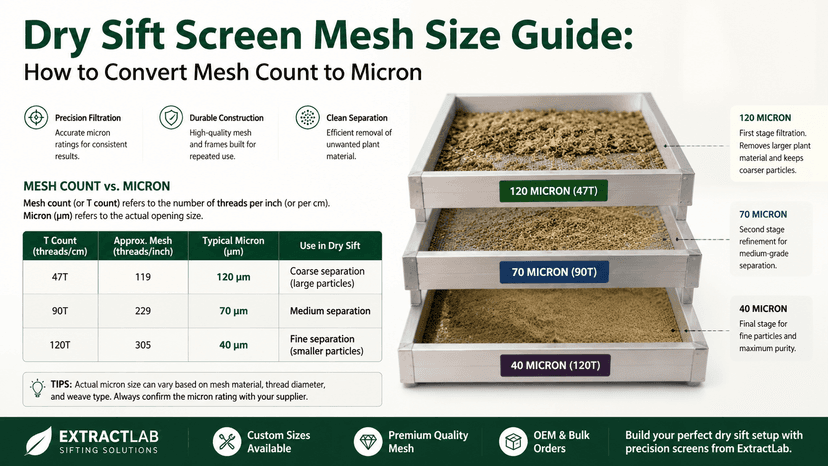
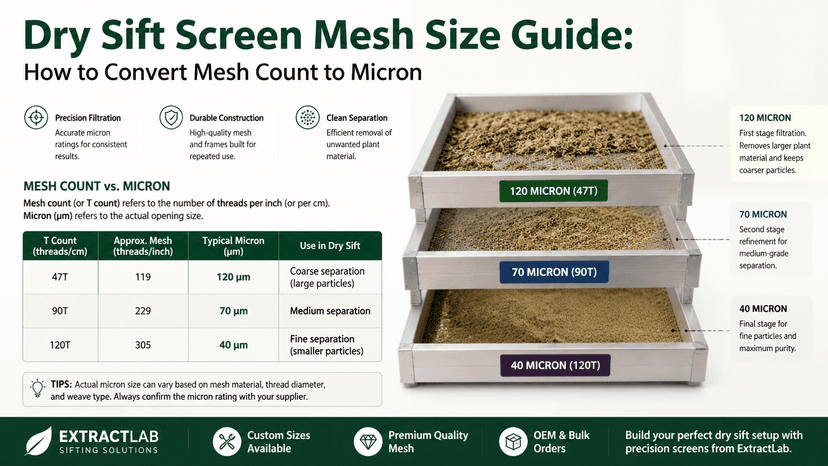
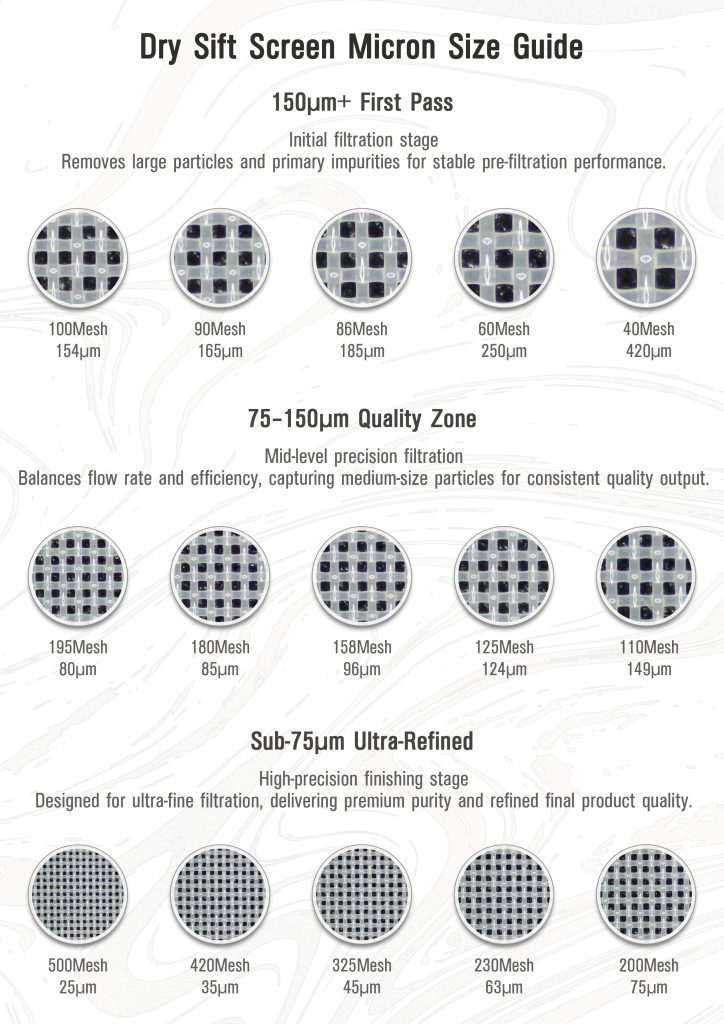
| Screen Layer | Micron Size | Mesh Equivalent | Primary Function |
| Scalping (Top) | 200µm | 70-80 Mesh | Removing leaf debris & stems |
| Cleaning (Mid) | 150µm | 100 Mesh | Removing broken hairs |
| Collection (Mid) | 90µm – 120µm | 140-170 Mesh | Capturing premium heads |
| Fines (Bottom) | <70µm | 200+ Mesh | Immature heads & dust |
FAQ: Common Questions about 200 Micron Screens
Q: Is 200 micron too big for kief?
A: As a final product, yes. It will contain too much plant matter. However, as a first step in a multi-screen system, it is the perfect size to separate the bulk waste from the resin.
Q: Can I use a 200 micron screen for dry ice hash?
A: Yes. Dry ice hash often requires slightly larger microns because the process is more aggressive. A 200 micron dry sift screen is an excellent choice for a high-yield dry ice extraction.
Q: How long does the mesh last?
A: If you choose a professional aluminum frame with high-quality stainless steel or nylon mesh, it can last for years of heavy use, provided it is cleaned properly.
Conclusion: Don’t Skimp on the First Step
A high-quality 200 micron dry sift screen is the foundation of a professional extraction lab. It protects your finer screens, increases your efficiency, and ensures that your final “Gold” is free from macro-contaminants.
If you are looking for a durable, high-tension, and professional-grade solution, our aluminum-framed screens are designed for the rigors of commercial and connoisseur use. Stop settling for messy results—start your extraction with the right gatekeeper.
[Browse our Collection of Professional 200 Micron Dry Sift Screens Here]