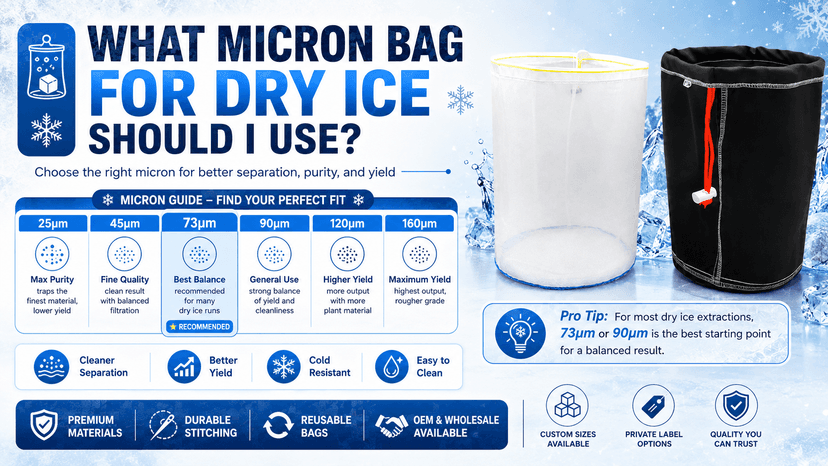
For solventless extraction connoisseurs and commercial labs alike, the pursuit of the perfect ice water hash comes down to a game of microns. You spend weeks cultivating premium genetics, chilling your water to the exact freezing point, and perfecting your washing cycles. Yet, many extractors overlook the single most critical gatekeeper of their final yield: the material of their bubble bags.
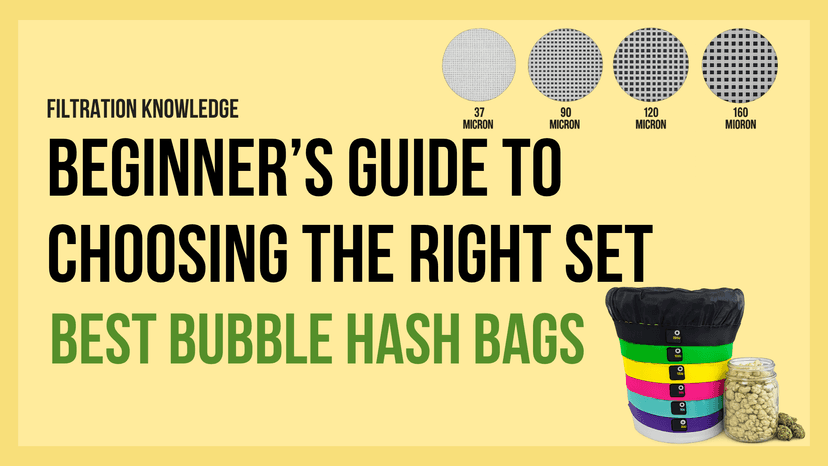
When browsing the market for extraction filtration kits, you will generally face two structural designs and material compositions: Traditional Nylon Canvas with a Mesh Bottom and All-Mesh Bags (often utilizing high-grade Polyester or Nylon monofilament).
While they might look similar to the untrained eye, their performance in water drainage speed, micron accuracy, stretching, and durability could not be more different. In this comprehensive guide, we will break down the science behind these materials to help you decide which setup will maximize your trichome yields and elevate your extraction purity. you can use our Ice Water Extraction Bag Selector Tool before reading further.
1. Understanding the Anatomy of Bubble Bags
Before diving into the material showdown, we must understand how these two designs are engineered.
The Traditional Setup: Nylon Canvas + Mesh Bottom
This is the classic bubble bag design that pioneered the home-growing and DIY extraction market.
- The Sidewalls: Made from heavy-duty, waterproof nylon canvas (often rated in denier, like 200D to 600D cordura-style fabric). Water cannot pass through these sidewalls.
- The Bottom: A circle of woven nylon mesh sewn onto the base of the canvas cylinder. This is the only area where water drains and filtration happens.
The Modern Setup: All-Mesh Bags
Driven by the demands of commercial labs and high-volume processors, the All-Mesh bag is a single-material construction.
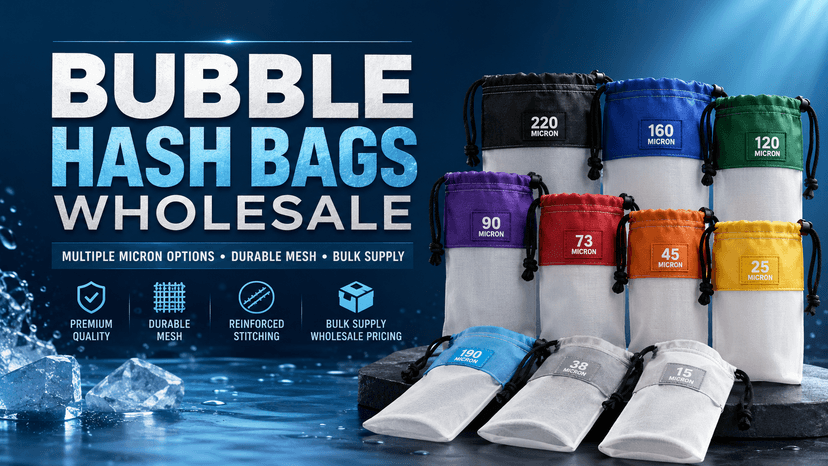
- The Whole Bag: From top to bottom, the entire bag is made of precision-woven monofilament mesh (traditionally Nylon, or more recently, premium Polyester). Water drains freely from every square inch of the bag’s surface area.
2. Drainage Efficiency: The Battle of Process Velocity
In ice water extraction, time and temperature are your greatest allies—and your greatest enemies. To preserve volatile terpenes, your water slurry must remain as close to as possible throughout the entire wash.
Nylon Canvas + Mesh Bottom: The Drainage Bottleneck
Because water can only escape through the bottom screen, traditional canvas bags create a severe drainage bottleneck. When pulling a 5-gallon or 20-gallon bag out of a washing vessel, the water pressure forces all the liquid toward a single focal point: the bottom mesh.
If you are running a heavy batch with high plant biomass or a massive yield of sticky trichomes, the bottom mesh quickly becomes coated, leading to clogging (blind-offs). This slow drainage causes the water temperature to rise inside the bag, causing the trichome heads to soften and stick together, ultimately ruining your terpene profile and slowing down your lab’s daily workflow.
All-Mesh Bags: 360-Degree Sidewall Drainage
All-Mesh bubble bags eliminate the drainage bottleneck entirely. Because the sidewalls are made of the same filtration mesh as the bottom, water drains instantaneously from all directions.
A 360-degree drainage system cuts down your processing time by up to 70%. It prevents water from pooling, maintains ultra-low temperatures, and ensures that your delicate trichome heads are separated from the water swiftly without undergoing mechanical degradation. For commercial operations where “time is money,” All-Mesh is the undisputed king of efficiency.
3. Micron Precision and the “Stretching” Problem
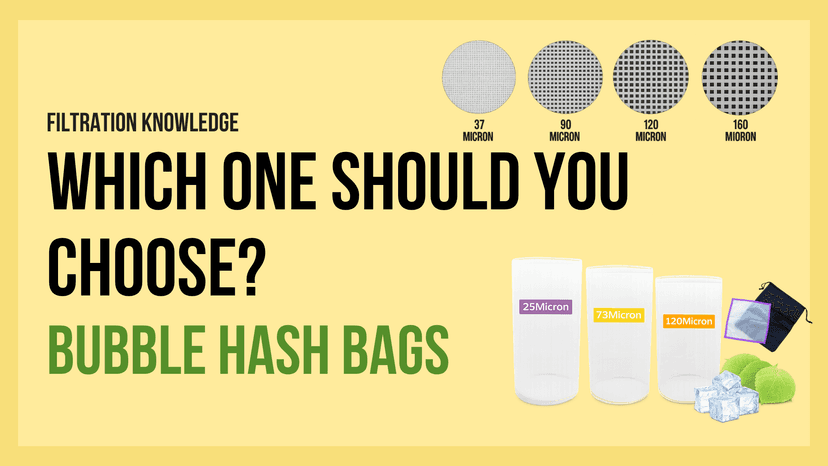
The goal of utilizing a multi-bag kit (e.g., 220, 160, 120, 90, 73, 45, and 25 microns) is to sort your botanical compounds strictly by size. The 73 and 90-micron bags usually hold the “sweet spot” full-melt trichome heads. However, your sorting is only as good as the physical stability of the mesh holes.
The Hydrophobic Reality of Nylon vs. Polyester
This is where true material science comes into play. Nylon is naturally hydrophilic—meaning it absorbs water. When nylon fibers are submerged in cold water for hours, they absorb moisture, swell, and become pliable.
When you lift a traditional nylon canvas bag filled with gallons of heavy ice water, the immense weight puts downward pressure on the mesh. Because the wet nylon mesh is pliable, it stretches.
What happens when a 73-micron nylon screen stretches under pressure? Those microscopic 73-micron square holes expand to 80, 85, or even 90 microns. This structural failure is known in the industry as “Micron Drift.” As a result, larger plant contaminants or broken stalks slip through into your premium collection bags, contaminating your full-melt hash with lower-grade particles.
Why Premium Polyester Mesh Outperforms Nylon
To combat Micron Drift, high-end All-Mesh bag manufacturers have transitioned from Nylon to Polyester monofilament precision mesh.
Unlike Nylon, Polyester is hydrophobic. It repels water and absorbs virtually zero moisture. Whether dry or submerged in ice-cold water for 24 hours, polyester maintains its exact structural tensile strength. When subjected to the weight of draining water, polyester mesh refuses to stretch. Your 73-micron bag stays exactly 73 microns, ensuring absolute purity, perfect data reproducibility across batches, and uncompromised separation.
4. Durability, Scraping, and Abrasion Resistance
Extracting the hash from the bag requires physical labor. After the water drains, you are left with a wet, muddy layer of trichome resin sitting on the mesh screen. You must use a spoon, a plastic card, or a stainless steel scraping tool to collect it.
Nylon: The Champion of Abrasion Resistance
If there is one area where Nylon shines, it is raw abrasion resistance. Nylon fibers are incredibly tough and flexible. When you are aggressively scraping wet resin off a nylon mesh screen, the material can handle the friction without tearing or fraying. The flexible nature of nylon canvas sidewalls also makes them highly resistant to cracking or ripping when tossed around, folded, or compressed in tight wash spaces.
Polyester: Precision That Requires a Gentle Hand
Polyester has incredibly high tensile strength (it won’t stretch), but it is slightly less elastic than nylon. If you use sharp metal tools or scrape with extreme force across a polyester monofilament mesh, you run a minor risk of snagging or shifting the weave over time.
However, modern premium extraction labs circumvent this by using silicone or soft plastic collection tools. When treated with proper care, a high-grade polyester All-Mesh bag will easily outlast a traditional canvas bag because it lacks one fatal flaw: stitching degradation.
5. Sanitation, Cross-Contamination, and Mold Prevention
In an industry moving rapidly toward strict medical-grade regulations and laboratory standards, sanitation is paramount. Your extraction equipment must be completely sterilized between runs to prevent microbial growth and cross-contamination of botanical profiles.
The Hidden Danger of Canvas Stitching
Traditional bubble bags require heavy-duty thread to sew the thick nylon canvas sidewalls to the fine mesh bottom. This stitched seam creates a physical ridge inside the bag.
During collection, wet resin particles and tiny plant debris inevitably get trapped inside these stitched seams. No matter how thoroughly you spray the bag with Isopropyl Alcohol (ISO) or cold water, getting 100% of the residue out of those thread tracks is nearly impossible. Over time, this trapped organic material becomes a breeding ground for:
- Mold and Bacteria: Moisture trapped in the thick canvas folds can cause mold to develop during storage.
- Terpene Cross-Contamination: Leftover resins from a previous batch of Strain A will contaminate the aroma and flavor profiles of Strain B.
The All-Mesh Sterile Advantage
All-Mesh bags are vastly superior for laboratory sanitation. Because the entire bag is made of a slick, uniform monofilament mesh, there are far fewer canvas folds or heavy fabric ridges to trap residue.
When it comes time to clean, you can submerge the entire All-Mesh bag in cold isopropyl alcohol or spray it down effortlessly. Water evaporates from all-mesh fabrics at a rapid pace, meaning the bags dry completely in a fraction of the time required by thick canvas. This eliminates the risk of damp fabric rot and ensures that your setup remains clean and audit-ready for commercial standards.
Summary Verdict: Which Material Should You Buy?
To make your final purchasing or manufacturing decision, evaluate your processing environment, budget, and end-goals based on our technical breakdown below:
| Performance Metric | Nylon Canvas + Mesh Bottom | All-Mesh (Polyester / Nylon) |
| Drainage Speed | Slow (Bottom screen only; prone to clogging) | Ultra-Fast (360-degree drainage) |
| Micron Accuracy | Medium (Prone to stretching/micron drift when wet) | High (Polyester keeps structural accuracy perfectly) |
| Sanitation & Cleaning | Difficult (Residue gets trapped in canvas seams) | Extremely Easy (Smooth mesh, dries rapidly, mold-resistant) |
| Abrasion Resistance | Excellent (Can withstand heavy scraping) | Good (Requires soft plastic/silicone scrapers) |
| Best Used For | Budget-conscious home hobbyists, small batches | Commercial labs, high-purity connoisseurs, automated washers |
Choose NYLON CANVAS + MESH if:
- You are a home hobbyist on a strict budget: If you only perform small-batch extractions a few times a year for personal use, traditional nylon-bottomed bags offer a highly affordable entry point.
- Your collection style involves heavy scraping: If you are prone to roughly scraping your mesh screens with firm tools, the forgiving, elastic nature of nylon provides a durable buffer against user error.
Choose ALL-MESH (Preferably Polyester) if:
- You run a commercial laboratory or washing facility: You require strict data reproducibility, fast drainage times to optimize labor costs, and identical micron sorting across every single batch.
- You prioritize maximum purity and zero contamination: You want zero “micron drift,” ensuring that your premium collection bags contain absolutely pure particle sizes without contamination from smaller debris or larger leaf fragments.
- You want an automated wash setup compatibility: All-mesh designs handle the intense fluid dynamics of automated extraction machines without creating pressure back-logs or tearing at the seams.
Explore our laboratory-grade Commercial All-Mesh Bubble Bags to upgrade your cleanroom workflow.
By upgrading your extraction kit to modern material standards, you aren’t just buying a bag—you are securing your yields, protecting your terpenes, and unlocking the true, uncompromised potential of your raw botanical genetics.