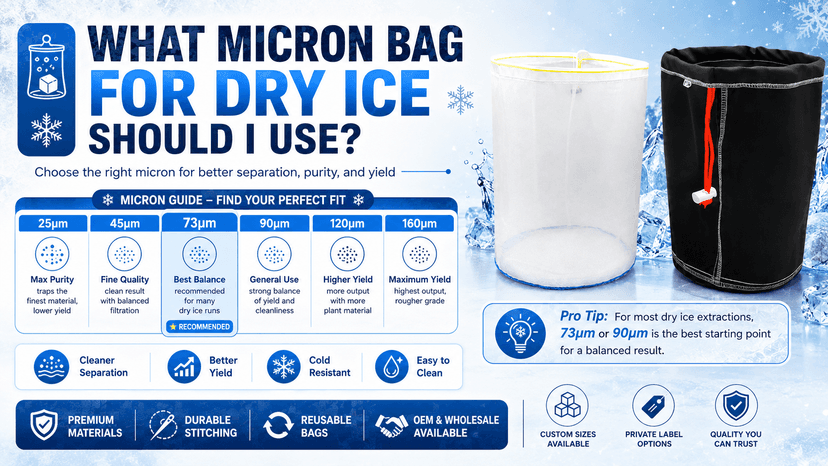
When working with filtration systems in precision extraction workflows, one of the most frequently asked questions is:
What is the difference between 25, 73, and 120 micron filter bags?
These three micron ratings are widely used in multi-stage filtration setups involving bubble hash bags. However, many users still misunderstand their function and end up selecting incorrect configurations or using them in the wrong sequence.
The key concept is simple:
Each micron size serves a specific role within a structured precision extraction solutions workflow.
Selecting the correct combination of best bubble hash bags significantly improves filtration efficiency, consistency, and overall process control.
If you are still evaluating options, you can explore different configurations in the bubble hash bags collection to better understand system compatibility.
Quick Answer: 25 vs 73 vs 120 Micron
Here is a simplified breakdown:
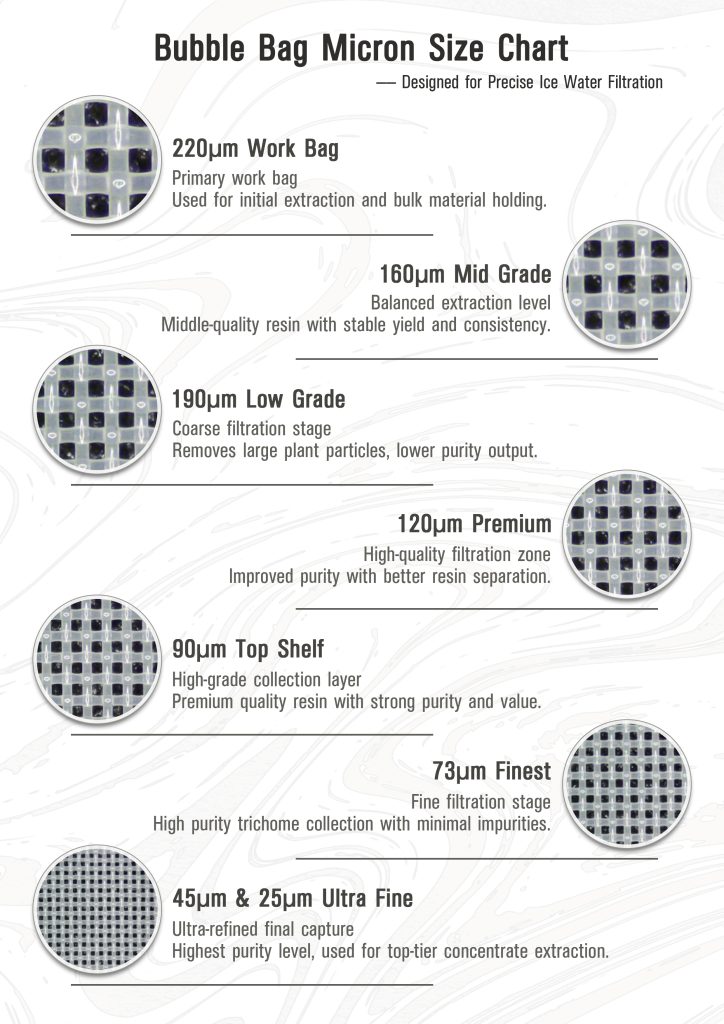
- 120 micron: coarse filtration, allows larger particles to pass while blocking oversized material
- 73 micron: balanced filtration, captures mid-range particles with stable efficiency
- 25 micron: fine filtration, captures the smallest particles for final refinement
In real bubble hash bags systems, these are not competing options. They are designed to work together as a layered filtration structure.
To better understand system design principles, you can also refer to general what are bubble bags concepts in multi-stage extraction workflows.
What Does Micron Size Actually Control?
Micron rating defines the size of particles that can pass through a filter mesh.
- Larger micron = higher flow, less restriction
- Smaller micron = tighter filtration, higher precision
This directly impacts:
- Filtration precision
- Output consistency
- Workflow efficiency in precision extraction systems
Understanding this principle is essential before comparing individual micron stages in any bubble hash bags setup.
120 Micron: Coarse Filtration Stage
The 120 micron layer is typically used at the beginning of a filtration sequence.
Function
It removes large debris while allowing smaller particles to continue through the system.
Characteristics
- High flow rate
- Low resistance
- Efficient early-stage separation
When to Use
Use 120 micron when you need:
- Fast initial separation
- Reduced clogging in downstream layers
- High-throughput pre-filtration
Limitation
It does not provide fine separation and may allow smaller unwanted particles to pass through.
In large systems like 32 gallon all mesh bubble bags from Extractphyto Lab, this layer plays a critical role in protecting downstream filtration efficiency during high-volume processing.
73 Micron: Balanced Filtration Stage
The 73 micron layer is often considered the “core zone” in precision extraction solutions.
Function
It captures mid-sized particles while allowing finer material to pass through.
Characteristics
- Balanced flow and retention
- Stable filtration behavior
- Strong consistency control
When to Use
Use 73 micron when you want:
- Reliable separation quality
- Balanced efficiency and precision
- Stable output consistency across batches
Why It Matters
In most best bubble hash bags configurations, the 73 micron layer often defines overall product quality and consistency.
For Extractphyto Lab systems, this layer is frequently used as the main collection zone in structured multi-layer setups.
25 Micron: Fine Filtration Stage
The 25 micron layer represents the final refinement stage in a multi-layer system.
Function
It captures ultra-fine particles that pass through previous layers.
Characteristics
- Very high filtration precision
- Slower flow rate
- Higher resistance under load
When to Use
Use 25 micron when you need:
- Maximum refinement
- Fine particle recovery
- High-precision separation output
Limitation
Because of its fine mesh structure, it may clog more easily and requires controlled loading conditions.
Side-by-Side Comparison
| Micron | Role | Flow Speed | Precision | Stage |
|---|---|---|---|---|
| 120μm | Coarse filtration | Fast | Low | Early |
| 73μm | Balanced filtration | Medium | Medium | Middle |
| 25μm | Fine filtration | Slow | High | Final |
This structure demonstrates why multi-layer systems are the foundation of precision extraction workflows using bubble hash bags.
How These Micron Sizes Work Together
A complete filtration system uses all three micron stages in sequence:
- 120 micron removes large debris
- 73 micron captures medium-sized particles
- 25 micron collects fine particles
This layered structure ensures:
- Higher filtration efficiency
- Reduced clogging risk
- Better output consistency
This is also why many professionals prefer best bubble hash bags configured with multiple micron layers instead of single-stage filtration.
For high-capacity operations, systems such as 32 gallon all mesh bubble bags from Extractphyto Lab demonstrate how layered filtration improves scalability and process control in real production environments.
Which Micron Should You Choose?
Your selection depends on your processing goal.
If You Want Higher Yield
Use larger micron (120μm) to maximize throughput, with less emphasis on precision.
If You Want Higher Precision
Use smaller micron (25μm) to maximize filtration accuracy and refinement.
If You Want Balanced Performance
Use all three layers together for a complete precision extraction solutions workflow.
This is the most common approach in professional bubble hash bags systems.
Common Mistakes to Avoid
Even when users understand micron differences, operational mistakes can reduce performance:
- Using only one micron layer instead of a structured system
- Incorrect stacking order in multi-layer setups
- Overloading fine micron bags, leading to clogging
- Ignoring the role of the 73 micron “middle balance layer”
Avoiding these issues is essential for achieving consistent results in precision extraction workflows.
Practical Setup Example
A standard configuration using these micron sizes:
- Top layer: 120 micron
- Middle layer: 73 micron
- Bottom layer: 25 micron
This setup is widely used in bubble hash bags systems and provides a strong balance between efficiency and refinement.
For advanced users, systems like 32 gallon all mesh bubble bags from Extractphyto Lab allow scaling this same principle to larger production volumes without losing consistency.
Conclusion
The difference between 25, 73, and 120 micron filters is not about which one is superior, but about how each contributes to a structured filtration workflow.
Each layer plays a defined role in precision extraction solutions:
- 120 micron = coarse separation
- 73 micron = balanced control
- 25 micron = fine refinement
When used together in properly designed bubble hash bags systems, they create a stable and efficient multi-stage filtration process.
Products like best bubble hash bags and high-capacity systems such as 32 gallon all mesh bubble bags from Extractphyto Lab demonstrate how correct micron selection improves consistency, scalability, and overall extraction performance.
Ready to upgrade your bubble bags?
Build a more reliable and scalable filtration workflow with professional-grade bubble hash bags engineered for consistency and precision.
Explore Extractphyto Lab’s full range of precision extraction solutions and discover how multi-micron systems can improve your process control, efficiency, and output quality.