Selecting the right filtration bags is a critical decision for any solventless extraction workflow. Bag quality affects separation accuracy, resin cleanliness, material handling, and long-term operating cost. Buyers often ask what are the best bubble bags for making hash because the market includes many options that look similar but perform very differently under repeated use. A reliable bag set should support stable filtration, safe material contact, efficient drainage, and consistent collection across different batch sizes.
The best bags to use for bubble hash are not defined by one feature alone. Capacity, micron accuracy, mesh strength, food-grade materials, seam durability, and cleaning performance all influence results. For professional buyers, the goal is not simply to purchase bags that fit a bucket. The goal is to choose quality bubble bags that help produce quality bubble hash with fewer process interruptions, lower maintenance demands, and better repeatability.
Understanding What Makes Bubble Bags Effective
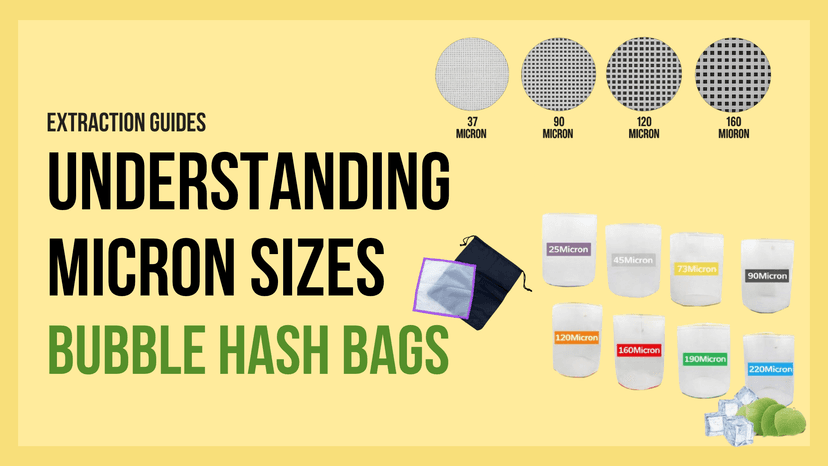
Bubble bags are filtration tools designed to separate resin particles from plant material through controlled mesh openings. Each bag uses a specific micron rating to capture or remove material according to particle size. This allows operators to separate different resin fractions and manage product quality more precisely. When evaluating what bags to use for bubble hash, micron range should be considered alongside material strength and construction quality.
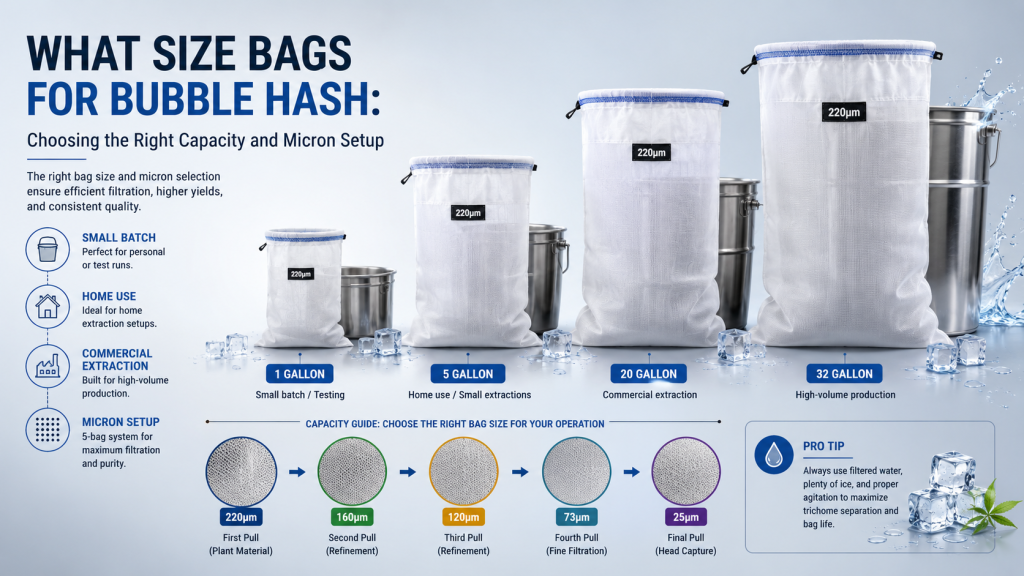
A dependable bag set usually includes several filtration layers, from coarse screens for removing larger plant matter to finer screens for collecting smaller resin particles. This multi-stage structure gives processors better control over separation and grading. However, more bags do not automatically mean better results. Poorly made bags with inaccurate mesh or weak seams can create inconsistent filtration even if the micron sequence looks complete. For this reason, quality bubble bags should be assessed by how well they maintain performance during repeated washing, draining, scraping, rinsing, and drying.
Material safety is another essential factor. Since the bags come into direct contact with water, ice, and collected material, food-grade construction is highly important. Smooth mesh surfaces also make collection easier and reduce residue buildup after use. Reinforced stitching, durable sidewalls, and stable mesh tension help the bags resist deformation during agitation. These features are especially important for buyers who expect long-term reliability rather than occasional use.
Choosing the Best Bags to Use for Bubble Hash
The best bags to use for bubble hash should match the user’s production scale and workflow. Small-batch operators may prefer compact one-gallon or five-gallon systems because they are easy to handle, clean, and store. Larger processors may require twenty-gallon or thirty-two-gallon systems to improve throughput and reduce the number of wash cycles. In both cases, bag strength must match the volume of water, ice, and biomass being processed.
When deciding what bags to use for bubble hash, buyers should first consider bucket or vessel compatibility. A bag that does not fit correctly can fold, collapse, or restrict drainage during processing. Proper fit improves handling and supports even filtration. The bag should sit securely in the container while allowing enough depth for liquid movement and material collection. This is especially important in larger systems where the weight of water and material creates more stress on seams and handles.
Micron selection also matters. A practical set often includes larger micron bags for coarse separation, mid-range bags for primary resin collection, and finer bags for smaller particles. The ideal configuration depends on the source material and the desired output grade. Buyers seeking quality bubble hash should avoid vague product listings that do not clearly identify micron sizes or material specifications. Clear labeling and consistent manufacturing are signs of a more reliable supplier.
Durability should be evaluated carefully before purchase. Bags used regularly must withstand cold water, repeated movement, lifting, draining, and cleaning. Weak stitching can fail at the worst time, causing material loss and workflow disruption. Mesh that stretches or clogs too easily can reduce filtration accuracy. For commercial or frequent use, quality bubble bags with reinforced seams and stable mesh construction offer better cost efficiency over time.
Dry Ice Hash, Ice Water Hash, and Pressing Applications
Buyers sometimes compare the best bubble bags for dry ice hash with bags intended for ice water extraction. Dry ice processing creates different mechanical conditions because material is agitated in a colder, drier environment and resin is separated through movement rather than water suspension. The best bubble bags for dry ice hash should have durable mesh, strong stitching, and controlled micron openings that can tolerate friction from frozen material and dry ice contact. Bag strength becomes especially important because brittle plant material can create additional wear on the mesh.
Ice water extraction places different demands on filtration bags. The bags must drain efficiently, resist water absorption, maintain micron stability, and allow collected resin to be removed cleanly from the mesh. For this reason, a bag that performs well in one process may not always be ideal for another. Buyers should confirm whether the bag is suitable for dry ice use, ice water use, or both. This distinction helps prevent premature wear and improves process consistency.
For buyers who intend to press collected hash into rosin, filtration does not end with the wash bags. Rosin pressing requires separate pressing bags designed to contain dried resin under heat and pressure. The best rosin bags for bubble hash are typically made with heat-resistant mesh, strong seams, and fine micron openings that help retain particles while allowing resin oil to flow. These bags are different from washing bags and should not be treated as interchangeable.
The best bags for pressing bubble hash must be selected according to resin quality, moisture level, press size, and desired flow rate. Common pressing bag sizes are finer than wash bags because the objective is containment during pressure application rather than water filtration. A well-made rosin bag reduces blowout risk and helps preserve product cleanliness. For production environments, reliable pressing bags contribute to long-term reliability by reducing failed presses, material waste, and cleaning time.
Quality Indicators Buyers Should Check
Quality bubble bags can usually be identified by several practical construction details. The mesh should feel stable and evenly tensioned, without loose sections or visible irregularities. Micron labels should be clear and durable. Seams should be reinforced, especially around the base, sidewalls, and handles. If the bag includes a drawstring or support band, these components should be strong enough for repeated use in wet conditions.
The interior surface should support smooth collection. Resin residue can be difficult to remove from rough or poorly finished mesh, which increases cleaning time and may affect later batches. Bags that rinse clean more easily help preserve filtration accuracy and reduce cross-contamination risk. This is an important factor for operators focused on quality bubble hash because cleanliness between cycles directly affects consistency.
Buyers should also assess the supplier’s consistency. A single good bag set is useful, but repeat purchasing requires stable product quality across batches. If a supplier changes mesh materials, stitching methods, or sizing without clear notice, production standards can become harder to maintain. Professional buyers should look for suppliers that provide clear specifications and consistent manufacturing rather than generic descriptions.
Price should be evaluated in relation to expected service life. Lower-cost bags may be suitable for limited or occasional use, but frequent extraction requires stronger materials. If a bag fails after only a few cycles, the real cost includes lost time, lost material, and replacement expense. Quality bubble bags can improve cost efficiency by lasting longer, draining more predictably, and reducing maintenance issues.
Building a Reliable Bag System for Long-Term Use
A reliable bag system should cover the full workflow from separation to collection and, where applicable, pressing. For washing, buyers should choose a capacity that matches their operating volume and a micron configuration that supports the desired level of grading. For dry ice use, the best bubble bags for dry ice hash should be strong enough to handle abrasive movement and very low temperatures. For rosin processing, the best rosin bags for bubble hash should provide heat resistance, tight containment, and stable seams under pressure.
The best bags for pressing bubble hash should also match the press format. Bag dimensions should fit the platen size and the amount of material being loaded. Overfilled bags can increase the risk of rupture, while underfilled bags may reduce efficiency. Consistent loading and appropriate bag sizing help create more repeatable pressing results. This is especially important for buyers who want predictable output across batches.
Cleaning and storage also influence bag performance over time. Bags should be rinsed promptly after use, dried completely, and stored in a clean, dry environment. Resin buildup in the mesh can restrict drainage and alter filtration performance. Careful maintenance protects the original micron function and extends the usable life of the bag set. Even the best bags to use for bubble hash require proper handling to maintain long-term reliability.
For buyers still asking what bags to use for bubble hash, the most practical answer is to choose bags based on process type, batch volume, micron accuracy, and construction quality. A strong five-gallon set may be ideal for small and mid-size workflows, while larger systems may require reinforced twenty-gallon or thirty-two-gallon bags. Operators who also press rosin should use dedicated pressing bags rather than relying on wash bags for a different function.
The right filtration system supports cleaner separation, better workflow control, and more dependable output. Quality bubble bags help reduce process variation, while suitable rosin bags support cleaner pressing when dried hash is further processed. By selecting bags with food-grade materials, accurate micron ratings, reinforced construction, and process-specific compatibility, buyers can build a more reliable system for producing quality bubble hash with improved consistency and long-term cost efficiency.