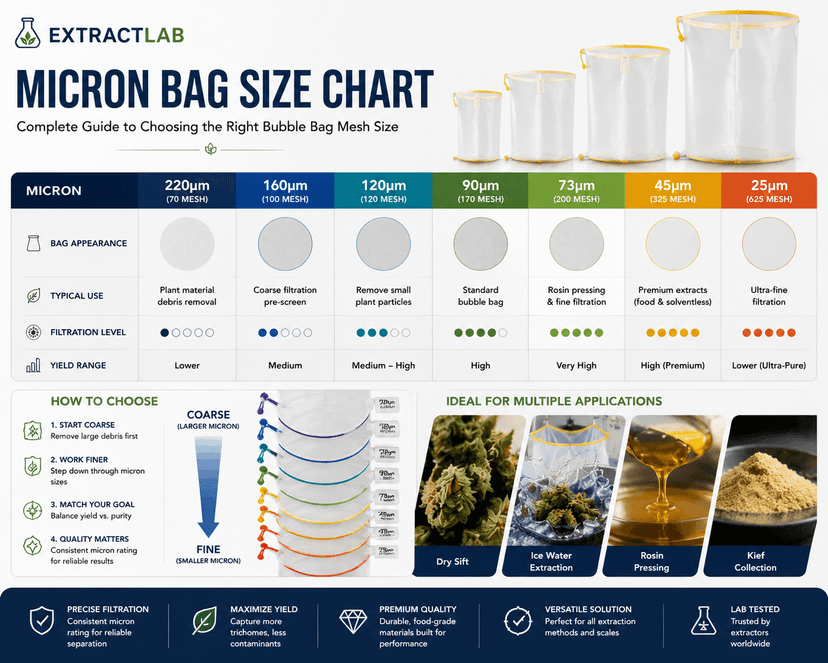
Choosing the right micron setup is one of the most important decisions in solventless extraction. Micron size controls how resin is separated, collected, graded, and prepared for further processing. When operators ask what micron bags to use for bubble hash, they are usually trying to balance yield, cleanliness, texture, and downstream usability. A bag set that is too coarse may allow excess plant material into the collection, while a bag set that is too fine may slow drainage and make recovery more difficult. The right choice depends on the source material, wash method, desired quality level, and whether the collected resin will later be dried, cured, or pressed into rosin.
Micron selection also affects economic performance. More filtration layers can provide better separation control, but they require additional handling, cleaning, and collection time. Fewer layers simplify the workflow, but they may reduce grading precision. For professional users, understanding what size micron bags for bubble hash are appropriate is not just a technical detail. It is part of building a repeatable process that supports consistency, long-term reliability, and cost efficiency.
Understanding Micron Bags for Bubble Hash
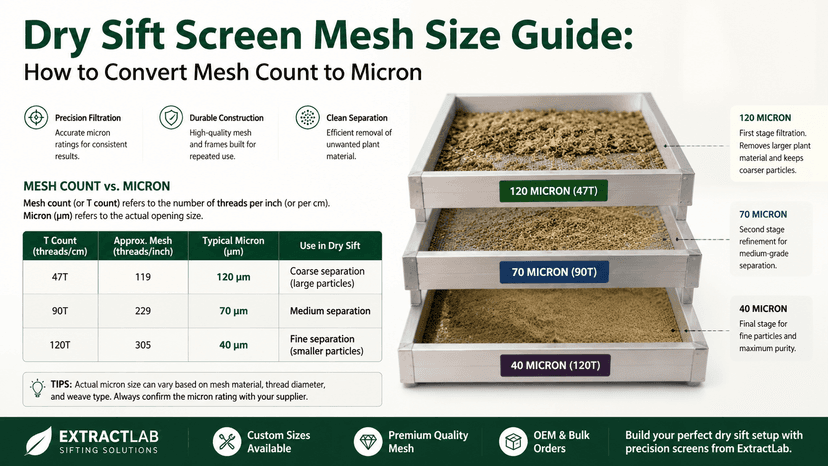
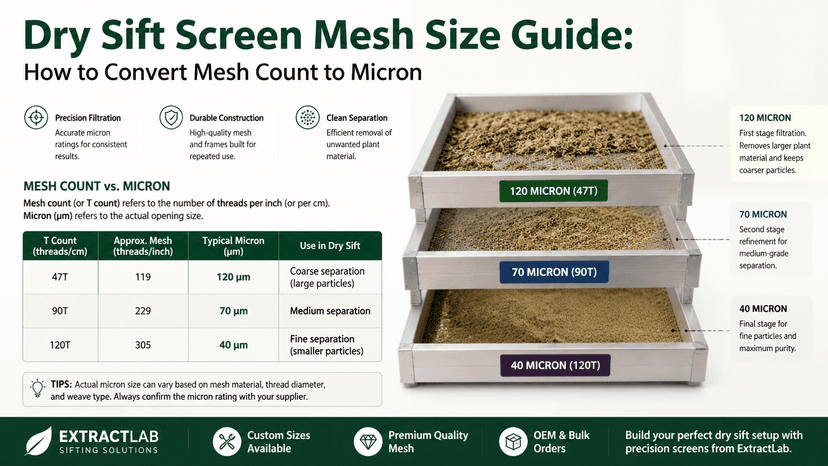
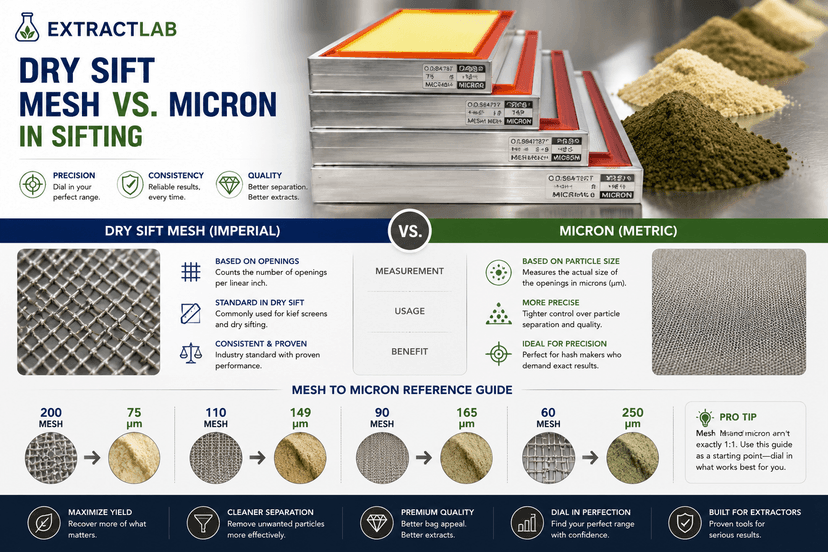
Micron bags for bubble hash are filtration bags made with mesh screens rated by opening size. A micron is a unit of measurement that defines how large or small the mesh openings are. In practical extraction terms, larger micron numbers allow bigger particles to pass or collect, while smaller micron numbers capture finer material. During ice water extraction, resin glands detach from plant material and are carried through the water. The bag stack separates those particles into different grades based on size.
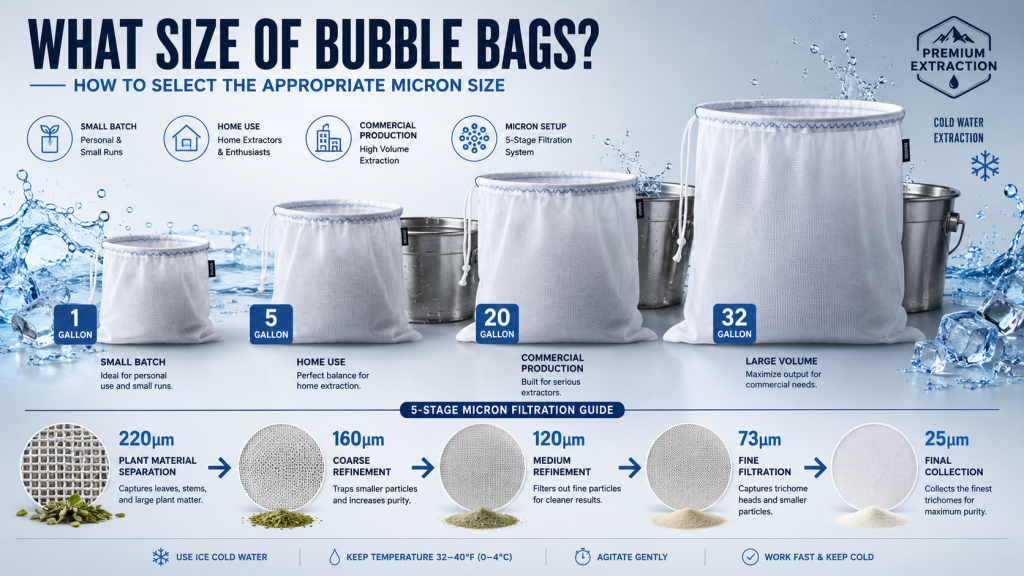
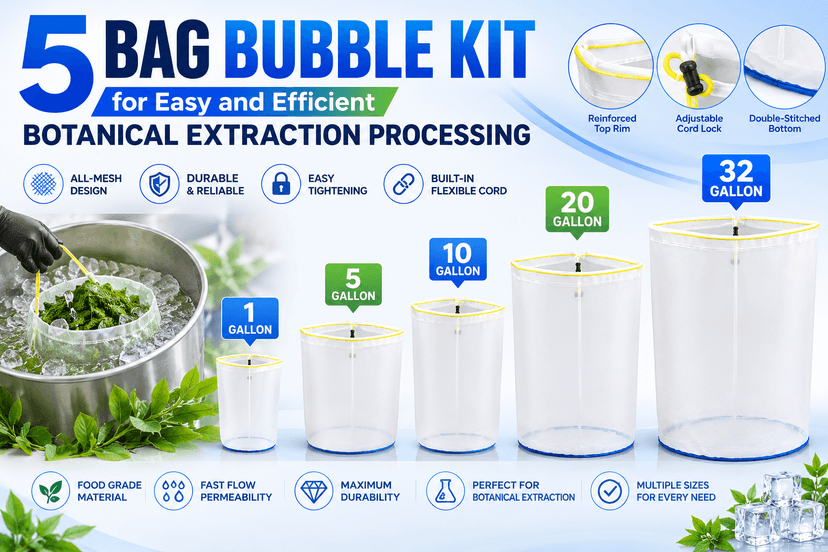
Common micron bags for making bubble hash may include 220, 190, 160, 120, 90, 73, 45, and 25 micron screens. The larger bags are usually used to remove coarse plant matter and protect the finer collection layers below. Mid-range bags often capture the most desirable resin fractions, depending on cultivar, maturity, and wash conditions. Smaller bags collect finer resin particles and sediment, which may vary in quality depending on the material and process.
For buyers asking what size micron bags for bubble hash should be included in a working set, the answer depends on the level of separation required. A basic setup may use only a few bags, such as 220, 160, 73, and 25 micron. A more refined setup may include six or eight bags to separate resin into narrower grades. The advantage of a larger set is better classification. The disadvantage is more time spent draining, collecting, and cleaning each layer.
Material quality is just as important as micron rating. Micron bags for bubble hash should be made from food-grade materials with stable mesh, reinforced seams, and smooth surfaces that support easy resin collection. If the mesh stretches, clogs, or deforms during washing, the stated micron size may not perform consistently. This can lead to mixed grades, slower drainage, and reduced process control.
Selecting Micron Sizes for Washing and Collection
The first bag in many systems is the 220 micron work bag. Its main purpose is to hold plant material and allow resin-bearing water to pass through. It is not usually treated as a primary collection bag. Instead, it acts as a coarse separation layer that prevents larger plant fragments from reaching the finer filtration stages. In many workflows, the 190 and 160 micron bags also function as contaminant-control or coarse collection layers, depending on the resin size and the quality of the wash.
Mid-range bags are often the most important for resin quality. The 120, 90, and 73 micron bags frequently capture well-formed resin heads from suitable starting material. Many processors consider the 73 micron range especially valuable because it can provide a strong balance between yield and cleanliness. However, there is no single universal answer to what micron bags to use for bubble hash because resin head size varies by cultivar, growing conditions, harvest timing, and material preparation.
The 45 and 25 micron bags collect smaller resin particles and fine material. These grades can still be useful, but they may require more careful drying and handling. Fine collections can retain more moisture and may include more particulate matter if agitation is too aggressive. For this reason, operators should evaluate each grade separately rather than assuming that every micron layer produces the same quality.
When deciding what size micron bags for bubble hash are needed, the intended final use matters. If the product will be consumed as loose hash, the focus may be on clean separation and texture. If the product will be pressed later, operators may prioritize the grades that melt well and produce efficient rosin yields. This is where the discussion shifts from washing bags to pressing bags, because pressing requires a different type of filtration tool.
What Micron Bags for Pressing Bubble Hash
After bubble hash is collected and dried, it may be pressed into rosin using heat and pressure. At this stage, operators often ask what micron bags for pressing bubble hash are most appropriate. Pressing bags are different from washing bags. Washing bags are used in water extraction, while rosin bags are used to contain dried resin during pressing. Their function is to hold the hash together while allowing oil to flow out under pressure.
The question of what size micron bags for pressing bubble hash depends on hash quality, resin texture, and desired output. Finer rosin bags are generally used for higher-quality bubble hash because they help retain small particles while allowing clean oil flow. Common sizes for pressing bubble hash include 15, 25, 37, and sometimes 45 micron rosin bags. The finer sizes are often chosen when the hash is sandy, dry, or very clean, while slightly larger sizes may be used when flow rate and yield are higher priorities.
For processors asking what size rosin bags for bubble hash should be selected, a 25 micron or 37 micron bag is often a practical starting point. These sizes can provide a balance between containment and oil release. A 15 micron bag may offer tighter filtration, but it can also slow flow and may require more careful pressure control. A 45 micron bag can allow faster flow, but it may not contain fine particles as effectively. The right choice depends on the material being pressed and the operator’s quality target.
Rosin bags for bubble hash must also be evaluated by seam strength, heat resistance, and consistency. During pressing, the bag is exposed to pressure and temperature, so weak seams can rupture and contaminate the output. High-quality stitching or seamless construction can reduce failure risk. For repeat-use production environments, selecting reliable rosin bags for bubble hash contributes directly to long-term reliability and reduced material loss.
Choosing Bags for Rosin Quality and Process Efficiency
Many buyers search for the best rosin bags for bubble hash when they want cleaner rosin, better flow, and lower contamination risk. In practice, the “best” choice depends on the input material and pressing method. High-grade, fully dried bubble hash often performs well in finer rosin bags because the resin is already clean and does not require aggressive filtration. Lower-grade or mixed material may need a slightly different approach to avoid restricted flow or excessive bag pressure.
The best bags for pressing bubble hash should provide predictable filtration, stable construction, and compatibility with the press size being used. Bag dimensions should match the amount of hash being loaded and the platen area of the rosin press. Overfilled bags can create uneven pressure and increase the risk of blowouts. Underfilled bags may reduce efficiency because the material does not spread evenly during pressing.
Micron choice should also be matched with pressure application. A very fine bag under excessive pressure can restrict oil movement and force material against the seams. A larger micron bag may improve flow but could allow more fine particles through. This is why operators evaluating what micron bags for pressing bubble hash should consider the entire pressing process, not just the micron number printed on the bag.
For cost efficiency, operators should also consider consistency across batches. Using the same micron range for similar material allows easier comparison of yield, color, texture, and quality. Changing bag size too often makes it difficult to identify whether performance differences come from the material, the wash, the drying process, or the pressing setup.
Building a Practical Micron Strategy
A practical micron strategy starts with understanding the difference between extraction filtration and pressing filtration. Micron bags for making bubble hash are used to separate resin in water. Rosin bags for bubble hash are used later to contain dried resin during pressing. The two products may both use micron ratings, but they serve different functions and should not be treated as interchangeable.
For washing, a multi-bag set with coarse, mid-range, and fine filtration layers provides the most control. A typical system may include a coarse work bag, one or two intermediate bags, several primary collection bags, and a fine collection layer. This allows operators to separate resin by grade and evaluate which fractions are most suitable for use or pressing. When users ask what size micron bags for bubble hash should be purchased first, a balanced set covering large, medium, and small micron ranges is usually more useful than a minimal set with only one collection screen.
For pressing, the decision is narrower. What size micron bags for pressing bubble hash usually comes down to the 15 to 45 micron range, with 25 and 37 micron options commonly used as balanced choices. Fine hash may benefit from tighter containment, while material that needs better flow may require a slightly larger bag. Operators should test small amounts first and record results to create a repeatable standard.
A complete workflow may use several micron bags for bubble hash collection and separate rosin bags for pressing. This approach gives better control over both extraction and final processing. It also helps operators identify which collected grades perform best under heat and pressure. Some grades may be better kept as loose hash, while others may be more suitable for rosin production.
Selecting the right micron bags requires attention to resin size, material condition, wash quality, drying method, and final processing goals. There is no single micron setup that works perfectly for every batch, but a structured approach makes the decision easier. By choosing reliable micron bags for making bubble hash, understanding what size micron bags for bubble hash support clean separation, and selecting appropriate rosin bags for bubble hash when pressing, operators can improve consistency, reduce waste, and build a more controlled solventless workflow.