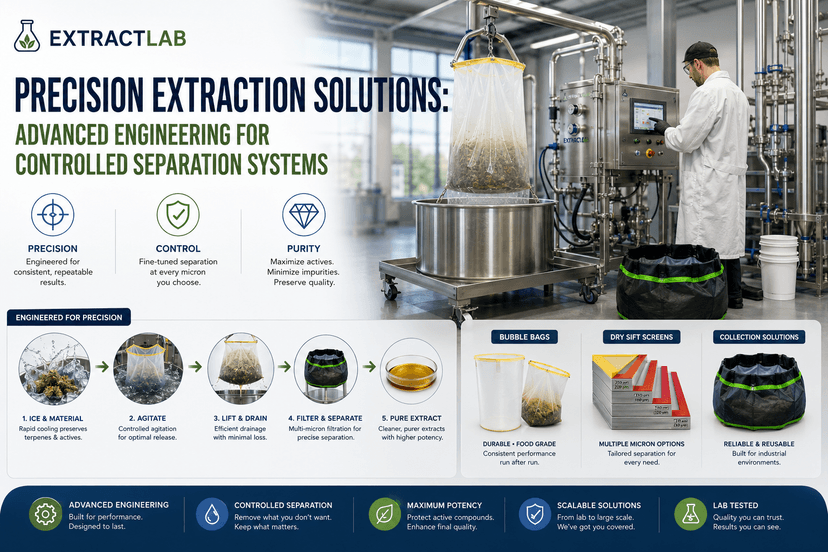
Ice water extraction has become one of the most widely used solventless processing methods for producing high-quality hash. The process relies on temperature control, mechanical agitation, and precision filtration to separate resin glands from plant material without the use of chemical solvents. For both small-scale operators and larger production environments, understanding the correct workflow is essential for achieving consistent results and maintaining material quality. As more processors explore solventless methods, interest in topics such as bubble bag hash how to techniques and filtration efficiency continues to increase.
The effectiveness of extraction largely depends on selecting the correct filtration setup and operating procedure. Many processors researching using bubble bags for hash focus on improving yield, maintaining purity, and reducing unnecessary plant contamination. Proper bag configuration, ice-to-water balance, and washing techniques all influence the final product. In addition, equipment selection, including the use of a bubble bag hash washer or dedicated agitation system, can significantly improve consistency during production cycles.
Understanding Bubble Bags and Ice Water Filtration
Bubble bags function as micron-rated filtration systems designed to separate trichomes according to particle size. During extraction, plant material is mixed with ice and water, allowing resin glands to become brittle and detach from the biomass through agitation. The suspended resin is then filtered through a sequence of mesh bags that capture material at different micron levels. For processors learning bubble bag hash how to procedures, understanding this layered filtration approach is one of the most important technical foundations.
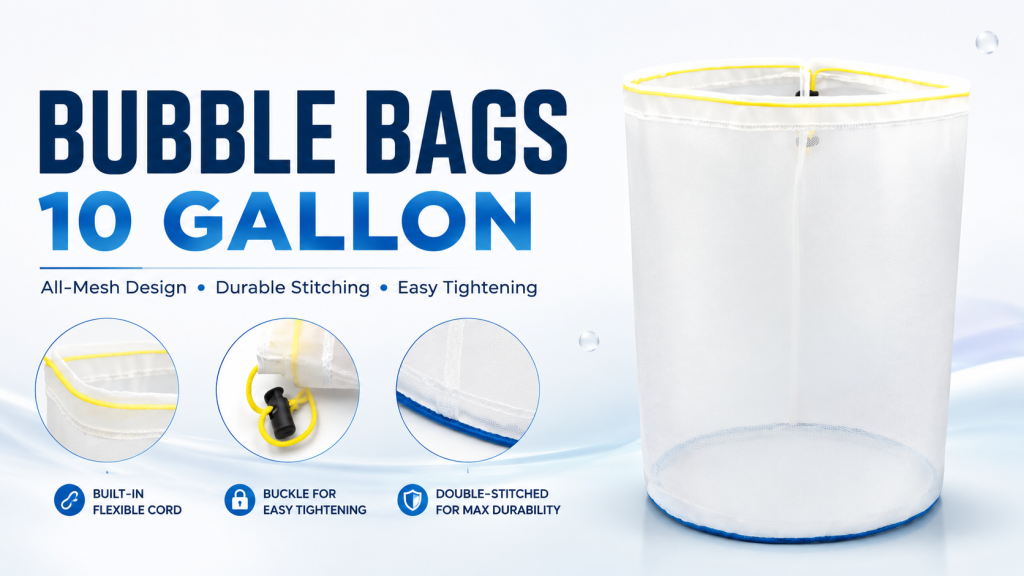
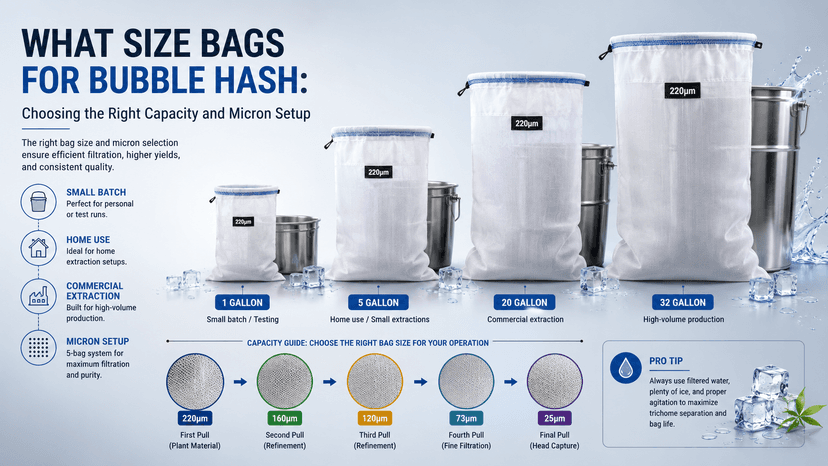
Most professional setups use multiple filtration stages because different micron ranges capture varying resin qualities. This is why many operators ask about the order of bags for bubble hash before beginning production. The typical configuration places larger micron bags at the top and finer filtration bags at the bottom. This arrangement allows larger contaminants to be removed first while preserving smaller resin particles for later collection. The bubble bag hash order directly affects filtration efficiency and the cleanliness of the final product.
Ice quality and water temperature are equally important factors during extraction. Bubble bags hash ice processes depend on maintaining low temperatures throughout the wash cycle so trichomes remain rigid and separate efficiently from plant matter. Excessive heat or prolonged agitation can increase chlorophyll contamination and reduce overall purity. For this reason, bubble bags for ice water hash systems are designed to operate under controlled cold-water conditions that preserve resin structure while maximizing separation performance.
Equipment Selection and Preparation Methods
Before starting extraction, operators should prepare all equipment carefully to ensure stable workflow conditions. A standard setup typically includes filtration bags, food-grade containers, ice, purified water, mixing tools, and drying surfaces. Many processors also use a bubble bag hash washer to automate agitation and improve consistency across batches. Automated systems reduce manual labor while creating more controlled wash cycles, especially in larger-scale operations.
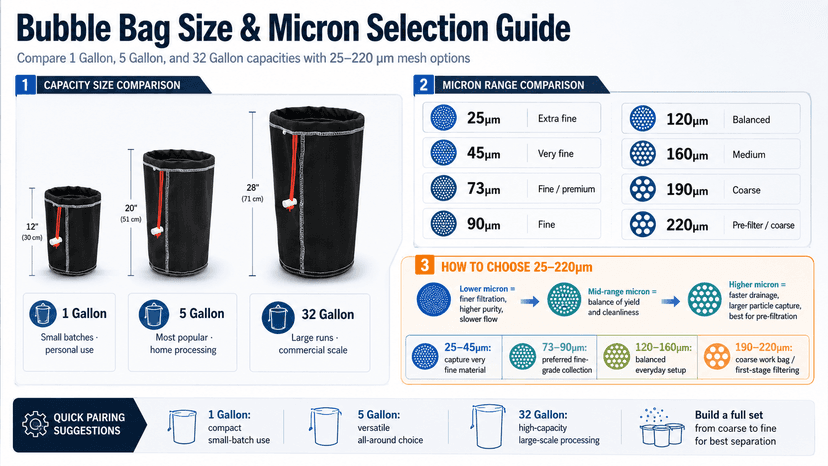
When choosing filtration systems, processors often compare different wash bags for bubble hash according to micron configuration, material quality, and durability. Food-grade mesh construction is particularly important because extraction environments involve prolonged water exposure and repeated mechanical agitation. Strong stitching and reinforced seams help maintain filtration integrity during intensive wash cycles, especially when processing larger biomass volumes.
The number of filtration stages used can vary depending on operational goals. Many new processors ask how many bags for bubble hash are actually necessary for effective separation. Smaller setups may use three to five bags, while larger commercial operations often rely on six to eight filtration layers for more refined grading. The choice depends on whether the focus is maximum yield, premium resin separation, or balanced production efficiency. Regardless of configuration, maintaining the correct bubble bag hash order remains essential for stable filtration performance.
Step-by-Step Process for Using Bubble Bags for Hash
The extraction process begins by filling a washing vessel with cold water and ice before adding frozen plant material. Freezing the material prior to washing improves resin brittleness and enhances separation efficiency. After mixing, agitation is introduced either manually or with a bubble bag hash washer to dislodge trichomes from the plant surface. The mixture is typically agitated for several minutes before filtration begins.
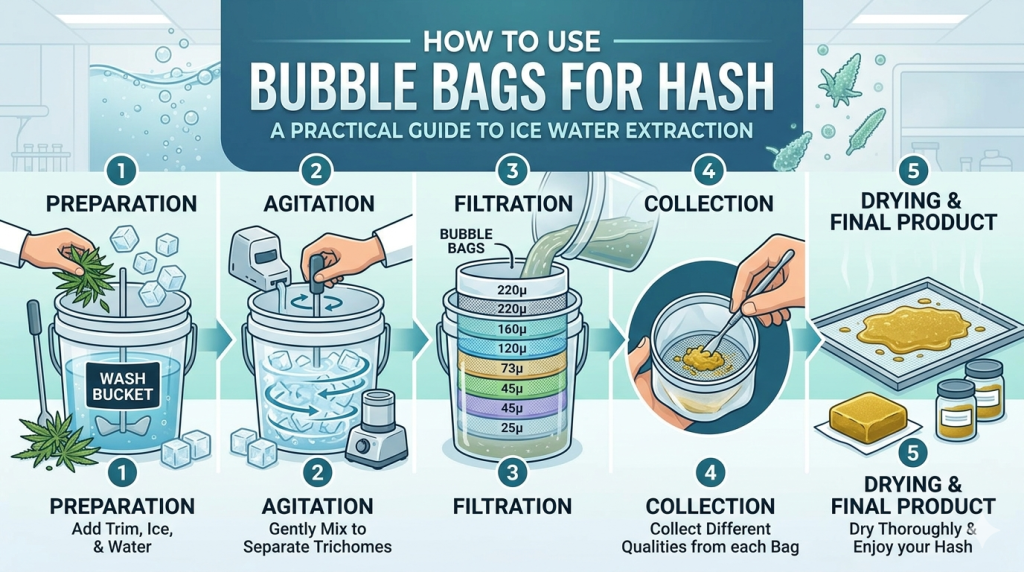
At this stage, using bubble bags for hash requires careful attention to filtration sequencing. The stacked bags are placed inside a collection bucket according to micron size, beginning with the largest filtration layer and progressing toward the smallest. Once the mixture is poured through the filtration system, each bag captures different particle grades. Operators remove the bags individually and collect the accumulated resin from the mesh surfaces.
Many processors learn operational techniques by reviewing a bubble bag hash video before attempting full-scale extraction. Visual demonstrations often help clarify washing duration, agitation intensity, and filtration handling. Although procedural variations exist across facilities, the core principles remain consistent: cold temperatures, controlled agitation, and properly sequenced filtration. Bubble bags for hash making are designed specifically to support this workflow while minimizing contamination during separation.
Drying is another critical step after collection. Excess moisture can compromise storage stability and encourage microbial growth if not removed properly. Collected resin should be spread thinly across drying surfaces in temperature-controlled environments. Some operations use freeze dryers to improve consistency, while smaller facilities may rely on air-drying methods under carefully monitored conditions.
Washing Machine Systems and Large-Scale Efficiency
As production demands increase, many operators transition from manual mixing to automated agitation systems. This is where bubble hash bags for washing machine setups become particularly valuable. Washing machines designed for solventless extraction provide controlled agitation while reducing physical labor requirements. Consistent movement patterns also help standardize resin separation across batches.
Commercial processors often prefer automated systems because they improve throughput while minimizing variability between operators. A properly configured bubble bag hash washer can maintain stable agitation speeds and washing times, reducing the risk of excessive plant contamination caused by overmixing. This consistency is especially important in facilities processing large biomass volumes daily.
The compatibility between filtration bags and washing systems also affects operational reliability. High-quality wash bags for bubble hash are designed to withstand repeated extraction cycles without mesh distortion or seam failure. Reinforced construction becomes increasingly important when working with washing machine agitation because the mechanical stress is higher than in manual setups. Selecting durable filtration materials therefore contributes directly to long-term cost efficiency and production stability.
In industrial extraction environments, bubble bags for ice water hash are frequently integrated into scalable workflows that prioritize repeatable quality. Operators can adjust agitation duration, water temperature, and filtration sequences according to the desired resin profile. This flexibility allows facilities to optimize production for different biomass types while maintaining controlled separation standards.
Cleaning, Maintenance, and Long-Term Performance
Proper maintenance is essential for preserving filtration accuracy and extending equipment lifespan. One of the most common operational questions is how to clean bubble hash bags effectively without damaging the mesh structure. After every extraction cycle, bags should be rinsed immediately using cold water to remove residual resin and plant material before buildup hardens within the mesh openings.
For deeper maintenance, processors may use food-safe cleaning agents specifically designed for filtration equipment. Aggressive chemicals are generally avoided because they can weaken mesh fibers over time or leave unwanted residues. Understanding how to clean bubble hash bags correctly helps maintain consistent micron performance while preventing cross-batch contamination.
Drying procedures are equally important after cleaning. Filtration bags should be air-dried completely before storage to prevent mold development and material degradation. Proper storage in cool, dry environments helps preserve mesh integrity and stitching durability during long-term use. Facilities operating multiple extraction cycles per week often implement structured maintenance schedules to monitor bag condition and replace worn filtration layers before performance declines.
Educational resources, including instructional guides and bubble bag hash video demonstrations, continue to support operators seeking improved extraction consistency. As solventless processing expands across the industry, greater attention is being placed on equipment maintenance, filtration precision, and repeatable workflow design. Bubble bags for hash making remain one of the most practical and adaptable solutions for ice water extraction because they combine scalability with relatively straightforward operational requirements.
Efficient solventless extraction depends on balancing temperature control, agitation, filtration sequencing, and maintenance practices. Whether operating a small manual setup or a large automated system using bubble hash bags for washing machine applications, the principles of controlled resin separation remain the same. By understanding the correct bubble bag hash order, selecting durable wash bags for bubble hash, and maintaining proper cleaning procedures, processors can improve both product consistency and operational reliability over time.