Introduction: Beyond the Trim Tray
For many hobbyists, the journey into extraction begins and ends with a basic trim tray. You shake your dried flowers, a bit of dust falls through a single 150-micron mesh, and you call it a day. But if you’ve ever looked at that “dust” under a 40x jeweler’s loupe, you’ve seen the truth: it’s a chaotic mix of broken leaf matter, stalks, and—hidden among the debris—the resin heads you actually want.
To transition from “kief” to “connoisseur-grade sift,” you need to stop thinking about filtering and start thinking about fractional isolation. This is why a professional-grade dry sift screen set is the most critical investment for anyone serious about solventless extraction. In this guide, we’ll dive deep into why multiple screens matter, the science of microns, and the professional techniques that turn raw plant material into “white gold.”
1. The Anatomy of a Professional Screen Set
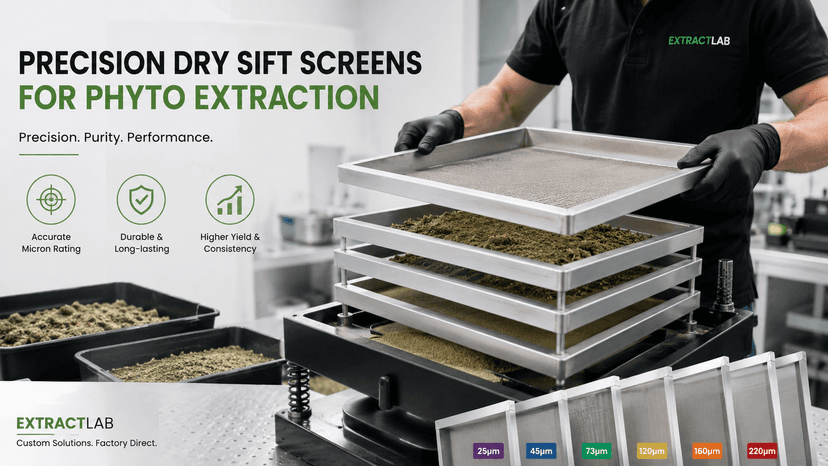
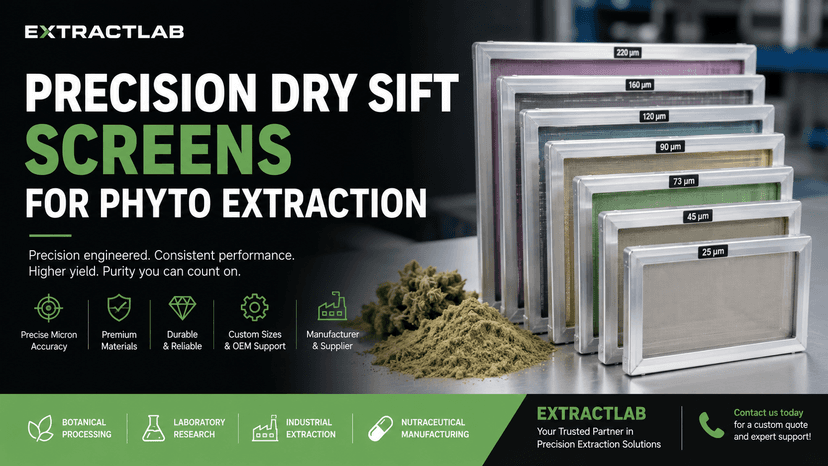
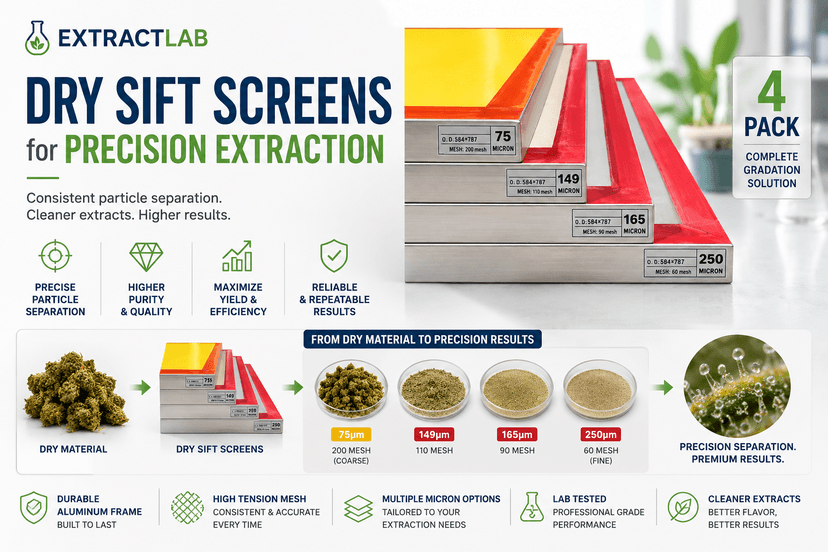
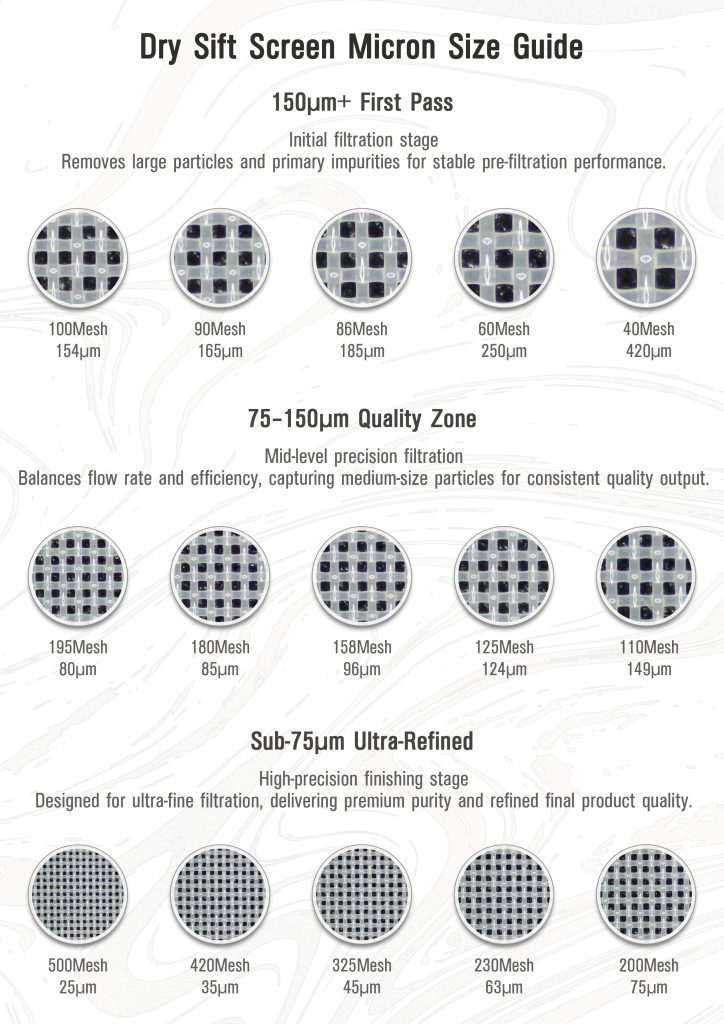
A standard, high-quality dry sift screen set isn’t just a collection of frames; it’s a precision-engineered grading system. Most top-tier sets consist of four distinct layers. Understanding what happens at each layer is the key to mastering the craft.
The Scalping Screen (200 – 250 Microns)
This is your first line of defense. When you place your dried material on the top screen, your goal isn’t purity—it’s separation. The 200-250 micron range is wide enough to let all the resin heads through but small enough to catch the “macro” contaminants: stems, seeds, and large leaf fragments.
The Guard Screen (140 – 170 Microns)
This is where the real work begins. This screen catches the “mid-sized” debris. While some large resin heads might get caught here, its primary job is to filter out the broken cystolith hairs (the tiny spikes on leaves) that make your final product look green and taste harsh.
The Keeper Screen (70 – 120 Microns)
This is the “Goldilocks Zone.” In most cultivars, the most mature, potent resin heads fall within this micron range. If you are looking for that light-blonde, sand-like texture that melts upon contact, this is where you will find it. A set that skips this specific range is essentially leaving the best part of the harvest on the table.
The Collector Screen (Below 70 Microns)
Anything that falls through the final screen is usually referred to as “fines.” This consists of immature resin heads and minute dust. While not “top-shelf” for dabbing, it remains incredibly potent for infusions or pressing into traditional hash bricks.
2. Materials Matter: Aluminum vs. Wood
If you browse DIY forums, you’ll see plenty of people stretching silk over wooden picture frames. While this works for a weekend project, it fails the “consistency test.”
Why Wood Fails: Wood is organic and porous. It breathes. If you live in a humid climate, the wood swells; in a dry climate, it shrinks. This constant movement causes the mesh to lose its “drum-tight” tension. Once a screen sags, the material pools in the center, and you lose the ability to “card” the material effectively. Furthermore, wood is impossible to sterilize properly.
The Case for Aluminum: Professional dry sift screen sets use sandblasted aluminum frames. They are lightweight, warp-proof, and—most importantly—they allow for high-tension mesh stretching. High tension is critical because it creates a “rebound” effect when you tap the frame, helping resin heads bounce through the holes rather than getting stuck. Plus, when things get sticky (and they will), you can clean aluminum with 99% Isopropyl alcohol without worrying about rotting the frame.
3. Mastering the “Static Tech” (The Human Element)
This is where the difference between an AI-written manual and human experience becomes clear. If you just shake your screens, you will get a 1-star or 2-star product. To get to 5-star or 6-star (Full Melt), you need to utilize Static Technology.
Resin heads are naturally prone to static electricity, while plant matter (leaf dust) is not. By using a specific “carding” motion with a PVC or parchment-wrapped card, you can create a static charge on the surface of the screen.
-
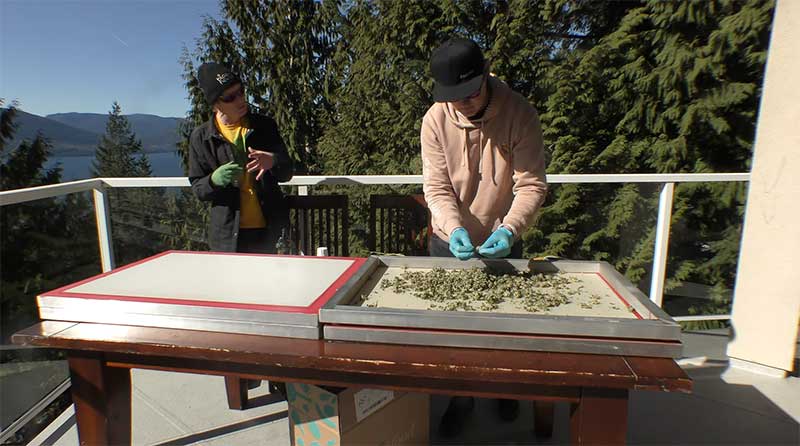
The Technique: You aren’t pushing the material through the holes. You are lightly whisking it across the surface. Watch as the resin heads jump toward the card or dive through the mesh, while the green plant matter stays “grounded” on top.
-
The Environment: This is a detail most manuals miss—humidity is the enemy of static. If your room is at 60% humidity, your dry sift screens will perform poorly. Aim for a cold, dry environment (under 35% humidity) for the best results.
4. Maintenance: Keeping Your Mesh “Open”
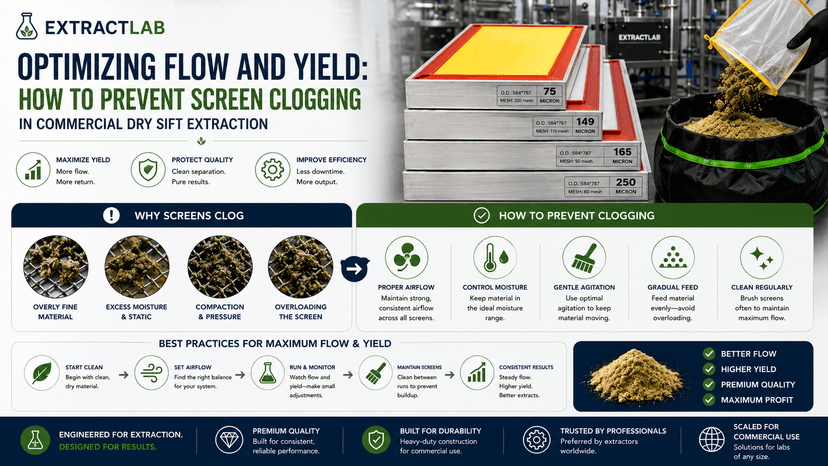
A common mistake beginners make is neglecting screen hygiene. Over time, resin heads will burst and “clog” the microscopic holes in your mesh. This is known as “blinding.”
To keep your dry sift screen set in peak condition:
-
Cold Cleaning: Never use warm water. It melts the resin and smears it into the mesh.
-
ISO Bath: Use a soft-bristled nylon brush and Isopropyl alcohol to gently dissolve clogs.
-
Air Dry: Ensure the frames are 100% dry before the next use. Even a microscopic amount of moisture can lead to mold in your final sift.
5. Why Buying a Set is Cheaper than Buying Single Screens
It’s tempting to just buy a 100-micron screen and call it a day. However, without the “scalping” layers above it, your 100-micron mesh will be bombarded with heavy plant material. This weight forces contaminants through the holes, ruining your purity.
A set works as a team. The top screens take the “beating” and handle the weight, allowing the bottom screens to perform precision filtration in a low-pressure environment. In the long run, you save money because your fine-mesh screens stay cleaner and last years longer.
Conclusion: The Connoisseur’s Choice
In a world dominated by complex chemical extractions and expensive CO2 rigs, the dry sift screen set remains the purest, most “soulful” way to process your harvest. It requires no solvents, no heavy machinery—just high-quality mesh, a bit of technique, and a lot of patience.
When you lift that third screen and see a layer of shimmering, golden resin heads that look like pure beach sand, you’ll realize that the investment wasn’t just in the aluminum and nylon. It was an investment in the quality of your experience. Don’t settle for “green dust” when the gold is just a few screens away.