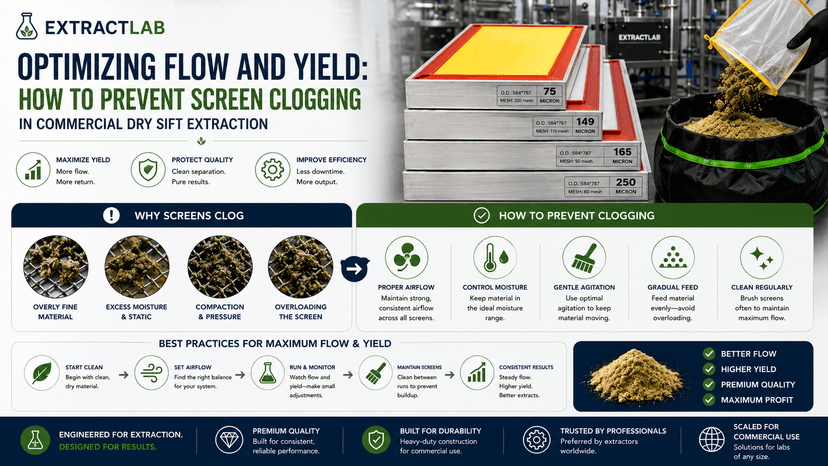
Ice water filtration depends on a simple principle: cold water, ice, controlled agitation, and accurate mesh separation work together to remove valuable particles from plant material. For many first-time and professional users, the main question is how to use bubble bags in a way that produces consistent results without overworking the material or damaging the filtration mesh. A properly selected bag set can improve workflow control, reduce contamination, and support repeatable processing across small or larger batches.
When buyers search bubble bag how to use guides, they are often looking for more than a basic step-by-step explanation. They need to understand preparation, bag stacking, washing methods, drainage, collection, cleaning, and equipment compatibility. Whether using bubble bags manually, with a bucket system, or with a bubble bag washer, the goal is to maintain cold conditions, protect mesh accuracy, and follow the correct bubble bag order throughout the process.
Understanding Bubble Bags and Ice Water Processing
Bubble bags are mesh filtration bags designed to separate particles by size. In ice water extraction, plant material is mixed with cold water and ice so that the target particles become brittle and detach during agitation. The liquid mixture is then passed through a stack of filtration bags, with each bag capturing material according to its micron rating. This makes bubble bags ice water workflows practical for users who need solventless separation with controlled grading.
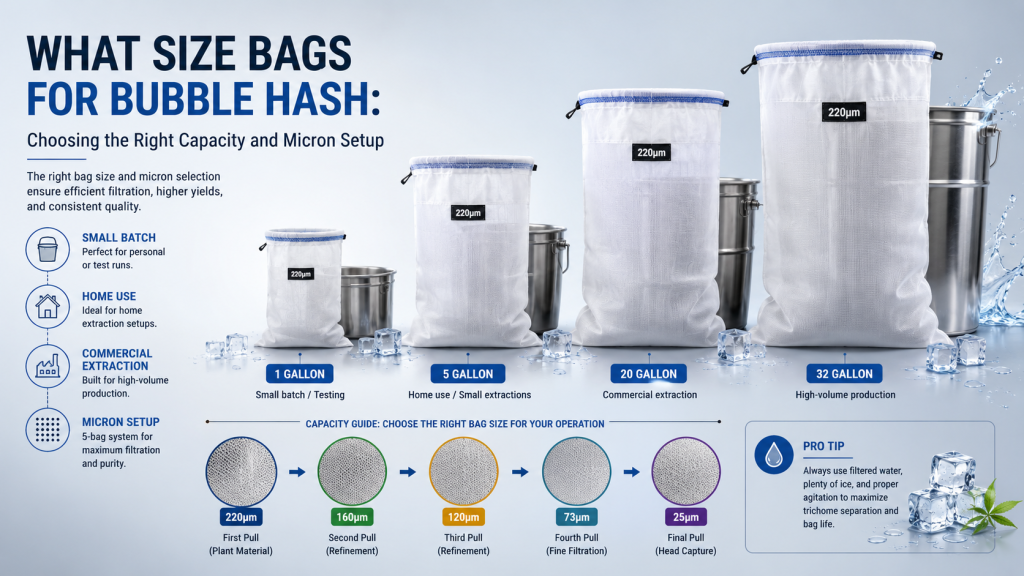
Bubble bags for ice water are commonly arranged in a bucket or vessel before filtration begins. Larger micron bags are used to catch coarse material first, while smaller micron bags collect finer particles as the water passes through the stack. This layered system helps operators separate material more accurately instead of collecting everything in one screen. For users learning from a bubble bag video, this stacking process is one of the most important details to observe.
Using bubble bags correctly also requires attention to temperature. Ice water should remain cold throughout the wash because low temperature helps improve separation efficiency. Excessive agitation or warm water can increase contamination and reduce product quality. The best results come from steady, controlled movement rather than aggressive mixing. This is especially important for users who are new to using bubble bags and want a clean, repeatable workflow.
How to Use Bubble Bags Step by Step
Before starting, prepare clean bubble bags, a suitable bucket or vessel, ice, cold water, starting material, mixing tools, and collection surfaces. Place the filtration bags inside the bucket according to the correct bubble bag order. In most systems, the smallest micron bag is placed at the bottom, and larger micron bags are stacked above it, with the largest micron bag at the top. This allows coarse material to be filtered first and finer material to be collected later.
After the bags are arranged, add cold water and ice to the washing vessel. The plant material should be chilled before agitation begins. Some users mix directly in the top work bag, while others wash in a separate vessel and then pour the liquid through the bag stack. Both methods can work if the process is controlled and the bags are not overloaded. When searching bubble bag how to use instructions, users should pay close attention to batch size because overfilling can slow drainage and make collection more difficult.
Agitation should be steady and measured. Manual stirring is suitable for small batches, while machine-assisted systems can help standardize larger workflows. After the wash cycle, allow the mixture to drain through each bag. Remove the bags one at a time, letting excess water pass through before collecting material from the mesh surface. This process should be done carefully to avoid stretching the mesh or mixing different grades.
Many users watch a bubble bag video before their first wash because visual guidance helps clarify bag stacking, agitation, and collection technique. However, a video should be treated as a process reference rather than a substitute for careful operation. Water temperature, material condition, wash duration, and bag quality all affect the final result.
Bubble Bag Washer and Washing Machine Use
A bubble bag washer can improve consistency in repeated washing cycles. Instead of relying entirely on manual stirring, the washer creates controlled agitation that helps separate particles more evenly. This can reduce labor, improve batch-to-batch consistency, and make larger workflows easier to manage. For users processing material regularly, a bubble bag washer may provide better operational efficiency than hand mixing alone.
Bubble bags for washing machine workflows require stronger construction because mechanical agitation places extra stress on seams and mesh panels. The bags must be compatible with the washer size and the intended batch volume. A bag that is too small, too loose, or poorly reinforced may fold, restrict flow, or wear out quickly. For this reason, buyers should choose durable bags with reinforced stitching and stable mesh when planning machine-assisted washing.
The phrase wash bubble bags can refer to both using bags during the wash and cleaning bags after the process. During production, operators should avoid overloading the washer and should keep the water cold. After production, each bag must be rinsed thoroughly to remove residue from the mesh. Both types of washing affect long-term performance.
Machine-assisted systems can improve workflow control, but they do not replace proper bag order or cleaning discipline. Even with a washer, the operator must use the correct bubble bag order and monitor agitation time. Excessive movement can break down plant material and introduce fine contaminants into the collection layers. A controlled washer setup should support separation, not overprocessing.
How Many Bubble Bags Are Needed
Many users ask how many bubble bags are required for effective filtration. The answer depends on the desired level of separation. A simple setup may use three or four bags, which can be sufficient for basic processing. This arrangement is faster, easier to clean, and suitable for users who do not need detailed grading. However, fewer bags also mean less separation control.
A more complete setup may include five, six, or eight bags with different micron ratings. More bags allow users to separate material into narrower particle ranges, which can improve grading and quality evaluation. This is useful for operators who want to understand which micron ranges produce the cleanest or most desirable results. The tradeoff is that more bags require more time for draining, collection, rinsing, and drying.
For beginners, a moderate set is often easier to manage than a full professional configuration. The key is to choose enough bags to separate coarse material, mid-range particles, and fine particles without making the workflow unnecessarily complex. As experience increases, users can move to larger or more detailed sets to improve classification.
Regardless of how many bubble bags are used, the sequence must be correct. Bag quantity alone does not guarantee performance. A smaller set arranged correctly will usually perform better than a larger set stacked incorrectly. Clear micron labeling helps prevent mistakes, especially when several bags look similar after repeated use.
Cleaning, Maintenance, and Long-Term Use
Knowing how to clean bubble bags is essential for preserving filtration accuracy. After each use, bags should be rinsed immediately with cold water before residue dries inside the mesh. Dried residue can clog openings, slow future drainage, and make the bags harder to clean. Prompt rinsing also helps reduce odor and prevents buildup between cycles.
Avoid harsh chemicals, high heat, or aggressive scrubbing that can damage the mesh. The goal is to remove residue while preserving the original micron structure. Gently rinse both sides of the mesh and inspect the seams, corners, and collection areas. If buildup remains, use a food-safe cleaning method suitable for mesh filtration equipment.
After cleaning, bubble bags should be dried completely before storage. Storing damp bags can lead to odor, mold, or fabric degradation. Bags should be kept in a clean, dry location away from sharp tools or heavy objects that could deform the mesh. For users running frequent cycles with a bubble bag washer or bubble bags for washing machine workflows, regular inspection is especially important because repeated agitation can create wear over time.
Using bubble bags effectively requires more than placing mesh bags in a bucket. It requires the right bubble bag order, correct temperature control, appropriate agitation, suitable bag quantity, and disciplined maintenance. By understanding how to use bubble bags, how many bubble bags are needed, and how to clean bubble bags after each cycle, operators can build a more consistent ice water filtration process with better reliability and longer equipment life.