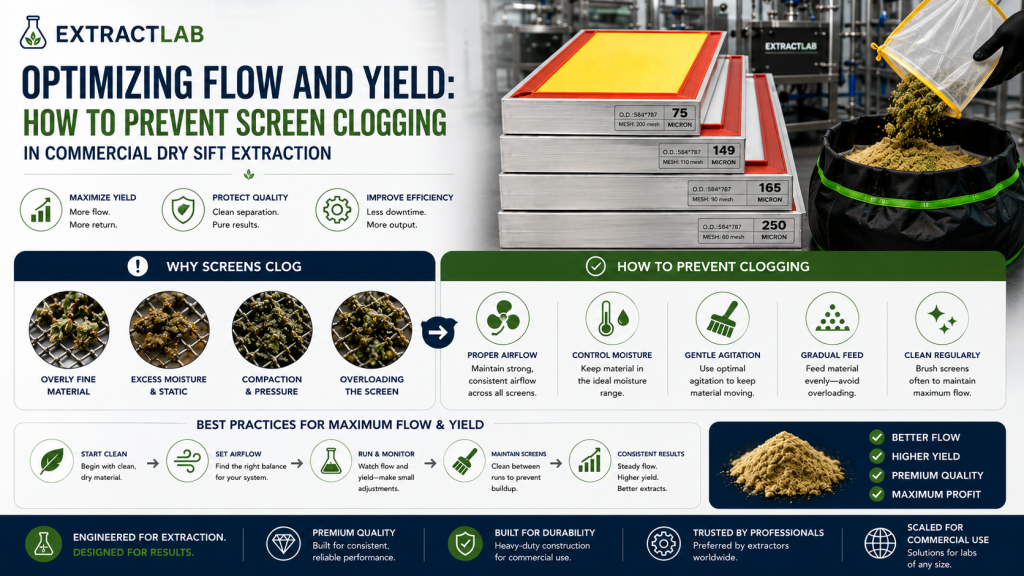
In the commercial botanical processing sector, throughput and purity dictate profitability. Among various solventless separation techniques, dry sift extraction remains highly valued for preserving the native terpene profile and structural integrity of trichome heads. However, industrial processing lines frequently encounter a severe operational bottleneck: screen clogging—scientifically referred to as screen blinding or pegging.
When fine mesh apertures become obstructed by resinous materials or near-size particles, processing efficiency drops exponentially. Yield is compromised, downtime increases due to frequent cleaning cycles, and the mechanical stress on the mesh cloth can lead to premature structural failure. For processing laboratory directors and plant managers, understanding how to prevent screen clogging in dry sift extraction is not merely a maintenance consideration; it is vital for sustaining continuous, high-throughput manufacturing.
Understanding the Root Causes of Screen Blinding and Clogging
To implement an effective preventative strategy, it is first necessary to diagnose why mesh obstruction occurs during the dry sifting process. Botanical biomass presents unique challenges compared to inert mineral or aggregate materials.
Particle Pegging vs. Surface Blinding
Screen obstruction generally manifests in two distinct mechanical behaviors:
- Pegging occurs when irregular or near-size trichome heads or microscopic plant fragments become wedged directly into the geometric openings of the mesh. These particles match the micron rating too closely to pass through freely, yet they lack the kinetic energy to dislodge themselves, effectively acting as tiny plugs.
- Surface Blinding is caused by the accumulation of resinous, oily, or moisture-rich fine particles that adhere to the upper surface of the wire cloth. Over time, these particles coat the wires, gradually narrowing the apertures until a continuous film completely seals the screen openings.
Resin Viscosity and Temperature Variations
The physical properties of botanical resins are highly sensitive to thermal fluctuations. At ambient room temperatures, trichome heads can become slightly malleable and adhesive. As the mechanical action of a vibratory separator or rotary tumbler generates localized friction, the surface temperature of the mesh increases. This heat softens the resinous glands, making them exceedingly sticky. Consequently, instead of bouncing off the wires, the glands flatten, smear, and fuse onto the stainless steel or synthetic fibers, accelerating surface blinding.
Electrostatic Accumulation on Fine Mesh
Dry sifting inherent to low-moisture botanical milling inevitably generates friction. This kinetic energy induces a strong triboelectric or electrostatic charge on both the biomass and the isolation screens. Because ultra-fine mesh screens (typically ranging from 45 microns to 150 microns) possess a high surface-area-to-mass ratio, electrostatic forces easily overcome gravitational forces. Fine particulate matter and broken trichome stalks become magnetically attracted to the mesh wires, clinging to the underside and perimeter of the apertures, which rapidly constricts material flow.
Industrial Strategies to Eliminate Mesh Blockage
Mitigating screen clogging requires a multifaceted approach combining environmental controls, mechanical countermeasures, and high-performance screen engineering.
Implement Low-Temperature and Environmental Conditioning
Controlling the thermodynamic state of the extraction environment is the first line of defense against resin smearing.
- Cryogenic Processing: Operating within cold-room environments (ideally maintained between -5°C and 5°C) or pre-chilling the biomass utilizing dry ice or liquid nitrogen injection ensures that the glandular trichomes remain completely brittle. Brittle trichomes break cleanly at the abscission zone rather than rupturing, drastically reducing the release of sticky interior oils that coat the mesh.
- Humidity Standardization: Relative humidity (RH) within the processing facility should be tightly maintained between 35% and 45%. Excess moisture causes ultra-fine powders to agglomerate into larger, dough-like clusters that cannot pass through fine apertures, while excessively dry air exacerbates electrostatic retention.
Utilize Active Mechanical and Ultrasonic Anti-Blinding Systems
Relying solely on gravitational force or standard orbital vibration is insufficient for high-throughput commercial extraction. Active de-blinding mechanisms must be integrated directly into the screen deck configuration.
- Mechanical Sliders and Ball Trays: Installing a perforated plate beneath the primary sifting mesh allows the integration of high-density nylon sliders or food-grade silicone bouncing balls. As the deck vibrates, these media provide continuous vertical impacts and horizontal shearing across the underside of the mesh, instantly dislodging pegged particles without damaging the delicate screen cloth.
- Ultrasonic Transducers: For ultra-fine separations below 75 microns, ultrasonic de-blinding systems represent the gold standard. By transmitting a continuous high-frequency, low-amplitude acoustic wave across the screen surface, the localized mesh wires vibrate micro-mechanically. This localized energy eliminates friction, neutralizes static attraction, and keeps near-size particles in a state of fluid suspension above the apertures.
Maintain Precise Tension and Feed Velocity Control
A slack or poorly tensioned screen creates dead zones where material accumulates and compacts. Industrial sieving frames must be pneumatically or mechanically tensioned to precise tolerances (often measured in Newtons per millimeter) to ensure uniform energy distribution across the entire screen deck. Furthermore, overloading the screen surface with a massive surge of raw feed will overwhelm the separation capacity, trapping fines underneath a heavy blanket of biomass and forcing them into the mesh openings. Utilizing automated volumetric or vibratory feeders ensures a consistent, thin mono-layer of material across the screen.
Why Precision Engineering Matters: The EXTRACTLAB Sifting Solution
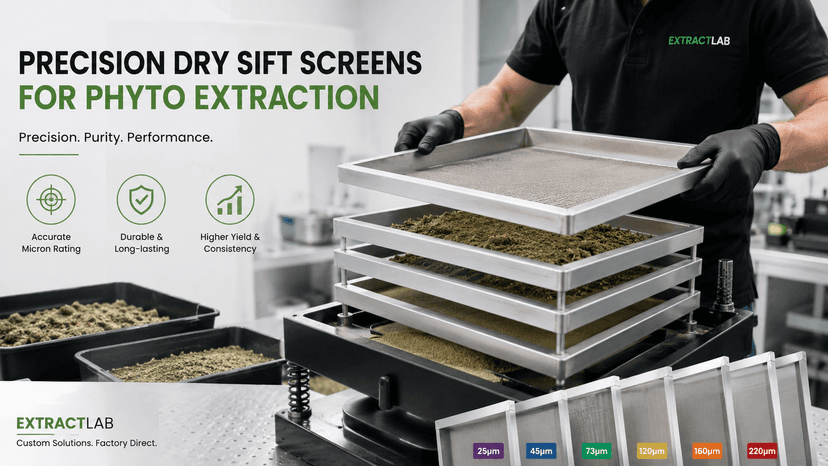
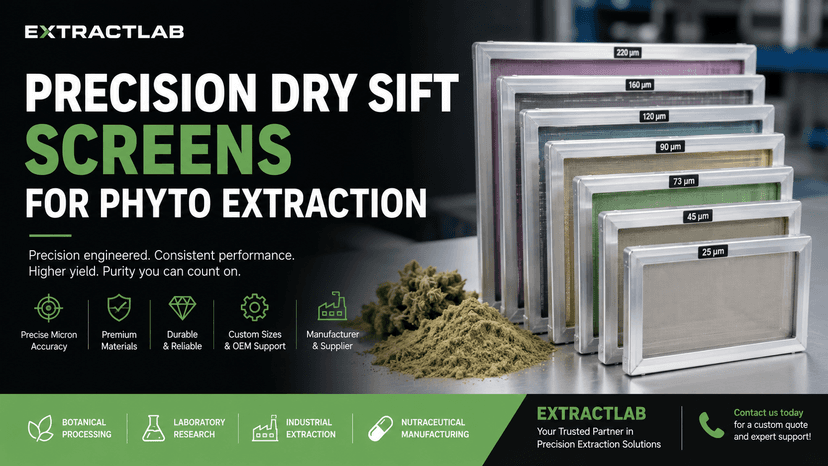
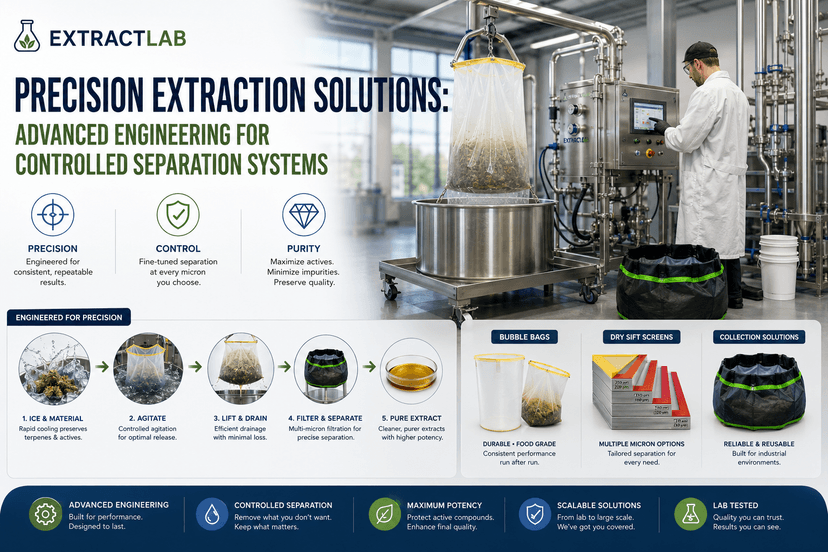
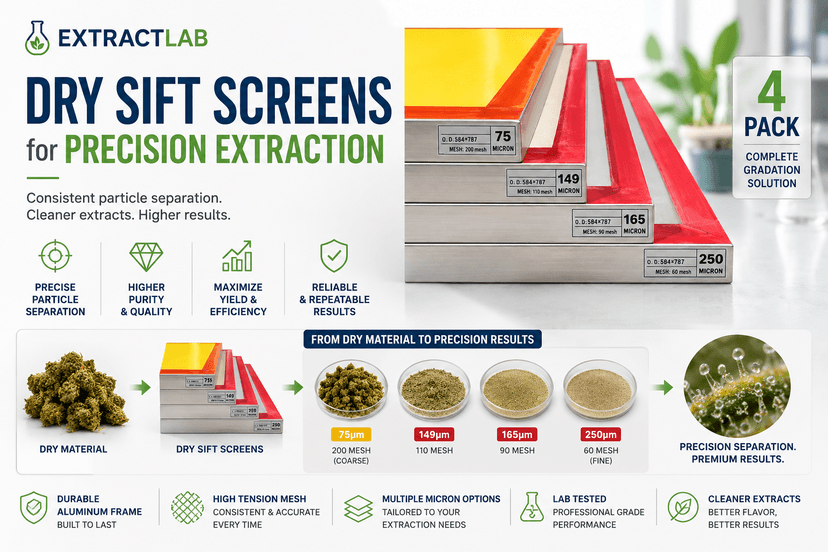
At EXTRACTLAB, we understand that standard, off-the-shelf industrial sieving components fail to meet the strict purity requirements of premium botanical extraction. As a dedicated manufacturer and OEM/ODM supplier, we engineer specialized non-clogging dry sift screen assemblies designed for continuous industrial performance.
Premium Stainless Steel and Synthetic Mesh Selection
Our screens are manufactured utilizing advanced wire-weaving technology to guarantee absolute uniformity in aperture geometry. We offer:
- Surgical-Grade 316L Stainless Steel Mesh: Highly resistant to mechanical wear, corrosion, and repeated alcohol sanitation protocols. The ultra-smooth wire drawing process minimizes surface micro-roughness, denying sticky resins an anchor point for adhesion.
- Precision-Woven Monofilament Nylon and Polyester: Engineered specifically for applications requiring high elasticity and natural anti-static properties. Our synthetic meshes feature precise micron ratings with optimized open-area percentages to maximize throughput while maintaining excellent tensile strength.
Fully Customizable Screen Assemblies and Frame Geometry
Every processing facility utilizes different equipment configurations, extraction volumes, and botanical cultivars. Because a single standardized design cannot address all operational variables, EXTRACTLAB specializes in fully customizable separation solutions:
- Custom Frame Dimensions: We manufacture replacement screens, round separator decks, and rectangular screen panels tailored to fit any major domestic or international equipment brand, as well as proprietary custom-built extractors.
- Integrated Anti-Blinding Technology: We provide pre-assembled “sandwich screens” that encapsulate custom silicone balls, nylon sliders, or custom-tuned ultrasonic rings directly within the frame structure, offering an out-of-the-box solution to eliminate downtime.
- Variable Tension Profiling: Based on your specific material density and target micron fractions, our engineers adjust the mechanical pre-tensioning of the mesh during factory fabrication to maximize particle acceleration and self-cleaning efficiency.
Industrial Applications of Non-Clogging Dry Sift Technology
Enabling a continuous, clog-free separation workflow unlocks significant economic advantages across diverse commercial sectors.
Botanical Extraction and Concentrated Resin Processing
For commercial extractors targeting high-purity solventless concentrates, preventing screen blinding ensures that only intact, clean trichome heads pass into the collection trays. Minimizing screen smearing ensures that fine vegetative particulate matter is not dragged into the final product by sticky residues, maintaining an ultra-clean, light-golden kief consistency suitable for premium pressing or vaporization products.
Pharmaceutical Ingredient Grading and Laboratory Separation
In specialized pharmaceutical and dietary supplement formulation, consistency is mandatory. EXTRACTLAB customizable screens allow laboratory technicians to isolate specific botanical active compounds based on strict particulate size distributions. The elimination of pegging ensures that analytical samples or active pharmaceutical ingredient (API) batches remain completely uniform from the first kilogram to the last.
Commercial Scaling of Agricultural Herbal Milling
Large-scale agricultural processors dealing with hundreds of pounds of herbal biomass per hour require robust equipment that can run multiple shifts without stopping for manual cleanings. By integrating EXTRACTLAB industrial-grade stainless steel wire cloth with active de-blinding trays, facilities can maintain unbroken production schedules, drastically reducing labor costs and improving overall equipment effectiveness (OEE).
Technical Specifications & Parameter Frameworks
To assist procurement managers and mechanical engineers in selecting the ideal screen configuration for their anti-clogging workflows, EXTRACTLAB provides a standardized matrix of high-capacity wire cloth parameters:
| Mesh Material | Mesh Count (per Inch) | Nominal Aperture (Microns) | Wire/Yarn Diameter (μm) | Open Area Percentage (%) | Ideal Anti-Blinding Countermeasure |
| SUS 316L Stainless Steel | 325 x 325 | 44 | 35 | 31.0% | Ultrasonic Transducer Array |
| SUS 316L Stainless Steel | 200 x 200 | 74 | 53 | 34.0% | Ultrasonic / Food-Grade Silicone Balls |
| SUS 316L Stainless Steel | 140 x 140 | 105 | 76 | 33.6% | High-Density Nylon Sliders |
| Precision Monofilament Nylon | 120 x 120 | 125 | 80 | 37.0% | Nylon Sliders / Mechanical Wiper Blades |
| Precision Monofilament Nylon | 100 x 100 | 149 | 100 | 36.0% | Sandwich Screen with Polyurethane Balls |
| SUS 316L Stainless Steel | 80 x 80 | 177 | 140 | 31.2% | Bouncing Ball Tray Assembly |
Note: All specifications can be completely customized. We offer wire diameters adjusted for heavier load capacities or thin-wire options engineered for ultra-high open-area requirements.
Elevate Your Extraction Throughput with EXTRACTLAB
Screen clogging should not dictate your production schedule or diminish your extraction margins. Implementing professional-grade environmental controls and mechanical isolation techniques represents part of the solution—but the foundation of a highly efficient processing line lies in the quality of the separation media itself.
As a premier manufacturing partner to the global extraction industry, EXTRACTLAB combines technical expertise, advanced material science, and flexible OEM capabilities to deliver screens that outlast and outperform standard industrial wire cloths. Whether you are running a boutique laboratory or managing a multi-ton agricultural processing facility, our engineers are ready to design and manufacture the exact mesh specification, tension rating, and frame geometry required to keep your processing line flowing continuously.
Streamline Your Processing Infrastructure Today
Do not let screen blinding compromise your extraction purity and output. Contact our technical sales engineering team to request a comprehensive consultation, discuss custom sizing parameters, or receive an expedited quote for custom production runs.
- Corporate Procurement & Technical Support: EXTRACTLAB Engineering Division
- Direct Email Inquiry: [email protected]
- Custom OEM Request Form: Available via our website for immediate technical review.