What should be approved before private label bubble bags enter production? Confirm the exact contents of each sellable unit, the micron and size labels, the artwork revision, the retail pack and the shipping-carton information. A logo proof alone leaves important order details unresolved.
This guide is for brands and distributors preparing an OEM order. It focuses on product identification and packaging approval after the bag specification has been chosen.
Define what one unit means
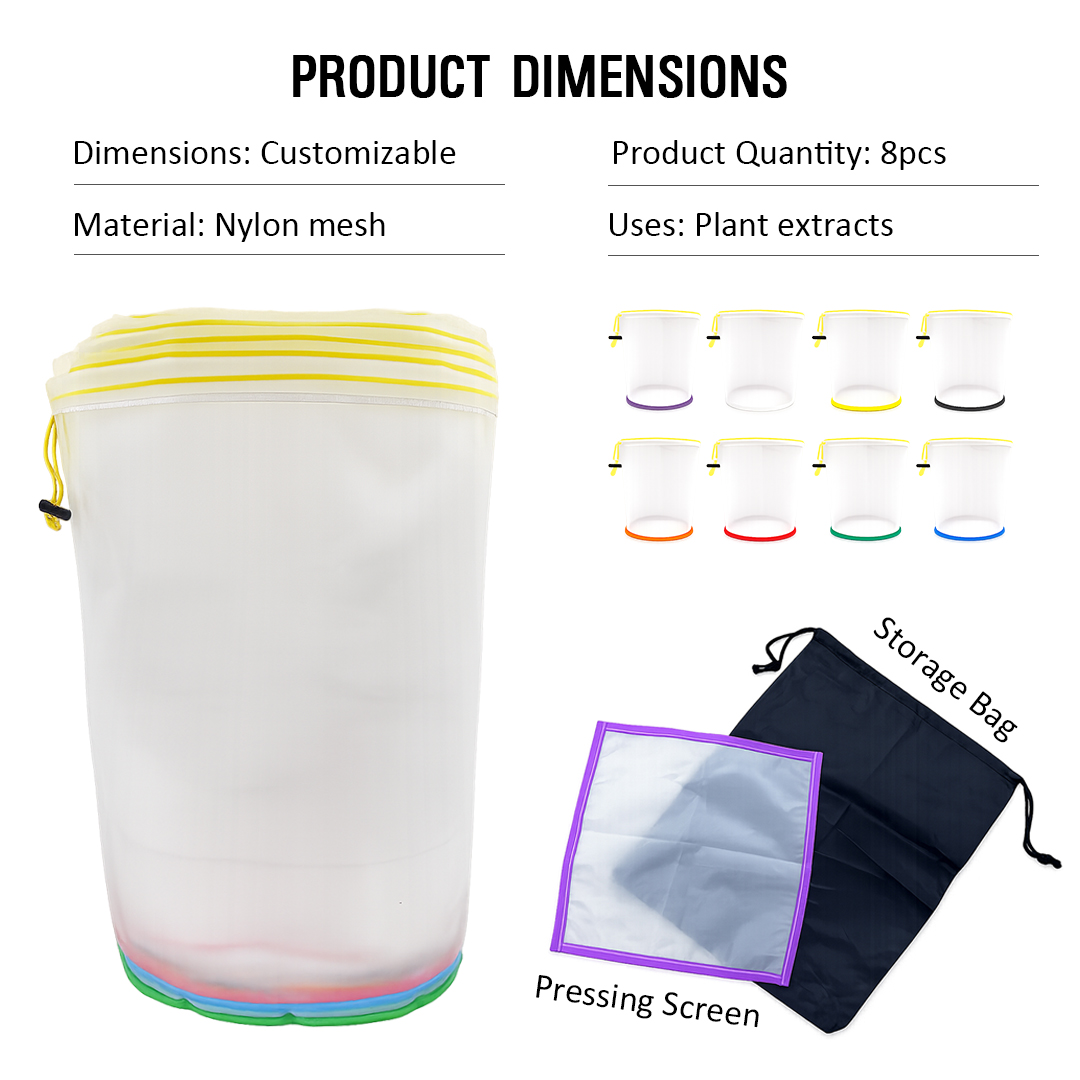
The EXTRACTPHYTO filtration bag range includes individual bags and multi-bag sets, with private-label and packaging options. Before requesting artwork, define whether a quoted unit is one bag, one complete set or one retail pack containing several items.
Create a component list for each sellable unit. Record the bag construction, nominal capacity, selected micron ratings, quantity of each bag and any accessories. List the carrying pouch, insert or other packaging separately. Do not assume that an accessory pictured in a catalogue is included in every single-bag or set quotation.
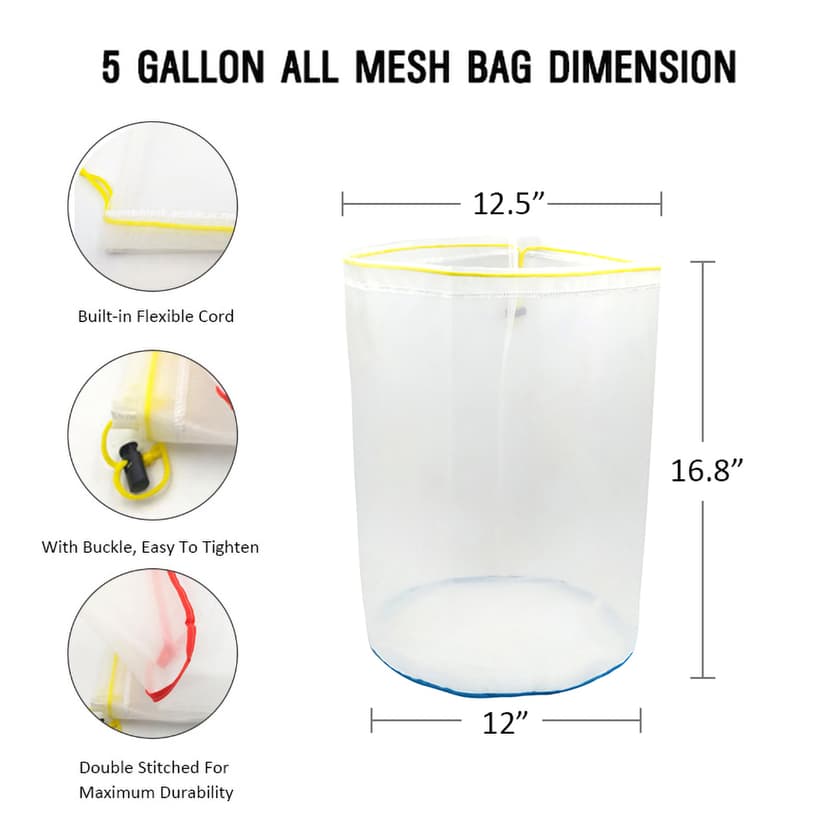
For example, the 5 gallon all-mesh single-bag page lists multiple micron choices. That does not mean a purchase of one single bag includes every listed micron option. The order line and pack label must say exactly which selection is being supplied.
Build one approved specification table
| Field | Approval question | Matching documents |
|---|---|---|
| Item code | Which code identifies this exact bag or set? | Order, pack label and carton list |
| Capacity and construction | What size and material construction were selected? | Product specification and retail artwork |
| Micron contents | Which ratings and how many of each are inside? | Bag labels and component list |
| Brand artwork | Which logo file, placement and revision are approved? | Artwork proof and production reference |
| Pack quantity | How many bags or sets form one sellable unit? | Retail label and packing instructions |
| Carton quantity | How many sellable units are in one shipping carton? | Carton mark and packing list |
| Traceability | What order or batch reference will be used? | Agreed label location and shipment record |
Use the table as the shared reference for purchasing, artwork and warehouse review. Resolve differences before approving the final proof. Otherwise, a correct logo can still be printed on a label with the wrong pack contents.
Make the micron number explicit
Colour coding can help distinguish products, but the written micron value should remain part of the agreed identification. Do not assume that colour assignments are universal across suppliers or private-label ranges. If your order changes a bag or drawstring colour, confirm the corresponding numeric label and update the artwork table.
Ask the supplier for a proof showing the label at its intended size and location. Check legibility, unit notation and placement on the actual construction. A large digital preview can hide text that becomes difficult to read on a small label.
Keep capacity and micron rating in separate fields. “5 gallon” identifies a nominal capacity category; it does not identify the mesh opening. A label that includes only one of those values may be inadequate for distinguishing variants in a distributor’s inventory.
Approve artwork and the physical pack separately
The artwork proof should show the logo version, colours, text, dimensions and placement. The physical pack review should confirm the packaging material, finished dimensions, component arrangement and closure. Ask which details can be shown digitally and which require a physical sample.
If your programme uses barcodes, provide the authorised code data and agree where it appears. Check a produced sample with your own inventory system before accepting a production-wide format. Do not invent a barcode or assume that a printed pattern has been verified simply because it appears in a mockup.
Only include product claims supported by evidence for the supplied item. A packaging design should not introduce unverified certifications, material claims or performance promises. Obtain the relevant supporting information before approving such wording.
Keep a clear approval and change record
- Freeze the component list and selected bag specifications.
- Approve a numbered artwork revision with the label text and placement.
- Review the agreed physical sample or packaging evidence.
- Record the final pack quantity, carton quantity and carton markings.
- Ask the supplier to obtain written approval for any subsequent changes.
A practical approval record identifies the product code, artwork filename, revision date, sample reference and unresolved items. Do not mark the whole order approved while an essential label or pack detail is still undecided. Keep a copy with the purchase order so the same specification can be used for reorders.
Questions to settle in the quotation
Ask for the minimum quantity for each custom element, sample charges if applicable, artwork or tooling charges, packaging price and the production timeline after approval. These terms depend on the project; this guide does not promise a fixed minimum order or delivery time.
Also confirm who supplies the final files and who signs off the proof. If several people review the design, nominate one final approved revision to avoid conflicting instructions reaching production.
Request an OEM bubble bag packaging quotation
EXTRACTPHYTO is a China-based manufacturer offering bubble bags for private-label and wholesale supply. Send an OEM label and packaging enquiry with your bag or set specification, quantity, destination, artwork and desired pack format. Ask for a quotation that identifies the sample and approval stages as well as the finished product.