Choosing the right filtration bags is essential for anyone working with small-batch solventless extraction. For compact processing, product testing, or controlled trial runs, 1 gallon bubble bags provide a practical balance of precision, manageability, and material efficiency. They allow operators to work with smaller quantities of plant material while still following a structured filtration process. For buyers comparing different bag systems, the goal is not simply to find a low-cost option, but to select quality bubble bags that support clean separation, safe handling, and repeatable results.
The question of how to choose the best bubble bags depends on the intended extraction method, desired product quality, micron configuration, and durability requirements. Some users need bags for ice water washing, while others compare the best bubble bags for dry ice hash. Others may collect bubble hash first and then look for the best rosin bags for bubble hash for later pressing. A reliable purchasing decision should consider the full workflow, from washing and filtration to drying, storage, and possible rosin production.
Understanding the Role of 1 Gallon Bubble Bags
1 gallon bubble bags are designed for small-volume extraction where process control is more important than batch size. They are commonly used by beginners, laboratories, product developers, and small-scale operators who want to test material quality without using large amounts of biomass, water, or ice. Their compact size makes them easy to handle, clean, and store, which is especially useful when users need frequent test runs or limited-batch processing.
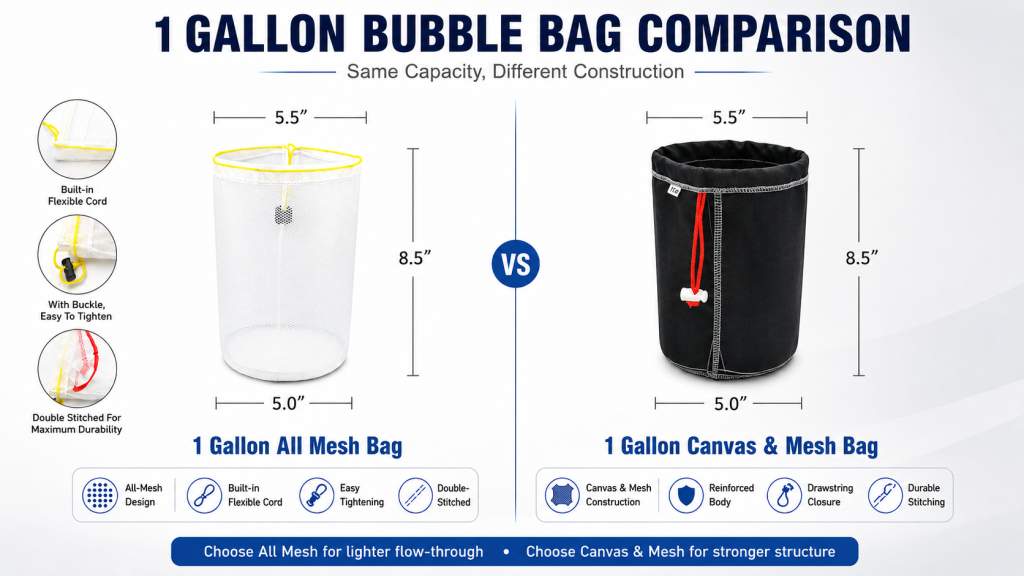
The main function of 1 gallon bubble bags is to separate resin particles from plant material through micron-rated mesh. During ice water extraction, cold water and ice help resin glands become brittle and detach from the plant surface. The liquid mixture is then passed through a sequence of bags that capture different particle sizes. When buyers ask what bags to use for bubble hash, the answer should begin with capacity and micron structure. A small set can still produce controlled separation if the mesh ratings are accurate and the bags are arranged correctly.
For users focused on quality bubble hash, bag construction is critical. Food-grade materials, stable mesh tension, reinforced seams, and smooth collection surfaces all influence the final result. Poorly made bags may stretch, clog, or tear during use, leading to inconsistent filtration and unnecessary material loss. With 1 gallon bubble bags, small size does not mean reduced technical requirements. Even a compact bag must maintain accurate filtration performance throughout repeated washing and cleaning cycles.
Comparing Ice Water, Dry Ice, and Pressing Requirements
Different extraction methods require different bag characteristics. Ice water extraction depends on cold water, ice, and controlled agitation. In this workflow, bags must drain efficiently, resist water saturation, and preserve micron accuracy when wet. Buyers who want more detail about dry ice and ice water applications can review this related guide on bubble bags for hash filtration solutions for dry ice and ice water extraction. For 1 gallon systems, ice water extraction is especially practical because it allows close control over small test batches and makes each filtration stage easier to observe.
Dry ice extraction creates different mechanical demands. Instead of using water as the carrier medium, dry ice makes resin brittle so it can be separated through shaking or movement. The best bubble bags for dry ice hash should have strong mesh, abrasion-resistant construction, and reinforced stitching because dry ice and frozen plant material can create friction against the filtration surface. A weak bag may wear quickly, especially if the operator shakes too aggressively or uses material with sharp stems.
Rosin pressing is a separate stage and requires a different type of bag. The best rosin bags for bubble hash are not the same as washing bags. Washing bags separate resin in water or dry ice workflows, while rosin bags contain dried hash under heat and pressure. For buyers planning to press extracted material, the best bags for pressing bubble hash should offer heat resistance, strong seams, and fine micron filtration. This distinction is important because using the wrong bag type can reduce yield, contaminate output, or cause bag failure during pressing.
Key Factors When Choosing the Best Bags
The best bags to use for bubble hash should match the user’s batch size, filtration goals, and handling method. For small-batch work, 1 gallon bubble bags are often preferable because they reduce waste and make the process easier to control. A larger bag set may be unnecessary when only a small amount of material is being tested. Compact bags also require less water and ice, which can improve cost efficiency for trial runs and product evaluation.
Micron configuration is one of the most important selection criteria. A practical set should include larger micron bags for removing plant material and smaller micron bags for collecting resin particles. The exact configuration depends on the desired level of separation. Users who want basic collection may prefer fewer bags, while users seeking more detailed grading may choose a multi-bag set. Regardless of the number of bags, each micron layer should be clearly labeled and consistently manufactured.
Material safety should also be treated as a priority. Since the bags contact water, ice, and extracted material, food-grade fabric and mesh are important for clean processing. Quality bubble bags should not release fibers, deform under cold conditions, or retain excessive residue after rinsing. A smooth mesh surface supports easier collection and cleaning, which helps maintain performance over time.
Durability is another major factor. Even small bags experience stress during filling, draining, lifting, scraping, and rinsing. Reinforced seams help prevent tearing, while stable sidewalls help the bag retain its shape in the bucket. For buyers comparing products, construction quality is often more important than the number of bags included in the set. A smaller set of well-made bags can provide better long-term reliability than a larger set with weak mesh or poor stitching.
Choosing Bags for Quality Bubble Hash
Quality bubble hash begins with good starting material, but the filtration system strongly affects consistency. If the mesh is inaccurate, resin grades may mix together. If drainage is poor, the process becomes slower and more difficult to control. If the bag surface is rough or poorly finished, collected material may be harder to remove cleanly. For this reason, buyers should evaluate 1 gallon bubble bags as precision filtration tools rather than simple accessories.
The best bags to use for bubble hash should allow operators to separate material without excessive plant contamination. Gentle agitation, cold temperatures, and proper bag sequencing all help protect quality. A well-made one-gallon set makes it easier to observe the process and adjust technique because the batch size is small enough to manage carefully. This is particularly useful for users developing standard operating procedures before moving to larger systems.
For users asking what bags to use for bubble hash in a testing environment, 1 gallon bubble bags are a practical starting point. They are compact enough for small samples but still capable of using professional filtration principles. Operators can test different micron combinations, compare material performance, and evaluate resin collection without committing to high-volume equipment immediately.
If the final goal is rosin production, the collected hash must be dried properly before pressing. At that stage, the best rosin bags for bubble hash should be selected according to resin quality and pressing conditions. Fine micron rosin bags are often used for cleaner hash, while slightly larger pressing bags may improve flow depending on the material. The best bags for pressing bubble hash should be chosen as part of the full production plan, not as an afterthought.
Long-Term Value and Supplier Considerations
A good purchasing decision should consider long-term reliability as much as initial price. Low-cost bags may appear attractive, but weak seams, inconsistent mesh, or poor material quality can increase replacement costs and reduce process stability. Quality bubble bags support cost efficiency because they last longer, clean more easily, and provide more predictable filtration across repeated cycles.
For 1 gallon bubble bags, ease of maintenance is especially valuable. Smaller bags are easier to rinse, dry, and inspect after each wash. Resin buildup should be removed promptly with cold water to preserve mesh openings and prevent clogging. Bags should be completely dry before storage to avoid odor, mold, or fabric degradation. Proper maintenance helps preserve filtration accuracy and extends service life.
Supplier consistency should also be evaluated. A reliable supplier should provide clear product specifications, food-grade material information, accurate micron labeling, and consistent manufacturing quality. Buyers should be cautious with vague product descriptions that focus only on price or set quantity. For professional use, dependable specifications are essential because each batch must perform as expected.
Choosing the right 1 gallon bubble bags requires a clear understanding of extraction method, batch size, micron requirements, and downstream processing goals. The best bubble bags for dry ice hash should prioritize abrasion resistance and seam strength, while bags for ice water extraction should emphasize food-grade construction, drainage performance, and stable mesh. If the material will later be pressed, the best rosin bags for bubble hash and the best bags for pressing bubble hash should be selected separately from the washing bags. By choosing durable, well-constructed filtration equipment, operators can produce quality bubble hash with better consistency, easier maintenance, and stronger long-term process control.