Choosing the correct bag size is one of the most important decisions in ice water extraction. Capacity affects batch volume, handling efficiency, drainage speed, cleaning requirements, and overall workflow control. For operators moving beyond small-batch processing, bubble hash bags 32 gallon provide a larger-capacity solution designed for higher-volume washing and filtration. They allow users to process more material per cycle while maintaining a structured separation process through micron-rated mesh layers.
Many buyers begin by comparing bubble hash bag sizes because gallon capacity can vary significantly across different setups. Small systems are useful for testing, sampling, and personal-scale batches, while larger systems are better suited to repeated production or higher material volumes. However, capacity is only one part of the decision. Buyers also need to understand what size micron bags for bubble hash are appropriate for their target separation results. Gallon size determines working volume, while micron size determines filtration accuracy.
Understanding Bubble Hash Bag Sizes
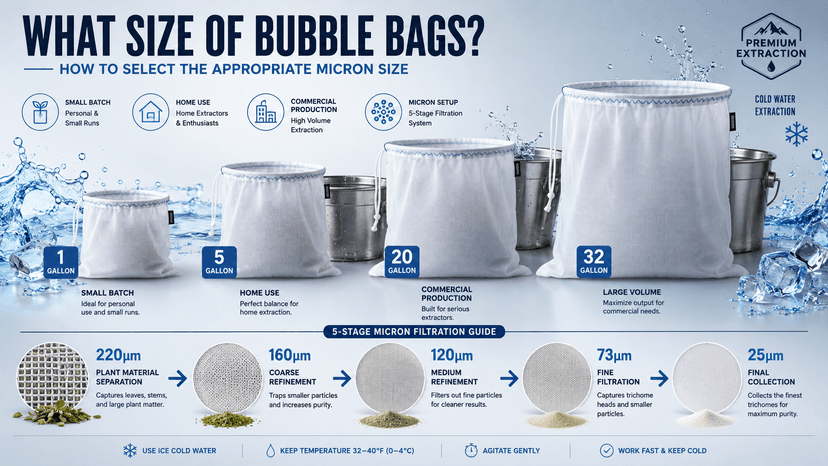
Bubble hash bag sizes usually refer to the bucket or vessel capacity that the bags are designed to fit. Common formats include 1 gallon, 2 gallon, 5 gallon, 20 gallon, and 32 gallon systems. These numbers do not describe mesh fineness. Instead, they describe the working volume of the filtration setup. A 73 micron bag can exist in a 1 gallon set, a 5 gallon set, or a 32 gallon set. The filtration function may be similar, but the batch capacity is very different.
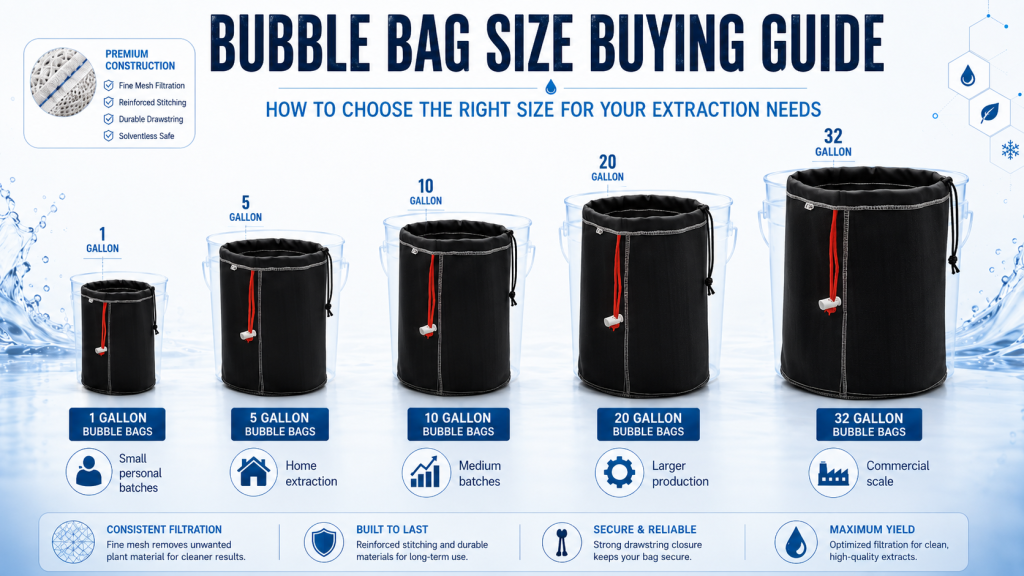
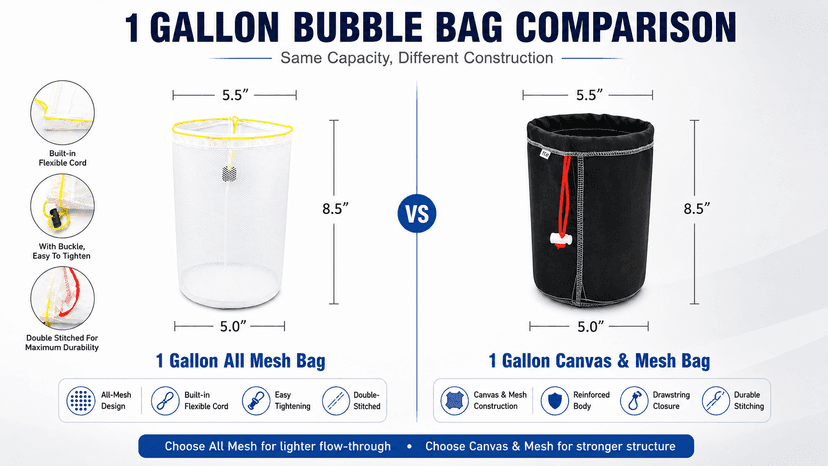
1 gallon bubble hash bags are often selected for sample testing, small trials, and low-volume processing. They require less water, less ice, and less workspace, making them practical for users who want to evaluate material quality before scaling up. 2 gallon bubble hash bags provide slightly more capacity while remaining easy to handle and clean. These small hash bags are useful when precision and convenience matter more than output volume.
Small bubble bags for hash are also helpful for process development. Operators can test agitation time, ice ratio, drainage behavior, and micron performance without committing large material volumes. This makes small systems suitable for laboratories, product development, and entry-level users. However, small bags become inefficient when the same process must be repeated many times to handle a larger harvest or production batch.
At the other end of the scale, large bubble bags for hash are designed to increase throughput. Larger systems reduce the number of wash cycles required and allow operators to handle more material in one workflow. Bubble hash bags 32 gallon are especially useful when batch volume, production efficiency, and repeatability are priorities. They require more workspace and stronger handling procedures, but they can significantly improve processing efficiency in the right environment.
Comparing 5 Gallon and 32 Gallon Systems
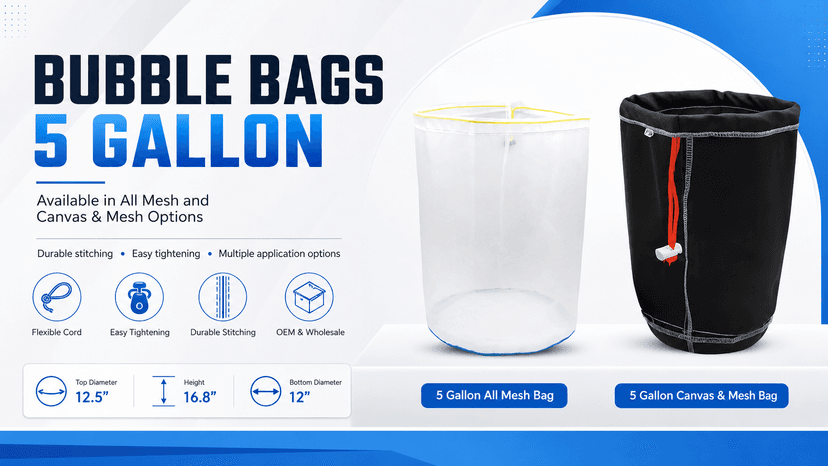
For many users, bubble bags for hash 5 gallon systems are the standard entry point. They fit common buckets, are easy to manage, and provide enough capacity for regular small-batch washing. Bubble hash bags for 5 gallon bucket workflows are practical because standard buckets are widely available and simple to integrate into manual filtration setups. This format is often used by beginners, small processors, and operators who want a balance between capacity and ease of use.
5 gallon bubble bags for hash are also useful for learning proper technique. Users can practice bag stacking, water control, agitation, drainage, and collection without the added weight of a large-volume system. For many buyers, a 5 gallon setup is the most flexible option because it supports meaningful batch sizes while remaining manageable for one operator.
Some buyers search for 5 gallon bubble hash bags amazon because marketplace listings provide quick access to common bag sets. While these options may be convenient, buyers should compare more than price. Food-grade materials, reinforced seams, accurate micron labeling, and mesh durability all affect long-term performance. A low-cost 5 gallon set may be acceptable for occasional use, but frequent processing requires stronger construction.
Bubble hash bags 32 gallon serve a different purpose. They are designed for larger vessels and higher-volume workflows. Compared with 5 gallon bags, they can process more material per cycle and reduce repetitive handling. However, they also require more water, more ice, more drying space, and careful lifting practices. A 32 gallon system should be selected when production volume justifies the larger format and when the workspace can support efficient cleaning and storage.
What Size Micron Bags for Bubble Hash
Capacity determines how much material can be processed, but micron size determines how material is separated. Buyers asking what size micron bags for bubble hash should consider the target product quality, starting material, and desired level of grading. Micron size refers to the mesh opening. Larger micron screens allow larger particles to pass or collect, while smaller micron screens capture finer material.
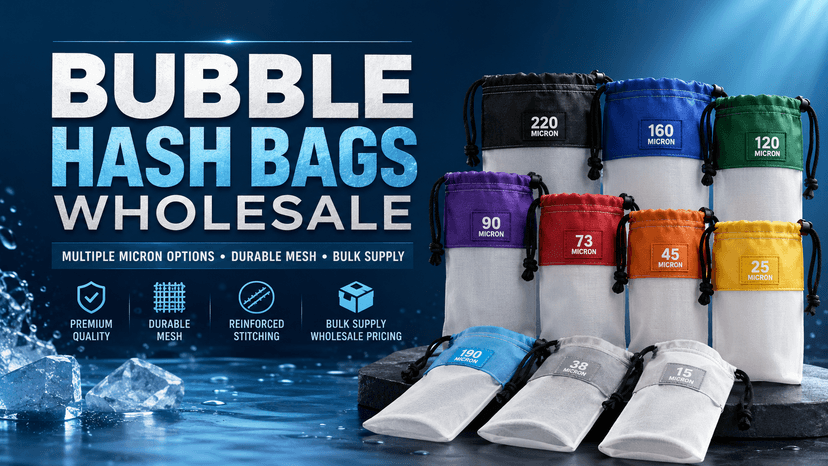
A typical bubble hash bag system may include coarse, mid-range, and fine filtration layers. Larger micron bags are used first to catch plant material and large particles. Mid-range bags often collect desirable resin fractions, while smaller micron bags capture finer resin particles and sediment. The exact setup varies depending on the bag set and operator preference.
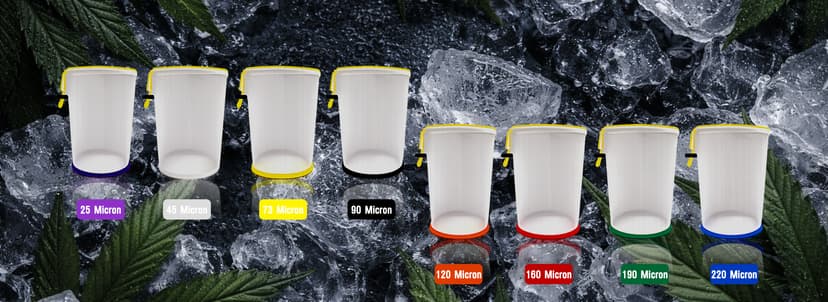
When users ask what size bags for bubble hash they need, they are often mixing two related but different questions. One question is about gallon size, such as whether to choose 1 gallon, 5 gallon, or 32 gallon bags. The other question is about micron size, such as whether to use 220, 160, 120, 90, 73, 45, or 25 micron screens. Both choices matter, but they should be evaluated separately.
For bubble hash bags 32 gallon, micron accuracy becomes especially important because each batch may involve more material. Inconsistent mesh can affect a larger amount of output at once, increasing the cost of errors. Buyers should choose bags with stable mesh, clear micron labels, and reinforced construction. This helps maintain predictable filtration across repeated high-volume cycles.
Choosing Between Small and Large Bags
The right size depends on production goals. Small bubble bags for hash are best for users who need compact handling, limited water use, and easy cleanup. 1 gallon bubble hash bags and 2 gallon bubble hash bags are suitable for testing material quality, developing procedures, or producing very small batches. These small hash bags are also easier to inspect after each use, which helps users identify clogging, seam wear, or mesh damage early.
However, small systems are not efficient for large production needs. Repeating many small batches increases labor, cleaning time, and process variation. When higher throughput is required, large bubble bags for hash become more practical. A larger system can reduce the number of cycles and help standardize production if the operator has the right workspace and handling equipment.
Bubble hash bags 32 gallon are appropriate for operators who need scalable capacity and are prepared for the physical demands of large-volume filtration. Wet bags can become heavy, and drainage may take longer if the mesh is overloaded. Proper batch sizing, controlled agitation, and patient drainage are essential. The larger format rewards good workflow planning but can be inefficient if used for batches that are too small.
For many businesses, the best strategy is to use multiple sizes for different purposes. Small hash bags can be used for testing new material, while 5 gallon bubble bags for hash can support routine small-batch production. Bubble hash bags 32 gallon can then be used when material volume increases and higher throughput is required. This layered approach helps operators match equipment to each task instead of forcing one size to handle every workflow.
Long-Term Value of 32 Gallon Bubble Hash Bags
The economic value of bubble hash bags 32 gallon comes from efficiency, durability, and repeatability. A larger bag system can reduce the number of wash cycles required for high-volume processing, which may lower labor time and improve workflow continuity. When paired with quality mesh and reinforced seams, a 32 gallon set can support repeated use while maintaining stable filtration performance.
Durability is especially important in large systems. Bigger bags experience more stress during filling, lifting, draining, rinsing, and drying. Weak stitching or unstable mesh can lead to failure at critical points in the process. Buyers should look for food-grade materials, strong sidewalls, reinforced seams, and smooth mesh surfaces that allow easier collection and cleaning.
Maintenance also affects long-term value. After each cycle, bags should be rinsed promptly to remove residue from the mesh openings. They should be dried completely before storage to prevent odor, mold, or material degradation. Larger bags require more cleaning space, but proper maintenance helps preserve filtration accuracy and extends service life.
Choosing among bubble hash bag sizes should be based on real operating needs rather than maximum capacity alone. 1 gallon bubble hash bags and 2 gallon bubble hash bags are effective for testing and small batches. Bubble hash bags for 5 gallon bucket setups remain a practical standard for many users. Bubble hash bags 32 gallon provide the capacity needed for larger workflows where throughput and consistency are priorities. By understanding what size bags for bubble hash fit the production volume and what size micron bags for bubble hash match the desired separation target, buyers can build a more efficient and reliable filtration process.