A T-shirt heat press and a dedicated rosin press should not be treated as interchangeable purchasing categories. Both can combine heat and mechanical force, but a matching temperature range, similar shape or digital display does not establish the same intended application, rated force or platen construction. Obtain a model-specific datasheet and written application confirmation before ordering.
This guide is for equipment buyers and distributors comparing listings that use overlapping terms such as “heat press,” “manual press” and “rosin machine.” The practical task is to identify what the exact model is designed to do and which configuration the quotation covers.

Compare these five items first
| Evidence | What to establish | Why it affects the buying decision |
|---|---|---|
| Intended application | The manufacturer’s stated use for the exact model | A broad marketplace title may combine unrelated search terms |
| Force specification | Rated force, its units, adjustment method and supporting documentation | A pressure knob or gauge alone does not establish total applied force |
| Platen assembly | Dimensions, materials, contact surfaces and heating arrangement | Similar outer dimensions do not mean equivalent working assemblies |
| Control and verification | What each display measures and how performance is checked | A setpoint display is not an independent measurement report |
| Supply configuration | Voltage, connectors, external utilities and included accessories | The pictured machine may differ from the configuration quoted for your market |
These checks apply to both categories. They do not imply that every garment press has one design or every rosin press has the same performance.
Do not use “two heated plates” as the only test
Some simplified comparisons say a garment press heats only from above. That is not a universal rule. STAHLS’ Hotronix Heated Power Platen is a documented heated lower-platen option for specified apparel presses. Its existence shows why heating from both sides alone cannot identify a machine’s intended application.
Instead, request a diagram or specification identifying the upper and lower contact assemblies, heating zones and control arrangement. Ask the supplier to explain how the proposed configuration meets the buyer’s stated equipment requirement. Do not infer that one product category can be converted into another by changing a pad or plate.
The Rosiva supplier FAQ also distinguishes garment-transfer equipment from its own hydraulic press. Treat such explanations as supplier descriptions; obtain the corresponding model documentation rather than applying a generic pressure claim to every machine.
Keep force, pressure and appearance separate
A listing may describe tonnage, hydraulic pressure, air-supply pressure or an adjustment setting. Those are not interchangeable specifications. Ask which quantity is being quoted and which component it describes. If the supplier provides a gauge value, request its relationship to the machine’s stated force rather than assuming a direct equivalence.
A manual lever does not automatically make a machine a garment press, and a pneumatic cylinder does not automatically establish a particular application. EXTRACTPHYTO’s catalogue includes both manual and pneumatic models within its rosin press machine range. Model documentation matters more than the drive mechanism’s appearance.

Use named catalogue models to make the enquiry specific
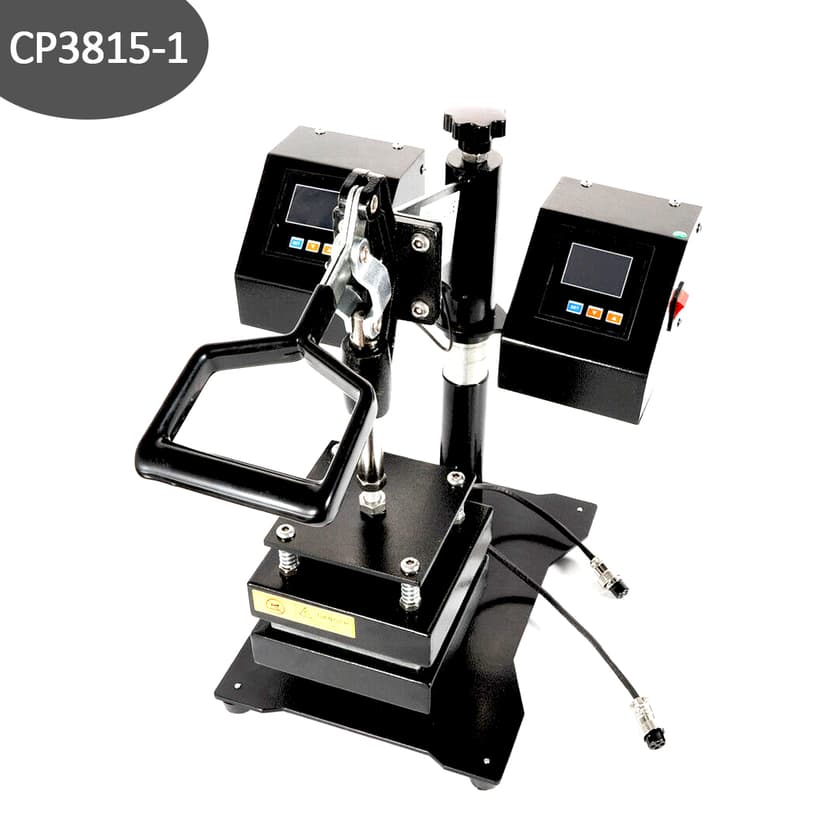
The CP3815-1 listing identifies a manual model with a listed 12 × 12 cm plate size. The LCB1015-3 listing identifies a pneumatic model with listed 10 × 15 cm, 12 × 12 cm and 15 × 20 cm plate options. These are catalogue choices, not a statement that every option is currently available or approved for every application.
Both listings present 110V/220V options. A US buyer should ask which configuration is being offered, its frequency and electrical requirements, and the supplied plug and cord arrangement. Do not treat a listed voltage option as proof of a particular safety certification.
Application limit: The current catalogue notes for these models state that they are not suitable for food processing. Buyers whose intended use involves food processing should resolve that limitation explicitly before purchasing. This article does not override the published restriction or certify either model for another use.
Review the supplied package and supporting documents

- Obtain the full manufacturer model number and configuration revision.
- Request the current manual and application restrictions.
- Confirm platen dimensions, heating arrangement and force specification.
- List required external utilities and whether the quote includes them.
- Request the applicable supporting documents for the exact finished machine; a component document alone may not cover the complete assembly.
- Confirm warranty scope, service parts and freight responsibilities in writing.
If a proposed quotation is only for heated plates or a partial kit, use the kit versus complete-machine guide to identify missing components. This article addresses a separate decision: whether the proposed machine belongs in the correct application shortlist at all.
Request a model review and quotation from EXTRACTPHYTO
EXTRACTPHYTO is a China-based manufacturer with named manual and pneumatic models in its catalogue. Contacting the team is useful when you need to move from a generic “heat press” search to a specific model, configuration and document request.
Email a model-selection and quotation request, or use the contact page. Include the intended application, candidate model or listing, required dimensions and force if known, available utilities, quantity estimate, destination and documentation needs.
If the requirement is still being defined, describe what you know and ask for a suitability review. Request written confirmation of feasible configurations and any exclusions before moving to a sample, demonstration or OEM discussion. Availability, MOQ, lead time and commercial conditions remain subject to the specific quotation. Include this article’s URL when sending a contact-form enquiry.
Catalogue and external product references checked 7 November 2026. No generic pressure rating, certification or performance guarantee is assigned to an equipment category.