If a dry sift screen may be exposed to dry ice, ask the manufacturer whether the exact screen and intended conditions are supported before ordering or use. Confirm the complete assembly, its documented limits and applicable warranty terms in writing. A nominal micron opening or a material name alone is not evidence that a finished screen has been qualified for a particular low-temperature application.
This article is a purchasing checklist, not a procedure for using dry ice or a claim that any EXTRACTPHYTO screen is approved for it. Product-specific suitability and commercial terms require confirmation from the supplier.
Why check the intended use?
Bubble Bags’ product instructions say that its dry sift products have not been tested for dry-ice use and that its warranty does not cover that use. This is a statement about that supplier’s products and warranty, not an EXTRACTPHYTO policy. It illustrates why buyers should obtain the relevant conditions for their own ordered product rather than transferring a general claim between brands.
Dry ice is solid carbon dioxide. CDC dry ice safety guidance identifies cold-contact injury and carbon dioxide accumulation as hazards, and cautions against storage in a tightly sealed container. Assess the intended workplace separately using the relevant safety data sheet, local requirements and qualified safety advice.
Specify the finished assembly, not only the mesh
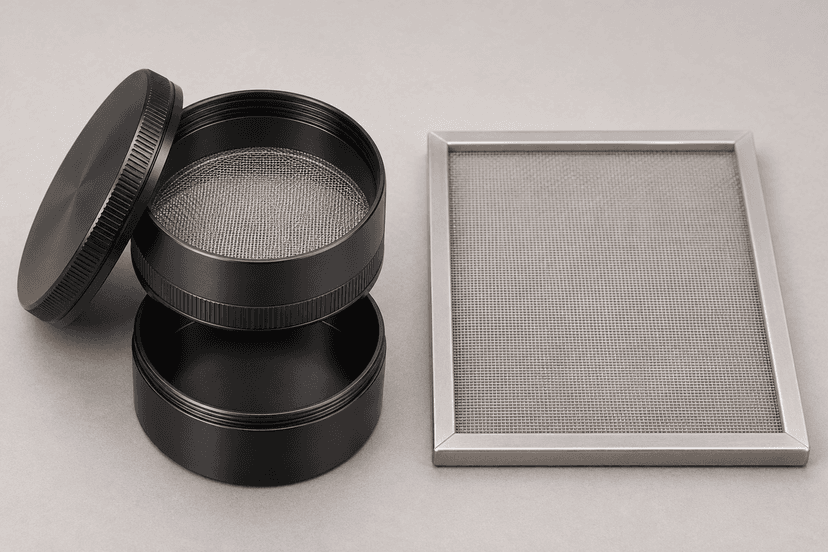
A screen is an assembly: mesh, frame and the method that secures them all matter. Send the supplier the product reference, frame dimensions, mesh material and nominal aperture, plus the intended environment and exposure. Ask whether written evidence covers the complete finished screen in those conditions, including any cleaning or handling steps relevant to the order.
A material data sheet may describe a material on its own; it does not by itself prove the performance of a finished frame and bonded edge. A product photograph or another manufacturer’s warranty cannot substitute for the offered model’s documentation.
Questions for the supplier
| Topic | Ask for |
|---|---|
| Product identity | Exact item, configuration, mesh, frame and specification revision. |
| Intended use | Whether the described exposure is supported and which conditions apply. |
| Evidence | Applicable test or technical documentation, with scope and limitations. |
| Warranty | Written coverage and exclusions for the specified use, including how a claim is assessed. |
| Alternatives | Available configurations or an explicit statement if the supplier cannot confirm suitability. |
If the response is incomplete, record the requirement as unconfirmed. Do not assume that an absence of a stated exclusion means approval. Ask for a revised quotation or seek a qualified alternative.
Separate product suitability from site safety
Even a supplier’s positive product statement would not eliminate workplace hazards. Dry ice can cause frostbite, and carbon dioxide released as it warms can accumulate in poorly ventilated spaces. A sealed container can also be pressurized. Follow the applicable safety data sheet and obtain a site-specific assessment before any planned use; this purchasing article is not a substitute for those controls.
Compare the same intended use and documentation across competing quotes. Retain the exact product reference and written answers with the purchase order so that later teams do not mistake a general catalogue description for a specific approval.
Ask EXTRACTPHYTO before ordering
Explore EXTRACTPHYTO Dry Sift Screens and request a quotation. Provide the desired frame size, mesh opening, quantity, destination and intended conditions. Ask whether the exact assembly is suitable for the proposed exposure and request the applicable supporting documents and warranty terms. You may also email [email protected].
Sources reviewed November 25, 2026: Bubble Bags’ product instructions and CDC dry-ice safety guidance. No EXTRACTPHYTO dry-ice suitability or warranty claim is established by those sources.