A private-label dry sift screen order needs more than a logo file. Your brand must be attached to the right product specification, a clear item label and packaging that accurately describes what the customer receives. Approve those elements together so the frame, carton and online product listing refer to the same version.
EXTRACTPHYTO’s OEM and wholesale catalogue lists custom-logo and private-label support. Treat each request as a defined project: the available marking method, packaging format, minimum quantity, setup cost and timing must be confirmed for the actual order.

Choose the scope of branding first
Decide whether the product needs a frame mark, a separate identification label, a branded retail pack or a combination. A simple frame logo and a fully designed retail kit involve different approval work. Ask for itemized options so you can compare their cost and preparation requirements without changing the underlying screen specification.
| Element | Supply to the manufacturer | Approve before production |
|---|---|---|
| Frame logo | Artwork, desired size, position and orientation. | Marking method, readable size and an agreed physical or visual proof. |
| Item identification | SKU, nominal size, mesh/aperture wording and revision. | Exact text and a match to the offered screen specification. |
| Retail packaging | Pack type, artwork and the complete contents list. | Dimensions, print layout, protection and approved claims. |
| Master carton | Packing quantity and shipping identification requirements. | Carton markings and the relationship between sets, frames and cartons. |
Keep a separate identity for each saleable item
Assign a distinct item code to every size and mesh combination sold individually, and another to each defined set. Write the set contents in full. A logo shared by every frame cannot tell warehouse staff which replacement item to pick or tell a customer what is missing from a bundle.
Use the same identifiers in the quotation, artwork, packing list and reorder request. If you supply barcodes, confirm their ownership and mapping before approving the print file. If you want the manufacturer to arrange them, confirm the scope explicitly; a request for private labeling does not automatically include barcode creation.

Approve the product before approving its claims
Keep the technical specification separate from marketing artwork. Confirm frame dimensions, mesh material, nominal aperture and set contents in the order documents. A label saying “200 mesh,” for example, is not a substitute for the agreed aperture specification and construction details.
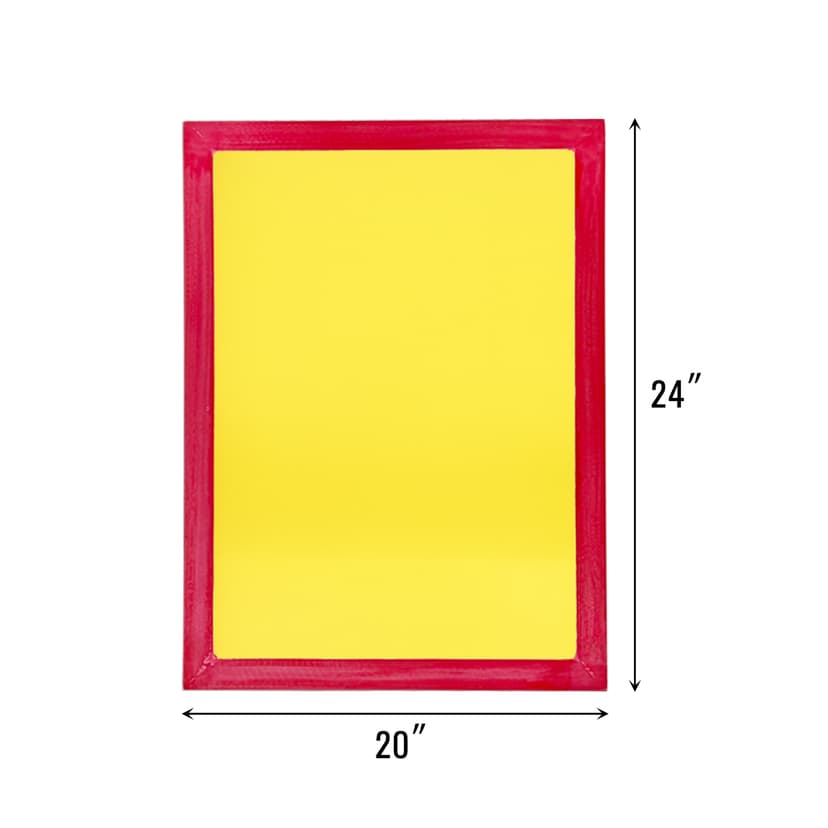
Put only supported statements on packaging and sales pages. If a claim depends on a test report or particular material documentation, obtain that evidence and confirm its scope before printing. Avoid turning an informal discussion into a guaranteed performance claim. For the available formats, compare the 20 × 24 inch option and 25 × 36 inch option.

Use a clear proof and revision sequence
Start with the product specification and item list. Next review artwork placement and exact wording. Request a physical marking or packed sample when the decision depends on a physical detail that a digital layout cannot demonstrate. Finally record approval of the specific revision to be produced.
Name one person on each side to handle changes. Keep the approved files and an explicit record of outstanding items. If the frame size changes after artwork approval, check the logo position and package fit again. If set contents change, review the pack label and item code as well as the price.
Commercial questions to settle with the OEM quote
Ask which minimum quantities apply to the product, each logo version and each packaging design. Request separate setup and recurring unit costs where applicable. Confirm how unused custom packaging, artwork revisions and repeat orders will be handled. A manufacturing quotation should identify the agreed scope rather than leave these costs implicit.
Can one logo be used across several sizes?
That may be possible, but placement, legibility and packaging dimensions need approval for each format. Ask whether a shared artwork file or separate files are required.
Does a logo sample approve the complete private-label order?
Only if the approval explicitly covers the complete specification. Logo appearance, screen construction and packed contents are separate decisions that should each be closed.
Request a private-label project quote
Send your requirements to [email protected]. Frame sizes and mesh requirements, Single-frame or set configuration, Quantity per variant, Logo and labeling needs, Retail packaging requirements will help us prepare a comparable quotation. Mark undecided items as “please advise.” Sample charges, minimum quantities, availability, production timing and freight require order-specific confirmation.
Prefer a form? Use the contact page and copy reference DS-OEM-20261113 into your message with this article URL.